


Technomania

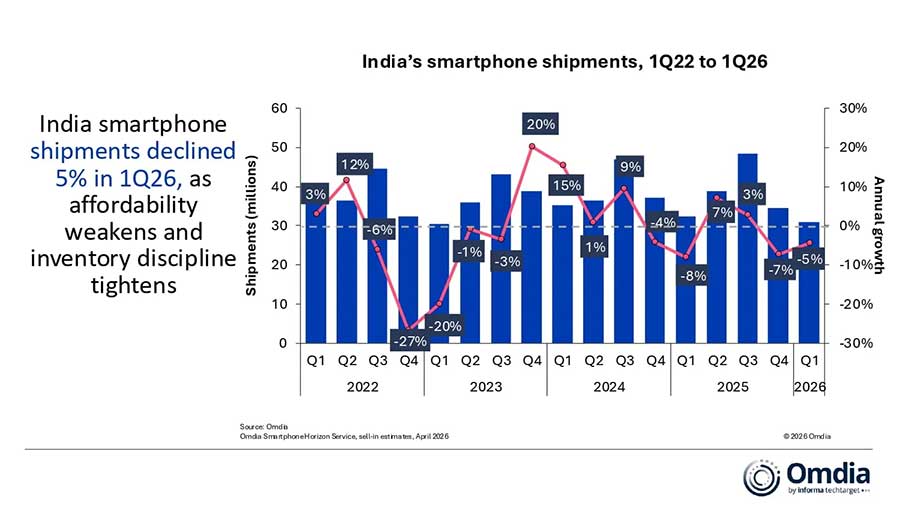
India’s smartphone market saw a 5% year-on-year decline in the first quarter of 2026, with shipments dropping to 30.9 million units, according to research firm Omdia. The slowdown reflects weak seasonal demand compounded by macroeconomic pressures and cautious inventory strategies across distribution channels.
Analysts attributed the dip to a mix of factors, including rupee depreciation, rising inflation, and delayed consumer upgrades, alongside earlier front-loading of inventory ahead of anticipated price hikes.
Despite the broader slowdown, leading brands maintained relative stability. vivo retained its top position for the seventh consecutive quarter, shipping 6.3 million units to capture a 20% market share. Samsung followed with 5.1 million units and a 16% share, supported by late-quarter launches, including its flagship Galaxy S26 lineup.
OPPO emerged as the fastest-growing vendor among the top five, shipping 4.7 million units to secure a 15% share, driven by strong performance across its mid-range and premium portfolio. Xiaomi and Apple rounded out the top five, with Apple marking its first-ever entry into India’s top five smartphone vendors in a first quarter.
According to Sanyam Chaurasia, principal analyst at Omdia, top vendors showed resilience even as smaller players struggled to cope with rising costs and weakening channel confidence.
Analysts attributed the dip to a mix of factors, including rupee depreciation, rising inflation, and delayed consumer upgrades, alongside earlier front-loading of inventory ahead of anticipated price hikes.
Despite the broader slowdown, leading brands maintained relative stability. vivo retained its top position for the seventh consecutive quarter, shipping 6.3 million units to capture a 20% market share. Samsung followed with 5.1 million units and a 16% share, supported by late-quarter launches, including its flagship Galaxy S26 lineup.
OPPO emerged as the fastest-growing vendor among the top five, shipping 4.7 million units to secure a 15% share, driven by strong performance across its mid-range and premium portfolio. Xiaomi and Apple rounded out the top five, with Apple marking its first-ever entry into India’s top five smartphone vendors in a first quarter.
According to Sanyam Chaurasia, principal analyst at Omdia, top vendors showed resilience even as smaller players struggled to cope with rising costs and weakening channel confidence.
Pricing strategies diverged significantly across brands as cost pressures intensified. While OPPO implemented broad-based price hikes to restore margins, Xiaomi adopted a tiered pricing approach to push higher-value devices. Meanwhile, Samsung and vivo opted for phased increases to protect demand and ensure smoother inventory absorption.
The impact was particularly visible in the ₹10,000–₹20,000 segment, where affordability took a hit due to uniform price increases and overlapping old and new inventory.
Looking ahead, Omdia expects further pressure on the Indian smartphone market, forecasting a potential double-digit decline in shipments for 2026. Entry-level devices have already seen price increases of up to 20% in early Q2, driven by sustained memory cost inflation.
As consumer spending tightens, upgrade cycles are expected to lengthen, with demand increasingly shifting toward repairs, second-hand devices, and financing options. Analysts say vendors will need to carefully balance margin recovery with demand sensitivity while adapting their long-term business models to navigate a structurally changing market.

See What’s Next in Tech With the Fast Forward Newsletter


Tweets From @varindiamag
Nothing to see here - yet
When they Tweet, their Tweets will show up here.


