VARINDIA

eMagazines

View all →

Latest News

View all →

Editorial

Opinion & Round About

View all →
Editor - VARINDIA

Editor Speak

AI’S NEW BATTLEGROUND: COMPUTE, CHIPS AND INFRASTRUCTURE

S. Mohini Ratna Editor, VARINDIA Artificial intelligence is entering a phase where the biggest competitive advantage may no longer come from models alone. Developments across AWS, Microsoft, Nvidia, Anthropic, Tesla and CyrusOne show how the technology race is spreading across compute capacity, custom silicon, open-source models, data centres and capital markets. The common thread is increasingly clear: AI demand is forcing technology companies to rethink the physical and economic infrastructure underneath their products. At AWS, that pressure is becoming visible through compute constraints. The company is reportedly asking engineers to reduce unnecessary CPU consumption as growing AI workloads put pressure on available capacity. This is important because the AI boom is often discussed primarily in terms of GPUs, yet conventional CPUs remain essential for databases, networking, orchestration, storage and many supporting cloud workloads. The emerging challenge is therefore not simply acquiring more accelerators—it is extracting maximum utilization from every layer of the data- centre stack. Microsoft is attacking the same economics from another direction: custom AI silicon. Its next-generation Maia 300 accelerator is reportedly intended to improve Microsoft's ability to run its own AI workloads and OpenAI models more economically. Hyperscalers currently spend enormous amounts purchasing accelerators, particularly from Nvidia. Developing competitive in-house chips could reduce cost, improve supply-chain control and allow Microsoft to optimize hardware specifically around workloads running inside Azure. The battle is consequently shifting from simply buying AI capacity toward vertically integrating it. Nvidia is moving beyond GPUs by developing Nemotron open-source AI models, encouraging wider AI adoption that can ultimately drive demand for its chips and infrastructure. At the same time, Microsoft and AWS are developing custom AI chips to reduce costs and dependence on Nvidia. The result is a vertically integrated AI race—cloud companies want chips, chipmakers want models, and AI companies want infrastructure. Anthropic represents another side of this transformation—the enormous organizational challenge of scaling an AI-native company. Reporting examining CEO Dario Amodei's leadership comes as Anthropic grows into one of the most influential frontier-AI developers. As AI companies expand and potentially move toward public markets, technical leadership alone becomes insufficient. They must develop mature governance, financial discipline, enterprise sales capabilities, security controls and organizational structures capable of managing technologies carrying significant economic and societal consequences. Beyond pure AI companies, Tesla's reported next-generation Roadster demonstrates how software, AI, advanced engineering and hardware innovation are converging. Reports suggest Tesla is approaching the unveiling of a substantially redesigned vehicle, including discussion of a version incorporating SpaceX-derived cold-gas thruster technology. While very different from cloud computing, the project reflects the same broader trend: technology companies increasingly combine capabilities from traditionally separate industries to create differentiated products and ecosystems. Perhaps the strongest evidence of AI's infrastructure impact comes from the data- centre industry. CyrusOne is reportedly preparing groundwork for a potential IPO, joining infrastructure businesses seeking to capitalize on surging investor demand around AI computing. Data centres have moved from being relatively invisible real-estate and IT assets to becoming strategic infrastructure. AI requires extraordinary quantities of electricity, cooling, networking and high-density computing capacity, turning access to land, power and grid connections into competitive advantages. This infrastructure boom also exposes a fundamental constraint: AI growth is ultimately physical. Models may exist as software, but every inference request consumes compute, electricity and network capacity. As agentic AI expands, one user request can trigger numerous model calls and supporting operations. This explains why AWS is focused on CPU efficiency, Microsoft is developing proprietary silicon, Nvidia is expanding its model ecosystem and data-centre operators are attracting enormous investor interest. All are addressing different parts of the same AI consumption curve. The next stage of competition will therefore revolve around total cost per useful AI outcome, rather than simply model intelligence or token pricing. Enterprises will increasingly evaluate how efficiently chips, models, routing software, data centres and energy systems work together. More efficient models can reduce memory and compute requirements; custom accelerators can lower inference costs; intelligent routing can direct simpler tasks toward cheaper models; and optimized infrastructure can extract greater output from constrained electricity and computing resources. The larger transformation is the emergence of an integrated AI industrial economy. The value chain now stretches from semiconductor manufacturing and accelerators through data centres, cloud platforms, foundation models, open-source ecosystems, enterprise applications and autonomous agents. Companies that control strategic layers—or successfully connect several of them—will have an advantage. The AI race is no longer simply about building the smartest model. It is becoming a race to deliver the most intelligence from every chip, watt, dollar and data-centre rack.

By Editor - VARINDIA02 Sept 2026
Read opinion →
Editor - VARINDIA

Editor Speak

THE AI INVEST- MENT TEST: CAN BIG TECH TURN BILLIONS INTO PROFITS?

S. Mohini Ratna Editor-VARINDIA Artificial intelligence has entered a defining phase. The race has evolved beyond chatbots to autonomous AI agents capable of reasoning, planning, and executing complex tasks with minimal human intervention. Industry leaders such as OpenAI, Google DeepMind, Anthropic, Microsoft, NVIDIA, AWS, Meta, Salesforce, IBM, Oracle, SAP, ServiceNow, UiPath, Perplexity AI, xAI, and others are investing billions to lead this transformation. As innovation accelerates, concerns around AI safety, governance, transparency, cybersecurity, ethics, and regulatory compliance are becoming equally critical. Following Google's earnings, investors are now turning their attention to Meta, Microsoft, Amazon, Apple, and PayPal. Their quarterly results will reveal whether unprecedented AI investments are translating into stronger revenue growth, cloud adoption, enterprise demand, and long-term profitability. Beyond financial performance, management commentary will provide important clues about the future direction of AI commercialization. Meta faces perhaps the greatest pressure. CEO Mark Zuckerberg has committed enormous resources to AI infrastructure, foundation models, and data centres, yet investors continue to question the path to monetization. Analysts will look for updates on Meta's AI strategy, commercial opportunities, and whether the company plans to generate additional revenue by offering spare computing capacity to external customers. Microsoft will be watched for proof that AI drives enterprise growth, with Azure's cloud growth and Microsoft 365 Copilot adoption as key metrics validating its OpenAI partnership. Amazon faces similar scrutiny, as investors seek evidence that its heavy AI infrastructure spending is accelerating AWS growth with sustainable returns. Apple, taking a more measured AI approach, is benefiting from renewed iPhone demand— though rising memory chip costs and expected hardware price hikes could pressure margins and consumer spending ahead. Beyond earnings, this reporting season highlights a larger shift in the AI industry. Competition is increasingly centered on autonomous AI agents capable of transforming software development, customer service, cybersecurity, business operations, and scientific research. At the same time, responsible AI has become a strategic priority, with enterprises demanding explainable AI, stronger security, privacy protection, regulatory compliance, and trustworthy governance. The companies that successfully balance innovation with responsible AI and strong commercial execution will shape the next era of digital transformation and define the future of the global AI economy. AI's compute demands are the direct engine behind this data center boom. AI didn't just create demand for a new app category — it created demand for a fundamentally different, much more resource-intensive physical infrastructure layer, which is driving this segment's outsized growth. This is 1.7 trillion in Data Center IT spending needed by 2026 to build out AI infrastructure. India's innovation ecosystem is entering a transformative phase, redefining its global technology leadership. From startup-led rocket launches and a 16-year-old capturing striking high-resolution Moon images that drew international attention, to quantum communication networks spanning over 1,000 kilometers with ambitions to reach 20,000, the country is rapidly pushing the frontiers of science and technology. Other major innovations driving India's technology boom include: • Indigenous semiconductor design under Semicon 2.0 • Sovereign AI and large language model (LLM) development • Post-Quantum Cryptography (PQC) and quantum-safe cybersecurity • AI-powered digital public infrastructure and governance • Gaganyaan human spaceflight mission and reusable space technologies • Green hydrogen, battery storage, and clean energy technologies • Precision healthcare, genomics, and AI-driven drug discovery • Advanced defense technologies, including hypersonic and directed-energy systems Together, these innovations are positioning India not merely as a technology adopter, but as a global innovation powerhouse shaping the future of science, AI, quantum computing, space, cybersecurity, and deep-tech industries. Security infrastructure has shifted from an IT necessity to a strategic business enabler as cyber threats grow more sophisticated. Modern enterprises need platforms that combine performance, intelligent automation, and real-time threat detection to protect their expanding digital ecosystems. AI-powered security, cloud-native architectures, zero-trust frameworks, and post-quantum readiness are now redefining how organizations defend critical assets. The ability to detect, analyze, and respond to attacks at machine speed is now essential for maintaining operational resilience and business continuity. Enterprises that invest in scalable, innovative, and resilient security infrastructure will not only reduce cyber risk but also accelerate digital transformation, strengthen customer trust, ensure regulatory compliance, and gain a sustainable competitive advantage in an increasingly connected world. Finally, the RBI's Draft Guidance on Data Governance requires Regulated Entities to treat data as a strategic asset by strengthening governance, lifecycle management, security, accountability, resilience, and third-party data oversight for better regulatory compliance.

By Editor - VARINDIA03 Aug 2026
Read opinion →
VARINDIA

Round About

Digitization and Justice Delivery: How Both Can Be Aligned?

DR. ASOKE K. LAHA Chairman-Emeritus and Founder, InterraIT Let me narrate a story told to me, a sordid but one that can happen to anyone in our country, where people are obsessed with owning a house, an abode over the head. It is a security for several generations starting from the original owner up to generations who will stay in that property. The incident is taking place in Delhi, one of the largest metropolis of India, where millions consider owning house in any part of the still growing city is a boon and a source of immense social security. My friend took a membership in a co- operative society floated in one of the satellite cities of Delhi. To cut down the waiting time and possible inordinate delays involved in construction and later fine tuning of interior of the apartments bereft of furnishing etc, he selected a housing complex which was fully constructed including white washing, landscaping etc. Though he was with a limited means, he managed to pay off to the society the initial amount of Rs, 100,000 by cheque and the membership amount of Rs 110. While handing over the amount, the secretary of the society secretly told him to pay up another Rs 400,000 in liquid cash as admission fee, which is collected from every member, before they become the member. That was a painful surprise to my friend, who had gone under the impression that the total cost of the housing unit would be slightly above Rs 17 lakh, which he was sure to mobilize partly from banks and the deficit either by borrowing from friends and relatives or selling small quantity of gold that his wife owned given by her parents at the time of marriage. An additional Rs 4 lakh was a jolt from blue and he started working back on his finances. It forced him to identify sources from where he could mobilize funds. Yet, the hope of owning a housing unit in a relatively well known area kept him moving despite the vissicitudes. But that hope lasted only for a few days. The secretary of the housing complex laced his second demand by telling him to make sure the payment be made by cash since no receipt will be issued for this amount. How he would mobilize such a large amount of money from informal sources? If he approached any other person from the family to lend money, they have to take loans or liquidate their FDs from bank, which would be bankrolled and accounted. Somehow he managed to mobilize that money and paid to the secretary of the society in time. Meanwhile, he also got the loan applied from a private bank that covered lion’s share of the cost of the flat. My friend was circumspect about the deal and tried to do some due diligence about the housing project, which was monitored by a wing of the Government of NCT. Though he did not get any information or any type of misdeeds involved in the project, he got an assurance informally, the project is genuine and the project was due for clearance for draw of lot. He kept quiet and started focusing on his office works under the bliss that everything went well and soon he would own a flat of his own in a middle class colony which might not be well - connected at that time; but has potential to be one since the Master Plan of Delhi made provisions for Metro and other connectvities. That bliss did not last for long. He never got a call from the Secretary later, which he thought he would for draw of lot. Immediately after the draw of lot, the Secretary called him and issued all relevant documents for occupation of the flat. Upon checking up the documents, he realized that all papers are intact and he took the possession of the flat and started living there with his family, which is a fairly large housing unit, going by urban standards. But that blissful state did not last long. He was informed by other owners of the housing units that document can be complete only when the RCS enters the name of the occupant in its list and forward that to the DDA for regularization. The Management of the Society did not send his name to the RCS and instead sent the name of the earlier person from whom he supposed to have bought the flat. There are certain other details to be explained to throw light on the exact nature of the deal, which I am overlooking since it is not relevant to the present context. Let me also state that it is not the first time such cases happen across Delhi and other places. It is happening every now and then; some of them are reported, others go unheard and unheeded. Yet, these things are happening when we boast ourselves as a country with a high level of digitization. There are some states in India digitization is carried out to some extent about the land rights, tenancy, sale and purchase etc. States like Kerala insists on encumbrance certificate is a must to trace the history of the property. There will be entries about its owners, sale, mortgage etc. for a sufficiently long time say 30 years into the past. That gives the buyer the correct picture of the title of the property in question and can steer away from buying disputed properties. More interesting is that one can retrieve such valuable data about any property provided one knows that title number of the property in question at a very negligible fee. If one is comfortable in navigating the digital journey through net, it can be downloaded, then and there. Otherwise, there are state agencies and digital kiosks that provide such services at a minimal cost. I feel this model is ideally suited to be implemented across the country. It has many spin-offs. Stakeholders of digital economy widens. The common man gets to know the advantages of the digital economy and will start reposing more faith in the system. Two, the model brings more transparency in the system addressing the widespread frauds and manipulations by land mafia and other vested interests. Thirdly, it helps plug the digital divide and can make public direct beneficiary of the digitization. Fourth and more importantly, it can reduce considerably high level pendency of cases in courts since a good number of cases are pertaining to land and related disputes. Yes, right from the time I started writing this column, I have been a votary of digitization and benefits it can give to the society at large. I strongly feel digitization particularly AI in judiciary initially to streamline the procedure and it should be calibrated to expand to other realms including adjudicating the cases within no time to cut short the decades-long wait for justice. It aligns with the basic tenet of jurisprudence that justice delayed is justice denied.

By VARINDIA02 Sept 2026
Read opinion →
VARINDIA

Round About

Football, Technology, and the Changing World: More Than Just a Game

DR. ASOKE K. LAHA Chairman-Emeritus and Founder, InterraIT The FIFA Worls Cup had gripped the imagination of billions across the globe. In India too, millions sacrificed sleep to cheer their favourite teams and players. For several weeks, normal routines were disrupted as football fever spread across homes, workplaces, and social media. I could not resist making football the central theme of this month's column. At first glance, readers may wonder what football has to do with a column that usually focuses on information technology and the digital economy. Surprisingly, the connection is deeper than it appears. As I watched match after match—both live broadcasts and highlights—I was struck by how remarkably unchanged the essence of football has remained over the decades. Ever since I began watching and playing the game in my childhood, its fundamental character has stayed intact. Whether played in a grand stadium before eighty thousand spectators or in a small backyard with makeshift goalposts, football remains the same beautiful game. Although the game's essence has remained unchanged, it has evolved in important ways. New rules have been introduced to improve fairness, reduce dangerous play, and protect players from serious injuries. The use of yellow and red cards has significantly discouraged reckless tackles and deliberate fouls. Interpretations of offside, handball, and more recently, technological interventions such as the Video Assistant Referee (VAR), have enhanced the accuracy of officiating. Modern tournaments also provide world- class medical facilities and emergency response systems, ensuring injured players receive immediate treatment—something unimaginable in earlier decades. Yet the fundamentals remain constant. A football team still fields eleven players. Victory continues to depend on discipline, teamwork, strategy, stamina, agility, dribbling skills, and finishing ability. Individual brilliance may win admiration, but championships are won by cohesive teams. One weak link in the chain can undermine the collective effort, much like a fragile component disrupting an otherwise efficient business supply chain. History has celebrated extraordinary footballers whose individual genius inspired generations. Pelé transformed football into a global spectacle. Later came Diego Maradona, Cristiano Ronaldo, Lionel Messi, and many others whose names became synonymous with excellence. However, even these icons depended on teammates. Football remains the ultimate team sport, where collaboration outweighs individual talent. While the game itself has changed little, everything surrounding it has undergone a remarkable transformation. Football today is no longer merely a sport; it is one of the world's largest entertainment industries. Technology has revolutionised how football is produced, consumed, and commercialised. I vividly remember waiting eagerly for the morning newspaper to read match reports or tuning in to All India Radio for live commentary. Those experiences carried their own excitement. Today, the situation is dramatically different. High-definition television, satellite broadcasting, smartphones, streaming platforms, and social media allow fans to watch every match live from virtually anywhere in the world. Instant replays, real- time statistics, multilingual commentary, and interactive fan engagement have transformed viewing into a highly immersive digital experience. This technological revolution has reshaped football's economics. Broadcasting rights, sponsorships, merchandising, advertising, digital subscriptions, and global branding now generate enormous revenues. According to Deloitte's Football Money League reports, Europe's leading clubs earn billions of dollars annually through commercial activities, media rights, and matchday revenues. When one includes clubs across continents, the global football economy comfortably exceeds tens of billions of dollars every year and continues to expand rapidly. Players have benefited enormously from this commercial boom. The world's elite footballers are no longer merely athletes; they are global brands. Endorsement contracts, image rights, business ventures, and investments have created extraordinary wealth. Cristiano Ronaldo, for instance, has built a business empire extending well beyond football through sponsorships, hospitality, fashion, and media ventures. The contrast with earlier generations, particularly in India, is striking. Many talented footballers who represented the country with distinction struggled financially after retirement. One poignant example is Olympian Antony, who reportedly spent his later years doing modest jobs to support himself before dying in relative obscurity. Such stories reflect the limited recognition and financial security historically available to Indian footballers, despite their contributions to the sport. Football enjoys passionate support in several parts of India. States such as Kerala and West Bengal have long nurtured vibrant football cultures where the sport rivals, and sometimes surpasses, cricket in popularity. Tamil Nadu, Karnataka, Goa, and parts of the Northeast also possess strong football traditions. Nevertheless, despite widespread enthusiasm, India has not translated this passion into sustained international success. India's football history contains moments of genuine achievement. The national team participated in the Olympic Games beginning in 1948, famously playing barefoot in some matches. Under the legendary coach Syed Abdul Rahim, India reached the semi-finals of the 1956 Melbourne Olympics—still regarded as one of the country's finest football achievements. However, after the 1960s, Indian football gradually lost its competitive edge and failed to qualify consistently for major international tournaments. This decline invites serious reflection. Why has India excelled in sports such as cricket and made notable recoveries in hockey while football has remained on the margins? Infrastructure, grassroots development, coaching standards, sports administration, and long-term investment all deserve closer examination. The popularity of football among fans has never been in doubt; what remains uncertain is whether institutional commitment has matched public enthusiasm. Football also reveals broader social and political contradictions. Many European nations and the United States, despite celebrating football's diversity, continue to adopt increasingly restrictive immigration policies, particularly towards migrants from poorer African countries. Yet some of their strongest football teams rely heavily on players of African origin or heritage. Their sporting success often reflects the contributions of immigrant communities they otherwise seek to restrict. Football, however, offers a powerful counter-narrative. On the field, talent transcends race, nationality, religion, and economic status. Success is determined by skill, discipline, teamwork, and determination rather than birthplace or social background. In many ways, football represents one of humanity's greatest levellers. The digital revolution has transformed how football is watched, marketed, and monetised, but it has not changed the spirit of the game itself. Teamwork, perseverance, discipline, and collective effort remain as relevant today as they were generations ago.

By VARINDIA03 Aug 2026
Read opinion →

eMagazine

E-Magazine, August 2026 Issue

E-Magazine, August 2026 Issue

Read the latest VARINDIA print edition with enterprise technology coverage, interviews and channel insights.

Read eMagazine →

Newsletter

Technology intelligence every morning

Receive the most important enterprise technology and channel updates directly in your inbox.

Subscribe now

New Arrival

View all →
MSI Makes Cyborg 15 Max Gaming Laptop Series Officially Available in India

New Arrival

MSI Makes Cyborg 15 Max Gaming Laptop Series Officially Available in India

MSI announced the official availability of the Cyborg 15 Max series in India, comprising the Cyborg 15 Max C2W and Cyborg 15 Max C13W. Featuring a distinctive cyberpunk-inspired design in a lightweight, portable chassis, the new Cyborg 15 Max lineup is built for Indian gamers, students, and everyday users who want reliable, AI-ready performance without compromising on mobility. “With the Cyborg 15 Max, we are bringing our latest generation of AI-ready performance to gamers and students across India at an accessible price point. Beyond raw power, we have focused on portability, connectivity, and everyday usability, so that Indian gamers get a laptop that keeps up with them wherever they go.” said James Sung, NB Sales Director, MSI. All-New Cyborg 15 Max: Major Upgrades in Performance & Display The Cyborg 15 Max arrives in India with significant upgrades in both performance and display quality. The series delivers up to 100W TGP, for a total system power of up to 130W across the CPU and NVIDIA GeForce RTX 50 Series Laptop GPU, setting a new benchmark in the entry-level gaming segment. This leap in performance is powered by an upgraded Cooler Boost thermal system with dual fans and five heat pipes, paired with a high-performance, safe phase-change thermal material. Compared to the previous generation, the new Cyborg 15 Max delivers a 122% increase in TGP, translating into smoother, more immersive gameplay for Indian users. All of this is packed into a slim chassis weighing just 2kg and measuring approximately 21mm at its thinnest point, making the Cyborg 15 Max easy to carry to class, work, or a friend's place for a gaming session. Cyborg 15 Max C2W – Available in Two Configurations The Cyborg 15 Max C2W is powered by the latest Intel Core 7 processor 240H and is available in India in two configurations, featuring the NVIDIA GeForce RTX 5060 and NVIDIA GeForce RTX 5050 Laptop GPUs, respectively. Model Cyborg 15 Max C2WF-103IN Cyborg 15 Max C2WE-105IN Processor Intel Core 7 processor 240H Intel Core 7 processor 240H Operating System Windows 11 Home Windows 11 Home Display 15.6" FHD (1920x1080), 144Hz, IPS-Level, 100% sRGB 15.6" FHD (1920x1080), 144Hz, IPS-Level, 100% sRGB Graphics NVIDIA GeForce RTX 5060 Laptop GPU, 8GB GDDR7 NVIDIA GeForce RTX 5050 Laptop GPU, 8GB GDDR7 Memory 16GB DDR5-5600, 2 slots, up to 96GB 16GB DDR5-5600, 2 slots, up to 96GB Storage 512GB NVMe SSD, PCIe Gen4, 2x M.2 slots 512GB NVMe SSD, PCIe Gen4, 2x M.2 slots Audio 2x 2W speakers, DTS Audio Processing, array microphone 2x 2W speakers, DTS Audio Processing, array microphone USB Ports 1x USB 3.2 Gen1 Type-A, 2x USB 3.2 Gen2 Type-A, 1x USB 3.2 Gen2 Type-C (DisplayPort/PD 3.0) 1x USB 3.2 Gen1 Type-A, 2x USB 3.2 Gen2 Type-A, 1x USB 3.2 Gen2 Type-C (DisplayPort/PD 3.0) Cyborg 15 Max C13W The Cyborg 15 Max C13W is powered by the 13th Gen Intel Core i7-13620H processor paired with the NVIDIA GeForce RTX 5050 Laptop GPU, offering Indian gamers and students a compelling entry point into the Cyborg 15 Max lineup. Model Cyborg 15 Max C13WE-104IN Processor 13th Gen Intel Core i7-13620H processor Operating System Windows 11 Home Display 15.6" FHD (1920x1080), 144Hz, IPS-Level, 100% sRGB Graphics NVIDIA GeForce RTX 5050 Laptop GPU, 8GB GDDR7 Memory 16GB DDR5-5200, 2 slots, up to 96GB Storage 512GB NVMe SSD, PCIe Gen4, 2x M.2 slots Audio 2x 2W speakers, DTS Audio Processing, array microphone USB Ports 1x USB 3.2 Gen1 Type-A, 2x USB 3.2 Gen2 Type-A, 1x USB 3.2 Gen2 Type-C (DisplayPort/PD 3.0)

ASUS all set to unveil the fresh Vivobook Lineup Inspired by Personal Style and Colour

New Arrival

ASUS all set to unveil the fresh Vivobook Lineup Inspired by Personal Style and Colour

ASUS India is set to bring a fresh expression of personal style to its Vivobook portfolio, with its upcoming lineup set to launch on September 16, 2026. Bringing together contemporary colours, premium materials and a youthful design language, the new Vivobook lineup is designed for users who see their technology as an extension of their personality, captured through the campaign thought “Your Vibe. Your Colour.” The new lineup introduces a contemporary colour palette featuring Cool Silver, Light Blue and Matte Gray, giving users the freedom to choose a laptop that reflects their individual style. Moving beyond conventional laptop aesthetics, the colours bring a more lifestyle-oriented character to the Vivobook range, while retaining its clean and sophisticated design identity. The colour story is complemented by a premium all-metal construction and an up to 38 hours of battery life, combining a sleek, lightweight design with a refined metallic finish. The understated sophistication of the metal construction is balanced by fresh colour options, creating a look that feels both premium and youthful. Together, these design elements have been thoughtfully developed to make the laptop feel as much a part of the user's personal style as it is a piece of technology. The design approach reflects the idea that there is no single way to express user’s style. Whether it is the understated appeal of Cool Silver and Matte Gray or the fresher character of Light Blue, the new Vivobook lineup offers users the freedom to choose a device that matches their individual vibe. The upcoming portfolio will include the Vivobook 14 Flip, Vivobook S14 Flip, Vivobook S14, Vivobook S16 & Vivobook 16 powered by AMD, Intel and Snapdragon processors, bringing the new colour and design language across a versatile range of devices. Adding further value to the upcoming launch, ASUS will also introduce a limited-period launch offer of 2 Years Extended Warranty + 3 Years Accidental Damage Protection worth ₹ 5,599 at just ₹99. The offer is designed to provide consumers with added peace of mind alongside the new Vivobook experience. The new ASUS Vivobook lineup will launch on September 16, 2026, at 12 Noon, bringing together colour, craftsmanship and everyday performance in a portfolio designed around one simple idea — Your Vibe. Your Colour.

Channel Buzz

View all →
Rashi Semiconductor Solutions Showcases Embedded and Semiconductor Technologies at Electronica India 2026

Channel Buzz

Rashi Semiconductor Solutions Showcases Embedded and Semiconductor Technologies at Electronica India 2026

Rashi Semiconductor Solutions Private Limited, a wholly owned subsidiary of Rashi Peripherals Limited , is participating in Electronica India 2026, being held from September 16 to 18, 2026, at the Bangalore International Exhibition Centre (BIEC). At the exhibition, the company is showcasing a wide range of advanced embedded and semiconductor solutions developed in-house for applications across smart cities, industrial automation, robotics, security and surveillance, automobile and related sectors. Key Technology Showcases ● AI Edge Solutions ● Industrial Automation ● Robotics ● Security and Surveillance ● Memory and Storage Solutions The company's participation underscores Rashi Peripherals’ commitment to strengthening its embedded and semiconductor business through localized engineering capabilities, reference-solution development, techno-commercial support, and value-added services. Joint Venture with Restar Corporation In August 2026, Rashi Peripherals Limited announced a joint venture with Restar Corporation, a leading Japanese technology and electronics company, to accelerate growth in its embedded and semiconductor business. The joint venture is scheduled to commence operations in October 2026. As part of the transaction, Rashi Peripherals Limited will transfer its semiconductor business division to Rashi Semiconductor Solutions Private Limited, headquartered in Bengaluru, along with its step-down subsidiary based in Singapore. Under the proposed structure: ● Rashi Peripherals Limited will hold a 74% stake ● Restar Corporation will hold a 26% stake The joint venture will be governed by a four-member Board comprising three representatives from Rashi Peripherals Limited and one representative from Restar Corporation. Headquartered in Bengaluru, one of India's foremost semiconductor design and engineering hubs, the joint venture will leverage its presence across five major cities to support customers nationwide. The partnership combines Restar Corporation's technology expertise, global semiconductor ecosystem relationships, and international presence with Rashi Peripherals' extensive distribution network, established customer base, and strong market-execution capabilities across India. Together, the two organizations aim to accelerate the adoption of advanced semiconductor technologies, support localized solution development, and address the evolving requirements of manufacturers across automotive, robotics, industrial automation, and other high-growth sectors. The joint venture will focus on delivering advanced image sensing solutions for industrial and automotive applications, backed by localized engineering, design, and technical support services tailored to the Indian market. Target Industry Segments ● Automotive Tier-1 Suppliers ● Industrial Robotics ● Electronics Manufacturing Services (EMS) ● Electronics Component Manufacturing Services (ECMS) ● Enterprise Surveillance ● Machine Vision Cameras ● Audio-Visual Solutions ● Home Appliances By combining global technology expertise with local engineering and market support, the joint venture aims to play a significant role in strengthening India's rapidly growing embedded and semiconductor ecosystem. "Our participation in Electronica India 2026 highlights Rashi Semiconductor Solutions' growing capabilities in bringing localized, high-value embedded and semiconductor technologies to the Indian market. Through in-house solution development and the strength of our Bengaluru Embedded Lab, we are enabling local design and accelerating technology adoption across high-growth sectors like automotive, robotics, AI edge, and industrial automation. As we prepare to commence our joint venture with Restar Corporation in October, this platform allows us to showcase our readiness to bridge global semiconductor innovation with India’s rapidly expanding manufacturing ecosystem," said Rajesh Goenka, Director & CEO, Rashi Peripherals Limited.

UPI Gets 0.4% MDR Above ₹2,000

Channel Buzz

UPI Gets 0.4% MDR Above ₹2,000

India’s UPI ecosystem is entering a new phase. From October 15, 2026 , person-to-merchant (P2M) UPI payments above ₹2,000 will attract a 0.4% Merchant Discount Rate (MDR) . Importantly, the merchant—not the consumer—will bear the charge. Consumers can continue using UPI without a transaction fee. Person-to-person transfers remain free regardless of value , while merchant payments up to ₹2,000 are also outside the MDR framework. More than 95% of merchant transaction volume is expected to remain unaffected. For standard merchant payments, MDR is capped at ₹300 for transactions of ₹75,000 and above . A ₹5,000 purchase, for example, would generate an MDR of ₹20, payable by the merchant. Certain sectors receive preferential treatment. Railways, telecom, insurance, fuel, agricultural inputs and specified utility payments will attract a flat ₹5 MDR above ₹2,000, while securities-related transactions carry a lower rate. Small merchants are protected: eligible vendors receiving up to ₹1 lakh monthly through UPI QR payments remain under zero MDR. Five percent of MDR collections will also support a fund promoting UPI adoption among small merchants. The MDR revenue will be distributed across the payments ecosystem, including banks and payment application providers , supporting infrastructure, cybersecurity and continued UPI expansion. Published details indicate the settlement structure is more nuanced than a simple fixed 40%-30%-30% split. The change signals UPI’s evolution from a government-supported growth model toward sustainable payment infrastructure economics—while keeping the consumer experience free at the point of payment .

Movers & Shakers

View all →
Sanjiv Patankar Joins Comviva to Lead and Accelerate Growth of its FinTech Business

Movers & Shakers

Sanjiv Patankar Joins Comviva to Lead and Accelerate Growth of its FinTech Business

Comviva announced the appointment of Sanjiv Patankar as product unit head of FinTech business, spanning digital wallets and payments, payment orchestration, embedded finance and tokenisation. Sanjiv will lead the digital financial business, driving its global fintech growth across digital payments, embedded finance and next-generation financial services. He will spearhead product innovation, accelerate expansion in developed markets, and strengthen strategic customer and ecosystem partnerships. He brings more than 28 years of global leadership experience across fintech, digital payments, banking technology, mobility, software products and enterprise-wide digital transformation. He joins Comviva from Giesecke+Devrient (G+D) ePayments, where he spent eight years managing the company’s global ePayments product portfolio across digital wallets, tokenisation, digital identity, authentication and next-generation payment solutions. During his tenure, he led strategic initiatives focused on product expansion, innovation and global customer engagement, contributing to the growth and market positioning of the G+D ePayments business. Commenting on the appointment, Rajesh Chandiramani, Chief Executive Officer, Comviva , said, “We are delighted to welcome Sanjiv to lead our Digital Financial Services business. His extensive experience across digital payments, product innovation and global markets will be valuable as we scale our fintech business and expand our presence across the evolving digital financial services ecosystem. With the rapid convergence of payments, embedded finance, digital identity and AI, Sanjiv’s expertise will further strengthen our ability to build differentiated, scalable solutions for customers globally.” Sanjiv Patankar, Product Unit Head - FinTech, Comviva , said, “The next phase of digital financial services will be shaped by the convergence of intelligent technology, payments and embedded experiences. I see a significant opportunity for Comviva to build on its strong global fintech foundation and accelerate the evolution from transaction-led platforms to intelligent, connected financial ecosystems. By combining our deep domain expertise, product innovation and global reach with emerging technologies such as AI and tokenisation, we aim to create scalable, secure and differentiated solutions that unlock new value for financial institutions, businesses and consumers. I look forward to working with our teams, customers and ecosystem partners to shape this next chapter of growth for Comviva’s fintech business.”

OpenAI names Sanjay Deshmukh as VP of APAC Sales

Movers & Shakers

OpenAI names Sanjay Deshmukh as VP of APAC Sales

OpenAI has appointed Sanjay Deshmukh as Vice President of Asia Pacific (APAC) Sales. The appointment adds a senior enterprise technology executive to OpenAI’s regional sales leadership as the company builds its commercial operations across Asia Pacific. Deshmukh joins OpenAI from Elastic, where he was Vice President of Asia Pacific and Japan. While announcing his move to OpenAI on LinkedIn, he said he would focus on working with organisations and customers across the APAC region. The newly created role focuses on sales rather than product or engineering. According to a report on the appointment, Deshmukh is based in Singapore and will report to OpenAI Chief Revenue Officer Dali Rajic. Prior to joining Elastic and Snowflake, Deshmukh spent several years at VMware, where he held leadership roles overseeing Southeast Asia, Korea and the broader Asia-Pacific region. Earlier in his career, he held senior positions at Citrix, SAP, Business Objects and Informix. Much of Deshmukh’s recent career has centered on enterprise software, cloud, data and technology sales across Asian markets. At Elastic, he served as Vice President of Sales for APJ.

Face to Face

View all →
The Classroom Is the Real Test Lab for India's AV Industry

Face to Face

The Classroom Is the Real Test Lab for India's AV Industry

By Mr. Vijay Sharma, Managing Director, Optoma India Walk into an actual Indian classroom, and you'll quickly realise it tells a very different story than a product demo ever could. A projector that looks flawless under studio lighting has to somehow hold up against a window with no curtains, a power supply that occasionally dips, and a teacher who has exactly forty minutes to get through a lesson plan. This is the real test for AV technology in Indian education, and increasingly, it's shaping the entire direction of the industry. Why the Classroom Is the Toughest Test There Is A solution may look genuinely impressive in a controlled demonstration, but its real value only becomes clear once it's placed inside an actual classroom, dealing with changing light through the day, limited on-site technical support, and a teacher working within a fixed lesson plan who simply doesn't have time to troubleshoot. This is where practical intelligence starts to matter. Features like adaptive brightness and colour, intelligent framing for hybrid classes, and interactive annotation directly change how a lesson feels for both teacher and student. The classroom is quietly pushing the whole industry to move beyond spec sheets, toward technology that genuinely improves participation, collaboration, and learning, without adding complexity to an already busy school day. A Market Growing Alongside Real Classroom Need This shift is happening against the backdrop of genuine, measurable momentum. The global EdTech and smart classroom market is valued at around USD 254.67 billion in 2026, and is projected to nearly double by 2030, growing at close to 19.6% a year. In India specifically, government programmes are accelerating this in real, tangible ways. The PM SHRI scheme alone is upgrading 14,500 schools with smart classrooms and digital libraries, backed by an outlay of ₹27,360 crore, while Delhi's CM SHRI initiative is working to convert thousands of classrooms into AI-enabled smart classrooms. What's genuinely encouraging is that Tier-2 and Tier-3 schools are increasingly leading this adoption curve, not lagging behind it. Rethinking What "The Right Fit" Actually Means Schools today need to evaluate technology based on how well it fits the realities of their classrooms, rather than simply comparing specifications or price points on paper. Reliability, ease of installation, low maintenance, connectivity, and total cost of ownership are becoming just as important as any single feature. In many Tier-2 and Tier-3 schools, a solution genuinely needs to work without additional civil work, specialised infrastructure, or recurring consumable costs, and local service and technical support matter just as much as the product itself. Most importantly, technology should adapt to the classroom, not the other way around. A solution that stays useful and dependable across multiple academic years is, in the end, simply the better investment. Closing the Gap Between What's Possible and What's Practical One of the biggest gaps in Indian education right now sits between what technology can offer and what a classroom can realistically support. Infrastructure remains genuinely challenging in rural and semi-urban schools, where power, connectivity, and technical expertise can be limited. Teacher training matters just as much, since adoption tends to struggle whenever educators receive equipment without the methodology or support to use it well. There's also real value in stronger interoperability between displays, classroom software, and content platforms, since solutions built primarily around metro classrooms don't always translate smoothly to district-level schools. Designing around these everyday realities, and making technology simpler, more reliable, and scalable across very different classroom environments, is where the industry's real opportunity lies. From Content Delivery to Genuine Classroom Collaboration Projectors and displays are quietly evolving from simple content-delivery tools into far more interactive, intelligent classroom platforms. The value isn't just a bigger or sharper image anymore; it's enabling teachers and students to interact with content more naturally. Capabilities like adaptive brightness and colour based on surrounding light, intelligent content framing for hybrid or recorded classes, and interactive touch and annotation are turning a simple projector into a genuine collaboration tool, letting teachers annotate, run activities, and bring in multimedia content without constantly switching between devices. The next generation of projection will be defined by intelligence, interaction, and adaptability, working with the classroom exactly as it is. What This Means for Sustainable Adoption Making this shift meaningful will require a genuine change in how technology is designed, procured, and implemented, favouring integrated solutions over scattered, siloed tools, and weighing reliability and total cost of ownership alongside the initial purchase price. Teacher training remains equally essential, because technology only creates real outcomes once educators feel comfortable weaving it into how they actually teach. Above all, technology needs to adapt to a classroom's existing conditions, rather than asking the classroom to be redesigned around it, and that, more than any single feature, is what will make digital adoption in Indian schools genuinely sustainable.

MPMS to Power India’s ‘Sand-to-Systems’ Electronics Ambition

Face to Face

MPMS to Power India’s ‘Sand-to-Systems’ Electronics Ambition

The notification of the ₹62,500-crore Mobile Phone Manufacturing Scheme (MPMS) represents a major shift in India’s electronics manufacturing strategy—from large-scale assembly toward deeper domestic value addition, indigenous design and intellectual property creation. Ashok Chandak, President of the India Electronics and Semiconductor Association (IESA) , described the scheme as a “defining turning point” for the industry. By incentivizing localization of critical sub-assemblies such as camera modules, display assemblies, mechanical components and battery cells, MPMS aims to increase the proportion of value created within India. A particularly significant element is the proposed 3% incentive for domestic R&D and product design under Target Segment 2, aimed at encouraging the creation and expansion of Indian mobile-phone brands. This could help manufacturers move beyond contract production toward owning technology, designs, products and intellectual property. The bigger opportunity, however, comes from connecting MPMS with India's wider electronics and semiconductor strategy. According to Chandak, the combination of MPMS, the Electronics Component Manufacturing Scheme (ECMS) and Semicon India can create a powerful integrated manufacturing ecosystem. MPMS generates demand for finished devices, ECMS strengthens domestic production of components, sub-systems and multilayer PCBs, while semiconductor initiatives build capabilities in silicon fabrication, packaging, ATMP/OSAT and fabless chip design. Together, these programs can potentially create what IESA describes as an end-to-end “Sand-to-Systems” value chain: The strategic objective is therefore much bigger than producing more smartphones. India wants to capture a greater share of the technology, IP, manufacturing and economic value embedded inside every device. If successfully executed, MPMS could help transform India from one of the world's largest mobile manufacturing locations into a design-led electronics and semiconductor powerhouse, strengthening supply-chain resilience, creating high-value technology jobs and positioning Indian brands more competitively in global markets.

VAR Speak

View all →
Epson Embraces AI to Make Marketing More Intelligent, Predictive and Relevant

VAR Speak

Epson Embraces AI to Make Marketing More Intelligent, Predictive and Relevant

TUSHAD TALATI Director- Brand & Communication Epson India Evolving Marketing Strategy for the AI Era AI is changing Epson’s marketing in many ways, and we are looking at different ways to harness its benefits. The first and most obvious is that AI is changing how people discover our brand. People are increasingly asking AI platforms questions rather than simply typing keywords into a search engine. This means our marketing has to think beyond traditional SEO and consider how Epson and our products are represented in AI-generated answers. Being visible and credible in these new search environments has become an increasingly important part of brand building and demand generation. The creative process is changing too. AI allows us to take a core idea and quickly develop different messages and executions for different audiences. We operate with a relatively lean marketing team supported by a network of specialist agencies, so AI is also becoming an important enabler in the way we work. We are using it across creative strategy, content, PR, marketing communications, web and technology-related activities. As we move forward, we are looking to use AI to understand customers better and make better decisions. For example, we want to bring together signals from website behaviour, search, content engagement, CRM and other interactions that previously sat in different places. If someone is researching high-volume printing, repeatedly looking at cost-per-print information and downloading product specifications, that should tell us much more about their intent than simply knowing they are an SMB customer. We can use those signals to make our communication more relevant and, through Account-Based Marketing, identify high-value businesses and tailor our approach around their specific needs. The next step is to move from understanding behaviour to predicting it. AI should help us identify which customers may be ready for an upgrade, which prospects are more likely to convert, or where an emerging demand may be developing. That can influence not just marketing, but where sales focuses, which partners we activate and where we invest. It also helps us get closer to measuring marketing by actual business outcomes rather than just clicks, impressions or engagement. For us, the real opportunity is not simply to make marketing faster. It is to make it more intelligent, more predictive and more closely connected to business growth.

Beyond Specifications: Acer’s Strategy to Build a Stronge Technology Brand

VAR Speak

Beyond Specifications: Acer’s Strategy to Build a Stronge Technology Brand

SOORAJ BALAKRISHNAN Head of Marketing Acer India Evolving Marketing Strategy for the AI Era Our marketing strategy is evolving to keep pace with the way consumers are experiencing technology today. As AI becomes an increasingly important part of the PC experience, we are moving beyond communicating specifications and focusing more on how technology can make a tangible difference to consumers’ everyday lives. Our communication is therefore centred on practical AI use cases, productivity, creativity, gaming and personalisation, making the benefits of AI easier to understand and more relevant to different consumer segments. At the same time, we are strengthening our digital, social, retail and experiential engagement to create more meaningful interactions with consumers. We want customers to not just hear about AI, but see, experience and understand its value through our products and content. For Acer, the larger objective is to build a stronger, more contemporary technology brand by combining product innovation with consumer-led storytelling and deeper engagement across the entire customer journey. Technology-driven Trust, Partner Ecosystems, and Customer Experience AI, data analytics, and digital channels are helping us make customer engagement more relevant, responsive, and personalised. We are using consumer insights and market data to understand evolving preferences, identify emerging trends and sharpen how we communicate with different audiences. AI is also enabling us to create more engaging content and experiences while helping customers better understand the value that technology can bring to their everyday lives. Digital platforms also play an important role in strengthening engagement with our partners and creating a more connected ecosystem. By bringing together insights, communication and engagement across digital and physical touchpoints, we can create greater consistency in the customer journey. Brand Positioning in Competitive Market Our key priority is to differentiate Acer through a combination of product innovation, meaningful technology experiences and strong consumer relevance. As the PC market becomes increasingly competitive, we are focused on delivering products that address evolving consumer needs across segments, while building stronger differentiation around areas such as AI, gaming, performance, design and mobility. Equally important is ensuring that our brand communication goes beyond product specifications and clearly demonstrates the value and experiences our technology delivers. From a business perspective, we are focused on turning these efforts into measurable outcomes through stronger consumer engagement, improved product consideration, deeper channel relationships and sustained market growth. We are also placing greater emphasis on data-led decision-making, ensuring that our marketing investments are closely connected to business objectives and that we can measure their impact across the customer journey.

Cyber Security

View all →
Sophos: MSPs Are Becoming Acting CISOs for Nearly Half of Their Customers

Cyber Security

Sophos: MSPs Are Becoming Acting CISOs for Nearly Half of Their Customers

Sophos released its 2026 MSP Perspectives Report, revealing that managed service providers (MSPs) are playing an increasingly strategic role in helping organizations manage cyber risk. Traditionally responsible for deploying, managing and supporting IT and cybersecurity technologies, MSPs are increasingly being called upon to provide the cybersecurity leadership, governance and risk guidance that many organizations do not have the resources to maintain in-house. On average, MSPs estimate that nearly half (46%) of their customers currently rely on them to act as their Chief Information Security Officer (CISO). New research suggests this role will continue to expand, with 84% of MSPs expecting demand for CISO services to increase over the next 12 months as organizations seek trusted advisors to help navigate cybersecurity risk, compliance obligations and increasingly complex security environments. “Organizations require more than technology management to stay secure. They need trusted cybersecurity leaders who can help them understand their risk, navigate compliance requirements and translate security investments into meaningful business outcomes,” said Scott Barlow, Vice President and Chief Evangelist at Sophos . “MSPs are already stepping into this role for nearly half of their customers, creating a significant opportunity to deepen relationships and develop new, higher-value services. The challenge now is delivering that leadership consistently and efficiently across a growing customer base.” The opportunity to create efficiencies is also vast, with MSPs estimating they would save 53% of their time if they could use a single, unified platform for customer security posture and compliance management and reporting. Additionally, 81% believe it would reduce the time they currently spend on these activities by more than 30%. Compliance is also central to this expanding role. Nearly all MSPs surveyed, 99%, provide at least one cybersecurity compliance service, and 58% currently offer full compliance program management. However, just 6% offer the full range of compliance services evaluated in the research, highlighting a gap between broad participation in compliance and the delivery of a comprehensive service stack. Other findings from the MSP Perspectives 2026 Report include: · Compliance drives security investment: Compliance influences 50% of customer cybersecurity purchasing decisions on average, with 33% heavily or decisively influenced by regulatory demands. This creates an opportunity for MSPs to connect compliance requirements with broader security priorities. · The shift to continuous compliance is gradual: Only 33% of MSPs are “completely confident” in their ability to continuously monitor, manage, and document compliance across multiple customers, highlighting a gap between the certainty customers need from their partners and what MSPs can consistently deliver. · Tool-based delivery is commonplace, but fragmented: While 36% of MSPs rely on a single tool or platform to centrally manage cybersecurity compliance or CISO-type activities, 53% use multiple tools or platforms, indicating that delivery remains complex, disjointed, and potentially harder to scale. · Full automation of security reporting has room to grow: While 86% of MSPs use a fully or semi-automated process to produce consolidated security posture reports, 55% still require some manual effort and just 31% can generate reports quickly through a fully automated process. “MSPs have an opportunity to become indispensable strategic partners to their customers but scaling that role requires a more unified operating model,” continued Barlow. “Bringing security posture, compliance management and reporting together can help MSPs spend less time manually consolidating information and more time helping customers reduce risk, strengthen resilience and make informed cybersecurity decisions.” Sophos CISO Advantage, available beginning October 2026, is designed to help MSPs turn the CISO role many already perform into a structured, scalable and billable cyber program management service. Delivered through Sophos Fusion, the company’s AI-native Cybersecurity Defense System, Sophos CISO Advantage uses agentic AI-accelerated assessment, reporting and roadmap workflows to support board-ready insights, framework-mapped evidence and prioritized action plans across an MSP’s customer base and prioritized action plans across an MSP’s customer base. Data for the MSP Perspectives 2026 report comes from an independent, vendor-agnostic survey of 800 MSPs across the United States, United Kingdom, Germany, France, Singapore, Australia and Brazil. Respondents represented senior to board-level MSP stakeholders. The survey was commissioned by Sophos and conducted by Vanson Bourne in April 2026.

Cyble Inks MoU with Cyber Security Council of UAE to Strengthen National Threat Intelligence Capabilities

Cyber Security

Cyble Inks MoU with Cyber Security Council of UAE to Strengthen National Threat Intelligence Capabilities

Cyble announced the signing of a Memorandum of Understanding (MOU) with the Cyber Security Council of the United Arab Emirates (UAE), the federal entity responsible for strengthening the UAE's cybersecurity posture. The agreement formalizes a strategic collaboration centered on Cyble's threat intelligence capabilities, marking a significant milestone in Cyble's engagement with the UAE's national cybersecurity ecosystem. The MOU establishes a framework for Cyble to support the Council's mission of protecting UAE's digital infrastructure, with a focus on delivering advanced threat intelligence, early warning capabilities, and actionable insights into emerging cyber risks facing government and critical-infrastructure entities across the country. This collaboration reflects the UAE's continued commitment to building a resilient, forward-looking cybersecurity posture at the national level, and positions Cyble as a trusted technology partner within that effort. By working closely with the Council, Cyble aims to help strengthen visibility into threat actors, malicious campaigns, and vulnerabilities that could impact the UAE's most critical systems and services. "This is not just a partnership announcement. It is a strategic validation of Cyble's capabilities at the national cybersecurity level and potentially a gateway to the UAE government and critical-infrastructure ecosystem," said Beenu Arora, CEO and Co-Founder, Cyble . "Working alongside the Cyber Security Council underscores the trust placed in our threat intelligence platform and reflects the growing importance of proactive, intelligence-led defense in protecting nations against increasingly sophisticated cyber threats." "The Cyber Security Council is committed to building strategic partnerships with world-class technology providers that strengthen the UAE's cyber resilience at every level," said H.E Dr. Mohamed AI Kuwaiti, Head of Cyber Security for the UAE Government. "This MOU with Cyble reflects our shared commitment to safeguarding the nation's digital infrastructure through advanced threat intelligence and proactive, intelligence-led defense, ensuring the UAE remains at the forefront of global cybersecurity readiness." The agreement builds on Cyble's broader strategy of deepening engagement with government and regulatory bodies across the Middle East, reinforcing its position as a trusted partner to national cybersecurity authorities navigating an increasingly complex threat landscape. Cyble's threat intelligence platform, Cyble Vision, powered by Blaze AI, will play a central role in the collaboration, delivering rapid detection, automated analysis, and contextual insights into ransomware, phishing, fraud, and other evolving threats relevant to national security priorities.

Software

View all →
Wipro Along With Aramco and SAP to Unveil Wipro STO360 Solution for Efficient Shutdown, Turnaround, and Outage Management

Software

Wipro Along With Aramco and SAP to Unveil Wipro STO360 Solution for Efficient Shutdown, Turnaround, and Outage Management

Wipro announced the launch of Wipro STO360, a new solution developed in collaboration with Aramco and SAP to help asset-intensive organizations to modernize and efficiently drive Shutdown, Turnaround and Outage (STO) management. Built on SAP’s Business Technology Platform (SAP BTP), the solution combines Wipro’s deep domain expertise with Aramco’s business innovation and operational leadership to support asset-intensive industries, including oil and gas, chemicals, mining, manufacturing, and utilities. Wipro STO360 is an end-to-end solution that enables real-time visibility into critical activities, improved collaboration across teams, and more informed decision-making throughout the STO lifecycle. Using a modern cloud-native architecture, it is designed to help organizations enhance asset reliability, improve operational efficiency, strengthen compliance, and reduce risk across maintenance programs. “Asset heavy industries need to embrace AI-led transformation quickly and at scale due to the increasing complexity, regulatory expectations, and the need for operational excellence,” said Vinay Firake, CEO of APMEA (Asia Pacific, India, Middle East, and Africa), Wipro . “Wipro STO360™ is a future-ready solution that combines our deep industry expertise, capabilities of Wipro Intelligence™, and cloud native engineering capabilities to help Aramco and other asset-intensive enterprises to optimize their STO operations, improving asset reliability, strengthening compliance, and unlocking measurable business value.” Ahmad O. Al Khowaiter, Aramco Executive Vice President of Technology & Innovation , said, “We are excited to implement Wipro STO360 to help transform our business operations. Leveraging cutting-edge technology, we aim to set new benchmarks in operational excellence to continue our strong position in the industry. This initiative can support Aramco in optimizing the Turnaround and Inspection planning and execution phases by increasing the process efficiency and productivity.” Wipro has been a trusted partner to Aramco for over two decades, delivering services across multiple domains including IT, engineering, and digital transformation. Wipro has also been working closely with Aramco on several initiatives that align directly with Vision 2030, Saudi Arabia’s national roadmap for economic diversification, sustainability, and human capital development. “Ecosystem innovations are essential to SAP’s vision and delivery of the Autonomous Enterprise for our customers,” said Darryl Gray, Global Senior Vice President of ISV Partner Management at SAP . “We applaud Wipro on achieving SAP-endorsed app status for Wipro STO360. Partners like Wipro help us deliver a business AI, cloud-first strategy with clean-core-compliant innovations that are proven to provide value while solving key business challenges.” SAP BTP provides enterprise-grade security, portability, extensibility, and scalability, while creating a foundation for future innovation. Wipro STO360 has been recognized as an SAP Endorsed App and is available on the SAP Store.

Autodesk Expands Agentic AI Capabilities Across Three Industry Clouds

Software

Autodesk Expands Agentic AI Capabilities Across Three Industry Clouds

At Autodesk University 2026, Autodesk previewed new agentic AI across its three industry clouds: Autodesk Forma for Architecture, Engineering, and Construction; Autodesk Fusion for Design and Manufacturing; and Autodesk Flow for Media and Entertainment. Together, these new capabilities are shaping the next generation of Autodesk Assistant, extending Autodesk’s agentic AI experience across products, projects, and teams rather than inside a single tool, and drawing on connected project data to understand not just the question being asked, but the project behind it. Autodesk Assistant is generally available across many Autodesk products, including Fusion, Forma, and Flow, where it helps customers work with Autodesk AI inside the tools they already use. The next-generation experience extends beyond any single product. Rather than requiring professionals to know which Autodesk product or AI capability to reach for, the next generation experience starts from what they are trying to accomplish, brings forward the relevant information and capabilities, and keeps professionals in control. This next-generation experience is designed to connect project intelligence with the right Autodesk capabilities across products, projects, and teams, including through a standalone experience planned for 2027. “The constraint in our industries has never been about ideas. It’s capacity,” said Andrew Anagnost, president and CEO of Autodesk . “And for Design and Make professionals, ‘probably right’ is wrong because their work has consequences in the real world. Our three industry clouds, Forma, Fusion, and Flow, connect the people, data and workflows that make industries work. Autodesk Assistant is how we bring intelligence to customers today, and the next generation will extend that experience across products, projects and teams. And because that intelligence is grounded in more than four decades of Autodesk industry expertise, we can bring customers the right capabilities at the right moment, so they can focus on the problem they need to solve, not the product they need to solve it.” Autodesk’s advantage is not just understanding what a customer is trying to do. It is combining project intelligence with the specialized design, engineering, simulation, manufacturing, and production capabilities required to turn intent into trusted, real-world outcomes. General-purpose AI can reason across many kinds of information; Autodesk can ground that reasoning in the geometry, constraints, physics, processes, and project history that determine whether something can actually be designed, built, manufactured, or produced. What the next generation of Autodesk Assistant does The next-generation Assistant is built around three priorities: Understand what needs attention. Personal Pulse surfaces prioritized issues and insights across projects. Assistant Spaces gives teams and their agents a focused environment to investigate a problem, collaborate on it, and see its downstream effects. Act across workflows. Assistant brings Autodesk’s specialized design, engineering, and creative AI together with the precise capabilities professionals rely on to simulate, manufacture, and produce their work, turning intent into trusted, reviewable outcomes through natural-language and voice interaction. Bring your own intelligence. Assistant Builder lets customers connect their own AI agents, tools and trusted partner services to Autodesk project context, with support planned for third-party agents from the Design & Make Marketplace. Behind the experience, Autodesk AI Orchestrator evaluates models based on the needs of a particular task, including accuracy, speed, security, and cost, allowing Autodesk to draw on different forms of intelligence rather than relying on a single model for every problem. The result is an intelligence layer that connects reasoning with action across Autodesk’s Design and Make Platform and industry clouds. It combines project intelligence with the specialized AI and precise capabilities customers rely on to turn ideas into real-world outcomes. Autodesk Assistant is available inside products customers use today and will extend across products, projects, and teams through the next generation of Assistant. Built for professional work Autodesk Assistant is grounded in actual project context and, like every Autodesk AI capability, is evaluated for data integrity, privacy and risk. Autodesk publishes AI Transparency Cards for Autodesk Assistant, covering the data and technologies used, safeguards, and known limitations. Autodesk Assistant is designed to support professional judgment, with appropriate controls and human oversight. In Autodesk’s 2027 State of Design & Make Report, 70% of Design and Make leaders and experts surveyed said they expect AI to reduce mundane and repetitive work and give them added capacity to focus on the judgment, creativity and expertise the work actually requires. Availability Autodesk Assistant is already available today within Autodesk industry clouds and across many Autodesk products, including Fusion, Forma, and Flow. Autodesk is previewing the expanded nextgeneration experience at AU 2026. The next-generation experience is not yet generally available. Availability, rollout timing, subscription terms, and regional details for these next-generation capabilities will be announced in 2027.

Peripherals

View all →
CADYCE Unveils CA-3DSP USB-C Triple Display Docking Station for Multi-Display Workspaces

Peripherals

CADYCE Unveils CA-3DSP USB-C Triple Display Docking Station for Multi-Display Workspaces

CADYCE has announced the launch of its new CA-3DSP USB-C Triple Display (4K@60Hz) Docking Station, designed to transform USB-C enabled computers into powerful, multi-display workstations with extensive connectivity. As modern professionals increasingly rely on multiple displays, high-speed data transfer and a wide range of peripherals, the CA-3DSP brings display, data, networking, storage and audio connectivity together through a single compact docking solution. Three Displays. One Powerful Workstation The CA-3DSP supports triple-display configurations in multiple combinations, including 3× HDMI, 2× DisplayPort + 1× HDMI, and 1× DisplayPort + 2× HDMI. Users can take advantage of both Extended and Mirror display modes, making the dock suitable for professionals who require expanded screen real estate for multitasking, content creation, data analysis, financial applications, presentations and other productivity-intensive workflows. Each HDMI and DisplayPort output supports resolutions of up to 4K UHD at 60Hz, delivering sharp and smooth visuals for demanding multi-monitor environments. High-Speed Connectivity for Demanding Workflows Beyond display connectivity, the CA-3DSP is designed to serve as a complete connectivity hub. It features USB 3.2 Gen2 ports supporting data transfer speeds of up to 10Gbps, along with additional USB connectivity for peripherals and accessories. The docking station also incorporates USB-C Power Delivery up to 20W, allowing users to charge compatible devices while simultaneously transferring data. For users who depend on fast and reliable wired networking, the CA-3DSP includes Gigabit Ethernet connectivity supporting speeds of up to 1000Mbps. Built-in SD and microSD card slots provide convenient access to memory cards, making the dock particularly useful for photographers, videographers, content creators and professionals working with large media files. Designed for Modern Workspaces The CA-3DSP combines extensive connectivity in a compact form factor measuring 157 × 77 × 32 mm. It also includes a 3.5mm audio connection and a Kensington lock slot, providing added flexibility and security for professional and shared workspaces. With support for Windows, macOS, Linux and other major operating systems, the CA-3DSP is designed to offer broad compatibility across modern computing environments. Built for Productivity The CA-3DSP is suited for a wide range of applications, including corporate offices, home offices, trading and financial workstations, content creation, graphic design, engineering, IT environments, presentations and professional multi-monitor setups. Key Features of the CADYCE CA-3DSP · Triple-display support with 3× HDMI / 2× DP + 1× HDMI / 1× DP + 2× HDMI · Up to 4K@60Hz resolution · Extended and Mirror display modes · USB 3.2 Gen2 up to 10Gbps · USB-C Power Delivery up to 20W · Gigabit Ethernet up to 1000Mbps · SD 3.0 and microSD 3.0 card slots · USB-C and USB-A connectivity · 3.5mm audio connectivity · Kensington security lock slot · Support for Windows®, macOS®, Linux® and other major operating systems · Compact 157 × 77 × 32 mm design · CE, FCC, UK, CA and RoHS certifications Availability The CADYCE CA-3DSP USB-C Triple Display Docking Station is now available through CADYCE. The product is listed at an MRP of ₹31,300 on the CADYCE website.

Optoma Drives Transformation to Integrated Visual Solutions Provider in India

Peripherals

Optoma Drives Transformation to Integrated Visual Solutions Provider in India

Optoma is strengthening its long-term commitment to India through three strategic pillars: technology ecosystem integration, software innovation, and expanded local manufacturing. At InfoComm India 2026, Optoma will highlight how these initiatives support its next stage of growth in India and across Asia-Pacific. As display technologies become more integrated into enterprise IT environments, Optoma is evolving beyond standalone hardware toward solutions that combine displays, software, device management, and ecosystem interoperability. Advancing Enterprise-Ready Solutions Through Microsoft MDEP A key milestone is Optoma’s participation in the Microsoft Device Ecosystem Platform (MDEP) community, strengthening its ability to deliver secure, scalable, and enterprise-ready visual solutions for Microsoft-managed environments. Through MDEP, Optoma is aligning future product platforms with Microsoft’s device, security, and management standards, with interoperability, security, manageability, and scalability remaining key priorities for future product development. From Display Hardware to an Intelligent Software Ecosystem Through Optoma Solution Suite (OSS), including Optoma AI, and Optoma Management Suite (OMS), Optoma is building an integrated software ecosystem that transforms displays from standalone hardware into intelligent platforms for communication, collaboration, and management. Optoma’s software roadmap includes AI-driven productivity tools, cross-brand device management, and open APIs for ecosystem partners. By bringing software, AI, connectivity, and device management together with display hardware, Optoma aims to address growing demand for centralized management and seamless IT integration. Expanding Made in India Manufacturing As part of India’s Make in India initiative, Optoma is expanding its local manufacturing capabilities to strengthen its long-term presence and better support the Indian market. In 2026, Optoma expanded its Made in India manufacturing program beyond interactive flat panel displays (IFPDs), commencing local production of projectors and professional display signage. Local manufacturing provides customers and partners with shorter delivery times, greater supply-chain responsiveness, stringent quality assurance, and stronger alignment with local procurement requirements, including product availability on India’s Government e-Marketplace (GeM). Optoma teams are directly involved in local quality inspections to ensure global manufacturing and quality standards. India as a Strategic Market for Optoma’s Next Stage of Growth Optoma’s participation in MDEP, expanding software ecosystem, and commitment to India’s Make in India initiative support its broader evolution into an integrated visual solutions provider, with India as a key strategic market. The capabilities developed in India will also support Optoma’s broader Asia-Pacific strategy as customers across the region move toward more connected, manageable, and software-driven display environments. Gordon Wu, General Manager, Optoma Asia Pacific said, “India is a strategically important market for Optoma and an increasingly important part of our regional and global growth. Our investments in local manufacturing, software and technology ecosystems reflect our long-term commitment to India and our focus on bringing global innovation closer to Indian customers. As Vijay Sharma, Managing Director of Optoma India, has highlighted, “Our strong Q2 performance and No. 1 position across three key projector segments reaffirm the strength of our local business and our commitment to delivering innovation and value to customers. These achievements provide a strong foundation as we continue to expand beyond individual products toward more integrated visual solutions for India and the wider Asia-Pacific region.” With India emerging as a key growth market, Optoma is strengthening its presence through local manufacturing, technology innovation and an integrated software ecosystem. The company remains focused on delivering connected, intelligent and high-performance visual solutions that address the evolving needs of Indian businesses and professional users.

Industry Event

View all →
L&T Semiconductor unveils 40 products at SEMICON India 2026, debuts first SiC platform and in-house motor controller

Industry Event

L&T Semiconductor unveils 40 products at SEMICON India 2026, debuts first SiC platform and in-house motor controller

LTSCT showcases a 40-product portfolio spanning national security, digital sovereignty and energy resilience, led by its first Silicon Carbide platform and a fully India-designed BLDC motor controller, with live demonstrations across power, compute and connectivity. L&T Semiconductor Technologies Limited (LTSCT), a wholly-owned subsidiary of Larsen & Toubro, today launched 40 products at SEMICON India 2026. The showcase is themed "Silicon to Systems: Building the Ecosystem." Portfolio built around three national priorities The company said the lineup is aimed at strengthening India's semiconductor capabilities in three areas: national security, digital sovereignty and energy resilience. The technologies include secure identity solutions, intelligent surveillance systems, IP cameras and communication products meant for critical infrastructure and strategic needs. The portfolio also targets the growing demand for indigenous compute and connectivity as India expands its data centre and AI infrastructure. Two milestones: SiC platform and BLDC controller Two developments anchor the showcase. The first is LTSCT's debut Silicon Carbide (SiC) product platform, a high-performance 1200V SiC MOSFET line built for next-generation power conversion. It is designed for EV fast chargers, microgrids, solid-state transformers and traction inverters, where efficiency and performance matter more each year. The second is the tape-out of a highly integrated BLDC motor controller, a chip designed entirely in India. It includes advanced protection features that can support longer product warranties. Its flexible architecture lets one platform serve several models, which can lower bill-of-materials costs and help India move towards energy-efficient BLDC ceiling fans. "A key pillar" of the chip ecosystem Dr Sandeep Kumar, Chief Executive of L&T Semiconductor Technologies Limited, said: "We firmly believe that India's next growth chapter will be driven as much by digital technologies as by megastructures. LTSCT is how we back that belief with investment, engineering talent and long-term commitment. As the India Semiconductor Mission works to build a trusted, self-reliant chip ecosystem, LTSCT is designed to be one of its key pillars, bringing decades of L&T's engineering discipline to a sector that will define India's technological sovereignty for the foreseeable future." In line with the Semicon 2.0 initiative, the company said it is working to take semiconductor design from innovation to scalable, market-ready products through closer collaboration across the ecosystem. Live demonstrations across product lines At the event, LTSCT is demonstrating its portfolio in real-world applications: · Analog and mixed signal: an integrated BLDC controller and an in-house designed USB-C GaN charger. · Compute: an indigenous Vision Camera SoC that combines advanced image processing with on-device AI acceleration, and a Secure Identity Platform for e-passports, payment cards and national ID systems, with hardware-rooted security and cryptographic acceleration. · Connectivity and RF: four indigenously designed modules for smart metering, automotive applications and digital payments, including the LCC43 Dynamic QR and a Soundbox proof of concept for NPCI's proposed Trusted Device Layer. · Power discrete and high power: MOSFETs, diodes and bridge rectifiers, along with LTSCT's first in-house SiC power modules and devices.

Hikvision India Showcases WonderOS 4.0 -IDP, Active LED and Latest PRO AV Solutions at Infocomm India

Industry Event

Hikvision India Showcases WonderOS 4.0 -IDP, Active LED and Latest PRO AV Solutions at Infocomm India

Hikvision India showcased WonderOS 4.0 Operating System along with the latest Interactive Display Panels (IDP), Active LED, Digital Signage and Pro AV Solutions at Infocomm India Expo 2026. Hikvision India participated in the latest edition of the Infocomm India Expo, India’s premier AV trade show, held from 16 to 18 May 2026 at Jio World Convention Centre in Mumbai. Commenting on the participation of Hikvision India at the Infocomm India Expo, Ashish P. Dhakan, MD & CEO, Prama Hikvision India Private Limited , said, “Hikvision India has made a big splash in India’s Pro-AV market by introducing an innovative range of Active LED, Digital Signage and interactive display and audio solutions. The demand for IDP and LED is growing in the market. We are here to serve the Pro AV market with high-quality products and bespoke solutions.” The key attraction at the Hikvision India booth was WonderOS 4.0 - an Android- based operating system. Hikvision developed it specifically to power its WonderHub Interactive commercial display products. These commercial-grade displays combine 4K UHD clarity with infrared or capacitive touch features. These display systems support multi-screen sharing, smooth white-boarding, and annotations, serving both as education aids and corporate tools. Their application scenarios include digital education and collaborative corporate meetings, ; they integrate core AI capabilities, refined system performance, and fluid multi- screen interaction models. Hikvision also showcased WonderHub, an all-in-one large display panel that integrates the features of a computer, whiteboard, and projector in to a single device making it a versatile tool for education and business. WonderOS 4.0 AI Features WonderOS 4.0 brings AI to applications through the WonderOmi voice assistant, AI Identify, and AI Notes. WonderOmi enables hands-free control to open the Whiteboard, launch browsers, or access materials, while teachers stay focused on students. It also supports voice activation and answering questions, with text-to-speech responses that give teachers a moment to recharge during lessons. The AI Identify feature enables a powerful search option - by merely circling any image on the screen, you get encyclopae dic information on the same. AI Notes features a unique bilingual speech-to-text advantage so that teachers can take notes easily. This revolutionary introduction takes the classroom teaching and learning environment to the next level. LED Solutions The special LED solution displayed at Infocomm India was the Hikvision LED MIP Screen P 1.5. Hikvision India presented an LED cabinet and controller system, along with Indoor, Outdoor, and cut-edge LED solutions, at the Infocomm India Expo. Hikvisi on India showcased a comprehensive ecosystem of professional LED displays designed for commercial, public, and surveillance environments. Widely recognised for their seamless modular splicing, advanced encapsulation tech (like COB and IMD), and robust remote management software, their product lines span everything from giant command centre video walls to individual desktop surveillance monitors. Customers can now choose from Hikvision Active LED modules, including indoor, outdoor, soft, and cut-edge options. Hikvision Commercial Displays provides a comprehensive ecosystem of hardware, software, and media players designed for impactful visual communication across retail, corporate, and public settings. Their digital signage solutions enable dynamic, scheduled advertising with efficient centralised management. Audio Solutions Hikvision India booth also presented Public Audio Solutions. Hikvision Public Audio Solutions portfolio represents an integrated ecosystem designed to transition modern business environments into fully digital, immersive smart spaces. This included Analog Speakers, IP Speakers and Pendant-mount speakers. Hikvision India showcased its latest offerings in Interactive Display Panels ( IDPs), LED Displays, signage solutions, and PRO AV solutions to end-users and the professional community. The Infocomm India expo provided a relevant platform to showcase cutting-edge solutions driving the rapidly growing Audio Visual technology market.

Voice of Channel Chief

View all →
Enabling Secure, AI-Ready Cloud Transformation

Voice of Channel Chief

Enabling Secure, AI-Ready Cloud Transformation

Atul Gupta Director - RX Infotech As organizations accelerate cloud adoption and AI initiatives, the focus has shifted from simply moving workloads to building secure, compliant, and scalable digital environments. Lapcare supports this transition through offering premium dependable technology solutions that enables partners to build secure, productive, and future-ready digital environments Overcoming the Toughest Barriers in Cloud Migration Cloud migration today is no longer a technology refresh—it is a strategic business transformation. At Lapcare, we believe the biggest challenge in migrating legacy workloads such as ERP, CRM, or inventory management systems to the cloud is ensuring business continuity while preserving data integrity and security. Many organizations rely on customized legacy applications that are deeply integrated with day-to-day operations. Our approach is to adopt a phased migration strategy, beginning with a comprehensive assessment, followed by workload prioritization, rigorous testing, and secure data migration. This minimizes disruption while enabling customers to modernize their IT environment with confidence. Aligning Cloud Migration with AI Adoption and Compliance Requirements The rapid adoption of Generative AI, coupled with India's Digital Personal Data Protection (DPDP) Act and data localization requirements, has significantly changed how organizations plan their cloud journey. Cloud infrastructure must now be designed with security, governance, compliance, and scalability at its core. At Lapcare, we see cloud modernization as the foundation for AI-driven innovation. Organizations require secure, compliant, and high-performance infrastructure to unlock the full potential of AI, analytics, and intelligent automation. As a trusted technology brand, we support this transformation through a comprehensive portfolio of IT peripherals, networking products, storage solutions, power solutions, and enterprise accessories that enable reliable hybrid and cloud-first workplaces. Building Long-Term Customer Value Beyond Cloud Migration Looking beyond migration, the greatest long-term opportunity for Value-Added Resellers (VARs) and solution partners lies in delivering end-to-end managed services that combine AI enablement, cybersecurity, cloud optimization, and lifecycle support. Customers increasingly seek strategic technology partners rather than product suppliers. Our focus is to strengthen this ecosystem by providing high-quality, dependable technology solutions that empower partners to build secure, productive, and future-ready digital environments. As cloud adoption accelerates across India, we believe sustainable value will come from helping businesses continuously optimize, secure, and innovate on their cloud investments rather than viewing migration as a one-time project.

Intelegain Technologies Builds Recurring Customer Value Beyond Cloud Migration

Voice of Channel Chief

Intelegain Technologies Builds Recurring Customer Value Beyond Cloud Migration

Neeraj Gargi, CTO & Director - Intelegain Technologies At Intelegain Technologies, cloud migration is approached as a business transformation initiative rather than a technology project. By combining structured migration planning, AI-led process transformation, and continuous security optimization, the company helps organizations reduce risk, improve operational performance, and create long-term business value beyond migration. Overcoming the Toughest Barriers in Cloud Migration Disruption to an established infrastructure initially brings internal challenges related to factors such as change management, TCO, and stakeholder alignment. Once buy-in is secured from internal stakeholders, organizations can begin evaluating other factors that influence the cloud migration strategy, including: Ø Licensing complexities from OEMs related to running workloads on-premises versus in the public cloud. Ø Regulatory compliance requirements for migrating business-critical applications to the public cloud, although most compliance frameworks support cloud adoption with appropriate adjustments to the migration strategy. Ø System integration requirements with external applications and third-party platforms. Ø Understanding the TCO implications when transitioning from a CAPEX to an OPEX model. The following is an industry-proven approach as cloud migration strategy: Discovery: We conduct an end-to-end assessment of the existing IT landscape — legacy applications, their dependencies, and their actual relevance to current business needs. This phase is designed to answer three fundamental questions: What exists? What is being used? What can be retired? Take Baby Steps: We follow a repeatable, workload-by-workload framework that allows each application to move at its own pace: Discover → Assess → Prioritize → Pilot → Migrate → Optimize . Throughout this journey, the focus stays on business outcomes, not migration metrics. Success is measured by improved performance, reduced costs, stronger compliance, and tangible value delivered to the business. Building Long-Term Customer Value Beyond Cloud Migration The biggest long-term value creation opportunity is not in migration itself, but in the intersection of AI and security. Migration revenues are finite. Once the workload is moved, the project ends. The real opportunity is creating recurring business value after migration. Guided AI Led Business Process Transformation Most customers do not need another chatbot. They need measurable improvements in productivity, customer experience, revenue, compliance, and operational efficiency. Organizations should therefore begin with clearly defined business objectives rather than the technology itself, focusing on metrics such as revenue growth, customer acquisition, customer retention, employee productivity, working capital reduction, faster decision making, and compliance improvement. Driving Cloud and Data Security As organizations accelerate their digital transformation journeys, maintaining a strong security posture is no longer optional—it is a fundamental business requirement. For solution providers and technology partners, helping customers strengthen and continuously improve their security posture creates significant long-term business value. Security is not a one-time implementation project; it requires ongoing monitoring, optimization, policy enhancements, compliance assessments, and adaptation to an evolving threat landscape. This creates opportunities for recurring engagement through managed security services, security operations, compliance consulting, vulnerability management, and cloud security optimization.

Technotainment

View all →
Meta’s Mega Settlement, T-Series’ Profit Surge

Technotainment

Meta’s Mega Settlement, T-Series’ Profit Surge

The global entertainment and digital-media business is entering a period where regulation, profitability, talent and new business models are converging. Recent developments involving Meta, T-Series and Netflix illustrate how rapidly the economics of content and platforms are changing. Meta has agreed to pay up to $18 billion over ten years to settle claims brought by most U.S. states over alleged harms to young users of Facebook and Instagram. Meta denied wrongdoing, but the agreement introduces additional safeguards for teenagers and represents one of the largest technology-sector settlements ever. Despite the enormous headline figure, Meta’s core advertising engine remains largely intact. The settlement leaves personalised feeds and targeted advertising largely untouched, demonstrating that regulatory penalties can be substantial without necessarily dismantling the underlying economics of a dominant digital platform. Meanwhile, T-Series continues to demonstrate the commercial power of India’s music and digital-content ecosystem. Its enormous catalogue and distribution reach across YouTube, streaming platforms, films and music underline how intellectual property can generate recurring value across multiple channels. T-Series’ flagship YouTube channel recently crossed 315 million subscribers. Netflix is simultaneously deepening its commitment to India. Current openings in Mumbai span production management, production finance, communications, marketing, security and analytics, reflecting investment beyond content acquisition into the broader infrastructure required to operate and scale its Indian business. The larger trend is clear: India is becoming both a content powerhouse and a strategic talent market for global entertainment companies. At the same time, initiatives such as Overshoot’s film-business masterclass reflect growing demand for commercial skills around monetisation, distribution and financially sustainable filmmaking. The entertainment battle is therefore no longer only about creating hits. The winners will combine compelling content with intellectual property, technology, monetisation, talent and responsible platform governance.

CEO Sextortion Case Exposes Wider Racket

Technotainment

CEO Sextortion Case Exposes Wider Racket

A high-profile alleged sextortion case in Mumbai has prompted the Crime Branch to investigate what police suspect could be a broader network targeting wealthy businessmen, entrepreneurs and senior executives. The investigation widened after a 31-year-old woman who had filed a rape complaint against Easy Pay founder Nilay Patel was herself arrested over an alleged multimillion-rupee extortion demand. According to police, the woman had accused Patel of sexually assaulting her at a five-star hotel near Mumbai airport, leading to his arrest on July 24. Investigators subsequently allege that she demanded ₹4 crore to withdraw or settle the matter. The demand was reportedly negotiated down to ₹2.5 crore. Patel’s representatives began recording conversations during the negotiations. Police say these recordings, together with call records, messages and financial transactions, have become key evidence in the Anti-Extortion Cell’s investigation. Authorities allege that an initial payment of ₹5 lakh was accepted in Mumbai’s BKC area before arrests were made. The Crime Branch is now examining whether similar tactics were used against other affluent individuals. Investigators suspect potential targets may have been approached through introductions involving banking, financing or prospective business relationships before personal relationships developed and alleged threats or financial demands followed. Authorities are also examining reports of an earlier Goa extortion case involving a woman with the same name and alleged associates. Police still need to establish whether the individual in that case and the woman arrested in Mumbai are the same person. The investigation highlights the growing complexity of sextortion and reputation-based financial crime, where personal relationships, digital communications, recordings and threats of legal or reputational damage can potentially be weaponized for financial gain. The allegations remain under investigation and should not be treated as established facts until determined through the judicial process. But the case sends an important warning to business leaders: in the digital era, personal security, identity verification and preservation of digital evidence are becoming as critical as corporate cybersecurity.

Investments

View all →
Shield AI Eyes $20 Billion Valuation

Investments

Shield AI Eyes $20 Billion Valuation

Defense technology company Shield AI is reportedly in discussions to raise fresh capital at a valuation of at least $20 billion, underscoring the extraordinary investor interest surrounding artificial intelligence, autonomous systems and next-generation defense technologies. The potential valuation represents another major leap for the San Diego-based company, which develops AI-powered autonomous aircraft and software for military operations. Shield AI’s core technology, Hivemind, is designed to enable aircraft and drones to operate autonomously, including in environments where GPS and communications may be unavailable. The fundraising talks come as governments worldwide accelerate investments in autonomous warfare, drones, AI-enabled intelligence and resilient defense systems. Recent conflicts have demonstrated that relatively inexpensive autonomous platforms can significantly reshape battlefield economics and military strategy. Shield AI has positioned itself at the intersection of AI software and defense hardware. Rather than simply building unmanned aircraft, the company’s larger ambition is to create AI pilots capable of operating different platforms, potentially enabling coordinated autonomous missions with reduced dependence on human control. A valuation of $20 billion or more would also highlight how rapidly capital is moving into defense technology. Investors increasingly see national security as a major commercial market for AI, particularly as the U.S. and its allies seek to maintain technological advantages amid intensifying geopolitical competition. The bigger story is the emergence of AI as strategic defense infrastructure. The next generation of military superiority may depend not only on who possesses the most advanced aircraft or weapons, but on whose AI can perceive, decide and operate autonomously at battlefield speed. For Shield AI, that opportunity could justify its extraordinary valuation ambitions.

Tabby Hits $6.5B as Saudi Fintech Accelerates

Investments

Tabby Hits $6.5B as Saudi Fintech Accelerates

Saudi Arabia-headquartered fintech Tabby has raised $233 million in a Series F funding round , lifting its valuation to $6.5 billion . The round was led by Blue Pool Capital, with participation from HSG, Wellington Management and Arbor Ventures, highlighting strong investor confidence in the Gulf’s rapidly expanding fintech ecosystem. Founded in 2019, Tabby began by building its position in Buy Now, Pay Later (BNPL) but is increasingly evolving into a broader financial-services platform. The company now processes more than $18 billion in annual transaction volume , serves around 25 million registered users and works with approximately 70,000 businesses . The fresh capital will support deeper expansion in Saudi Arabia and the UAE , Tabby’s core markets. The company has broadened its offering beyond short-term instalments into larger consumer financing, working capital for businesses and alternative spending products. In Saudi Arabia, it secured consumer and SME finance licences from the Saudi Central Bank in June 2026. The valuation jump is significant. A secondary share sale in October 2025 valued Tabby at $4.5 billion , meaning its latest valuation represents an increase of roughly 44% in less than a year . More importantly, Tabby says it is profitable—a differentiator in a fintech sector where rapid expansion has often come at the expense of sustainable economics. Tabby’s rise reflects a larger transformation across the Middle East. Digital payments, alternative credit and embedded financial services are becoming core infrastructure , supported by young digital-first populations and government-backed economic diversification. Tabby’s evolution from BNPL provider to financial-services platform demonstrates where the bigger opportunity lies. The $6.5 billion valuation therefore represents more than another fintech funding milestone. Tabby is betting that the future belongs not to standalone payment products, but integrated financial ecosystems controlling more of the customer’s everyday financial journey.

Make In India

View all →
Netweb Raises ₹1,200 Crore to Fuel AI Growth

Make In India

Netweb Raises ₹1,200 Crore to Fuel AI Growth

Homegrown high-end computing company Netweb Technologies has raised ₹1,200 crore through a Qualified Institutional Placement (QIP), marking its first equity capital raise since its stock-market listing in July 2023. The fundraise attracted strong participation from domestic and international institutional investors, underlining growing investor interest in India's rapidly expanding AI and high-performance computing (HPC) infrastructure market. Marquee participants included Goldman Sachs Asset Management, Nomura Asset Management, Amundi Asset Management and Think Investments, alongside major Indian mutual funds including ICICI Prudential, HDFC, Kotak, Tata, Motilal Oswal, Edelweiss, Invesco and Bank of India Mutual Fund. Under the QIP, Netweb allotted 2,505,219 equity shares with a face value of ₹2 each at an issue price of ₹4,790 per share, including a premium of ₹4,788 per share. The company plans to use the proceeds primarily to strengthen working capital as it prepares to execute an anticipated expansion in its order book. A portion will also be available for general corporate purposes. Netweb Chairman and Managing Director Sanjay Lodha described the QIP as an important milestone and said institutional participation reflected confidence in both the company's performance and the long-term opportunity in AI and high-end computing infrastructure. The timing is significant. India's demand for AI servers, GPU infrastructure, supercomputing, private AI clouds and sovereign computing capacity is accelerating as enterprises, government agencies and research institutions increase AI deployments. This is also making India's computing infrastructure market increasingly competitive. Domestic companies such as Netweb will have to compete with global technology majors and other infrastructure providers for enterprise, government and hyperscale AI investments. Access to fresh capital could therefore become a strategic advantage. As AI models become more computationally demanding, vendors capable of supplying high-density computing infrastructure quickly and at scale will be better positioned to capture the emerging opportunity. Despite the fundraise, Netweb shares were trading 4.26% lower at ₹5,225 on the BSE on Tuesday afternoon. The near-term market reaction notwithstanding, the ₹1,200-crore institutional backing highlights a larger trend: India's AI race is rapidly becoming an infrastructure race—and capital will be critical to winning it.

India’s Underwater Robot War Begins

Make In India

India’s Underwater Robot War Begins

India's deep-tech competition is moving beneath the ocean. Odisha-based Coratia Technologies has secured a ₹66-crore Indian Navy contract for indigenous underwater remotely operated vehicles (UWROVs), signalling the emergence of underwater robotics as a strategic technology market. Founded in 2021 and incubated at NIT Rourkela, Coratia develops remotely operated vehicles (ROVs) and autonomous underwater vehicles (AUVs). Equipped with cameras, sonar, positioning systems and AI-based inspection capabilities, its robots can inspect locations where sending human divers can be expensive, difficult or dangerous. The technology has applications far beyond defence. Bridges, dams, ports, ship hulls, offshore infrastructure, pipelines and undersea communication cables all require inspection and monitoring, creating a potentially large dual-use market. Coratia's Indian Navy contract under the Ministry of Defence's iDEX initiative represents an important validation of indigenous technology. Its Jalasimha platform has undergone open-sea trials and testing beyond 1,485 feet, while integrating sonar, imaging, leak detection and AI-powered analytics. But Coratia will not have the market to itself. Kochi-based EyeROV has also secured a ₹47-crore Indian Navy order and operates across defence and industrial inspection. Chennai-based Vikra Ocean Tech is developing deep-water ROVs, autonomous surface vessels and amphibious robots. Competition will therefore increasingly revolve around depth, autonomy, endurance, AI analytics, sensor fusion, payload capability, reliability and cost. Companies capable of combining robotic hardware with intelligent data analysis will have an advantage over those providing inspection hardware alone. The opportunity is particularly important because subsea infrastructure is becoming strategically critical. Undersea cables carry enormous volumes of international digital traffic, while ports, offshore energy installations and naval infrastructure require continuous monitoring and protection. India's defence modernisation is simultaneously creating a powerful domestic customer. The Navy is investing across autonomous maritime surveillance, underwater warfare and indigenous platforms, potentially giving Indian startups the scale and operational validation needed to compete internationally. The next stage could see competition expand from individual robots toward complete AI-powered maritime intelligence platforms connecting underwater vehicles, autonomous surface systems, sonar, computer vision and command centres. Coratia's ₹66-crore breakthrough therefore represents more than a startup success. It signals the beginning of an indigenous underwater robotics race, where Indian deep-tech companies could challenge imported systems while building technologies for defence, infrastructure and the rapidly expanding blue economy.

Deepfake

View all →
AI Fraud Beyond Deepfakes

Deepfake

AI Fraud Beyond Deepfakes

AI-driven fraud is rapidly evolving beyond today's deepfakes , synthetic identities, and phishing attacks. The next generation of threats will feature adaptive deepfakes that respond in real time, synthetic identities that continuously evolve to evade detection, and AI-powered phishing campaigns tailored to individual behavior. Traditional, rule-based security can no longer keep pace with these dynamic attacks. Organizations need intelligent, AI-driven verification that continuously analyzes authenticity, behavioral patterns, and contextual signals instead of relying on static signatures. Another growing challenge is the rise of integrated synthetic identities. Fraudsters now combine fake documents, cloned faces, cloned voices, and AI-generated behavioral traits into highly convincing digital personas. Point solutions that detect only one type of manipulation leave critical security gaps that attackers readily exploit. The future of fraud prevention lies in unified, real-time verification platforms that simultaneously validate identity, media authenticity, and user behavior. As AI-generated deception becomes more sophisticated, businesses and governments must adopt continuous, adaptive security to stay ahead and preserve digital trust in an increasingly AI-powered world.

Start-UP

View all →
Listen Labs Bets on $2B Salesforce Deal

Start-UP

Listen Labs Bets on $2B Salesforce Deal

AI-powered customer research startup Listen Labs has reportedly walked away from a $125 million Series C funding round that would have valued the company at $1.5 billion, as acquisition discussions with Salesforce potentially offer a more lucrative path. Menlo Ventures had been expected to lead the financing. Walking away after signing a term sheet is unusual in venture capital. But the decision appears connected to Salesforce’s reported discussions to acquire Listen Labs for approximately $2 billion. The negotiations remain ongoing, and there is no certainty that an acquisition will ultimately be completed. Founded in 2023 by Florian Jüngermann and Alfred Wahlforss, Listen Labs is disrupting traditional market research through voice AI. Its technology generates survey questions, conducts customer interviews through audio or video, and automatically transforms conversations into research reports and presentations. The company has reportedly reached approximately $30 million in annualized revenue and counts major enterprises among its customers. Its rapid growth demonstrates how generative AI is moving beyond content creation into sophisticated customer intelligence and behavioural research. For Salesforce, acquiring Listen Labs could strengthen its AI strategy by bringing deeper customer intelligence into its enterprise ecosystem. AI agents increasingly need more than transactional CRM data—they need to understand customer intent, sentiment, preferences and emerging behaviour to recommend meaningful actions. However, a $2 billion acquisition against roughly $30 million in annualized revenue would represent a valuation of around 67 times revenue, making price a critical consideration. If negotiations collapse, investors reportedly believe Listen Labs could return to fundraising seeking a valuation of $2 billion or more. The bigger story is the changing economics of enterprise AI. Customer data is valuable, but AI that can interpret the voice of the customer at scale may be even more valuable. Listen Labs shows why the next acquisition battle could focus on companies capable of converting conversations into actionable intelligence—making customer understanding the next frontier of enterprise AI.

Pixxel Raises $100 Mn

Start-UP

Pixxel Raises $100 Mn

Indian space-tech startup Pixxel has raised $100 million in Series C funding, marking the largest single funding round by an Indian space technology company. The investment highlights growing global confidence in India’s rapidly expanding private space ecosystem. The round was co-led by Singapore’s Temasek and UK-based Seraphim, with participation from new investors 360 ONE Asset and IMM Investment and existing backers Radical Ventures and growX Ventures. The latest investment takes Pixxel’s total funding to $195 million. Pixxel initially built its reputation around hyperspectral Earth-imaging satellites, which capture information beyond conventional satellite imagery. It is now expanding into a broader planetary infrastructure company combining advanced sensing satellites, satellite manufacturing and its Aurora Earth-intelligence software platform. The fresh capital will support expansion of the Honeybee satellite constellation, high-resolution optical imaging capabilities and Aurora. This could strengthen applications across agriculture, mining, energy, environmental monitoring, defence and government intelligence, where high-quality Earth-observation data can enable faster decisions. More importantly, Pixxel’s fundraise signals the maturing of India’s space-tech ecosystem. Government reforms since 2020 have opened the sector to greater private participation, helping hundreds of startups emerge. Large global investors backing an Indian space company at this scale demonstrates that India's space opportunity is shifting from experimental innovation toward commercial infrastructure. Pixxel could become an important example of how India converts its engineering capabilities into globally scalable deep-tech businesses.

Cryptocurrency

View all →
WazirX launches India’s first AI co-pilot for crypto trading

Cryptocurrency

WazirX launches India’s first AI co-pilot for crypto trading

WazirX has announced the launch of WazirX AI , an intelligent trading assistant designed to help users research crypto markets, understand their portfolios and act on trading opportunities in real time without moving between charts, news feeds, signal groups and trading screens. The agent is integrated into the WazirX app and website, and users can ask questions, receive researched insights with supporting charts, and approve real trades instantly, all from one unified interface. Before users trade, WazirX AI shows them their live portfolio update. It then uses their risk preferences to recommend the right position size. “Crypto markets operate 24/7, but traders should not have to spend their day moving between charts, news feeds and trading screens,” said Nischal Shetty, founder, WazirX . “WazirX AI combines market research, portfolio monitoring and trade preparation into one conversation, reducing the time and effort required to evaluate an opportunity and act on it. The AI streamlines the workflow, and enables a faster and easier decision making process.” How it works WazirX AI follows an ‘Ask-Understand-Decide’ model. It can coordinate market-data, technical-analysis, portfolio and order-management across a multi-step request, giving users a quick route from identifying an opportunity to making an informed decision. · Conversational market research: Users can ask about live prices, market news and macroeconomic developments. The co-pilot responds with a clear summary and supporting charts. · Portfolio briefings: Users can request a live overview of their account and connected WazirX balances, including portfolio value, profit and loss, open positions, etc. The same information can also be requested by users as a daily morning brief. · Trade execution in chat: Users can place trades directly within a conversation. WazirX AI presents each proposed order through an approval card and can size the position according to the user’s risk settings. · AI-powered alerts: Users can create monitoring instructions in everyday language, for example, “Tell me if BTC breaks key support.” WazirX AI evaluates the condition and sends a notification when the condition is met. A user can ask WazirX AI to screen INR futures for four-hour momentum, retain opportunities meeting a specified risk-reward threshold, validate the shortlist across multiple timeframes and prepare an order showing entry price, leverage, margin, stop-loss, take-profit and estimated loss. The assistant can then prepare an order displaying the entry price, leverage, margin, stop-loss, take-profit and estimated loss - all within the same conversation. Before placing a trade, traders can spend hours gathering market context, poring over charts, analysing technical indicators, identifying patterns and trends, and working out entry, exit and risk levels. With WazirX AI, that entire process is transitioned into one conversational experience, helping users access relevant insights and complete their analysis in under 10 minutes. The co-pilot continues watching user-defined market conditions and only sends a notification when those conditions require attention. To democratize access to this technology, WazirX is launching a Paper Trading Sandbox where every user begins with a simulated US$100,000 balance. This allows users to explore the entire research-to-trade workflow, test strategies, and build confidence before using real funds.

X to Add Stock and Crypto Trading

Cryptocurrency

X to Add Stock and Crypto Trading

X is preparing to move deeper into financial services, with plans to let users trade stocks and cryptocurrencies directly from their timelines. The feature, described by head of product Nikita Bier, will introduce “Smart Cashtags,” interactive ticker labels that allow buying and selling without leaving the app. The rollout is expected within weeks. By tapping a symbol in a post, users could view market data and execute trades, effectively blending social conversation with real-time investing. Owner Elon Musk has long pushed to transform the platform into an all-encompassing digital utility. He recently said internal testing is underway for X-Money , the company’s in-house payments system, with an external beta likely within a couple of months. Musk’s ambition goes far beyond peer-to-peer transfers. In earlier remarks to employees, he framed payments as covering a user’s entire financial life—transactions, savings, and even securities—arguing that such integration could eventually reduce the need for traditional banking relationships. If delivered, trading and payments would mark a dramatic expansion of X’s role, positioning it at the intersection of social media, fintech and digital identity. The move also intensifies competition with brokerage apps, crypto exchanges and payment platforms already fighting for user engagement. For X, finance may become the engine that converts attention into transactions.

Channel Guru

View all →
iValue’s Journey to a Public Company

Channel Guru

iValue’s Journey to a Public Company

A MILESTONE OF CONSISTENT GROWTH DRIVEN BY PEOPLE AND PARTNERSHIPS. For every organisation, there are defining moments that mark both a reflection on the past and a commitment to the future. For iValue, our Private Equity investment in 2019 and now our successful listing on the National Stock Exchange (NSE) and Bombay Stock Exchange (BSE) are such milestones. The iValue story has never been about visibility for its own sake. From the very beginning, we focused on building quietly, working closely with OEMs, partners and Enterprises, and staying true to one belief: technology creates lasting value only when it solves real business challenges. THE VISION THAT DROVE US From inception in 2008, iValue has been driven by a clear vision: to be the most valued technology enabler and Aggregator in the digital transformation space. That meant choosing away from the conventional path, and being a Trusted advisor, to our system Integrators and Enterprises. Our purpose was clear: curate and integrate the best technologies, address real business challenges, and help enterprises thrive in the ever evolving IT Landscape. We built our business on three fundamental pillars: deep relationships, domain expertise, and an unwavering focus on enterprise value. These principles shaped us into being a trusted advisor. Today, we serve over 8,000 enterprises across sectors, working with more than 100+ OEMs and 800+ channel partners. This includes trusted engagements with the Top 100 Brands across BFSI, ITES, Telecom, Manufacturing, and Conglomerates. But the numbers only tell part of the story. The real story is about how we've consistently aimed to be different, building differentiators that deliver value across the ecosystem. WHERE TECHNOLOGY MEETS BUSINESS OUTCOMES This philosophy manifests in how we approach enterprise challenges. Our expertise spans across four critical technology domains reshaping enterprises in: Cybersecurity, Information Lifecycle Management, Data Centre Infrastructure, Application Lifecycle Management and Hybrid Multi-Cloud. Today’s Business depend on Digital Applications more than ever before. Hybrid- cloud environment provides business with much needed flexibility with scalability for their core applications. Our Application Lifecycle Management offerings enable enterprises to build secure and scalable digital applications for hybrid cloud deployment needs. Information Lifecycle Management solutions empower enterprises to get the best insights from its vast data towards building predictable and profitable business. we Curate solutions from Code to Cloud needs, to meet every enterprise need around Performance, Availability, Scalability and Security of its critical digital applications. Our 24*7 Managed services help customers proactively identify and address needs to ensure business continuity. Each domain is interconnected. Together, they represent an integrated approach to the app-driven economy, enabling enterprises to build, secure, and scale their end-to-end digital capabilities. Our Center of Excellence (CoE) showcase these best-of-breed technologies in real-time, thus validating the impact of adopting these technologies in a customer’s environment, helping large and medium enterprises make risk-free, informed investment decisions. A MARKET IN TRANSFORMATION The Indian IT product market reached $81.2 billion in 2024, making it the second largest in Asia Pacific (excluding Japan), with projections to exceed $106 billion by 2028, according to IDC. But market size alone doesn't capture the transformation underway. Enterprises are fundamentally changing how they buy / consume technology and more importantly how they do business. They're moving from on-premise to hybrid multi-cloud architectures, prioritizing AI and automation, escalating cybersecurity investments in response to evolving threats, and modernizing legacy applications and infrastructure through API-driven integration and microservices. • Most importantly, they're Large Enterprises are not looking for transactional vendors anymore. The IDC report on the Future of Tech Distribution in India highlights this shift: Large and Medium enterprises now seek technology aggregators and advisors who understand their business challenges, simplify complexity, and enable secure, accelerated growth through new-age technology adoptions. This transformation validates everything we've built. As enterprises prioritize digital transformation initiatives, our role as a technology aggregator and consultant becomes increasingly critical. 18 YEARS IN THE MAKING Our CFO, Swaroop MVN, compared our journey to a rocket launch. "The ignition was 2008," he explains. "Since then, we've had multiple 'firsts'—first customer practices, Centre of Excellence (CoE), our ASPL acquisition, expansion into South East Asia, Private Equity investments, Institutionalizing our teams, and now going public." From our first OEM relationship to the 100+ strategic alliances we maintain today, identifying new technology partnerships has been our foundation. Each achievement— supporting enterprises through regulatory shifts, powering digital initiatives like UPI, GST, and Aadhaar, helping banks secure millions of transactions daily, and enabling hybrid-cloud adoption at scale—has been realized together with our partners. Equally important are our customers, who trusted us to guide their digital journeys. Their challenges shaped our solutions. Their ambitions drove our innovation. THE HUMAN ELEMENT Perhaps the most emotional part of listing day was recognizing what it took to get here. As Krishna Raj Sharma noted, “This journey didn’t start with just three promoters. Behind every success is a huge team. And behind every team member, families who gave their strength and support. Seeing our children in front of the bell reminded us this milestone is about legacy as much as it is about growth.” Our 400+ team members bring technical mastery, passion, and customer-first commitment to every engagement. They are consultants, problem-solvers, and trusted advisors to our customers. This listing celebrates them most of all. Sunil Kumar Pillai, Chairman and Managing Director, puts it simply: "This milestone belongs to every person who has been part of iValue's journey. From the earliest employees who believed in our vision, to our partners who stood by us through market shifts, to our customers who trusted us with their most critical assets—this listing is a celebration of you all. OUR COMMITMENT FORWARD As we enter this new chapter with public market accountability, our growth strategy is anchored in four key areas: advancing AI, ALM, cybersecurity, and hybrid cloud services. We're enhancing our capabilities in artificial intelligence, cybersecurity, and cloud services to meet evolving enterprise needs for analytics, automation, enterprise security, and multi-cloud solutions. We're expanding our application lifecycle management offerings with platforms that streamline development cycles and accelerate delivery. We're growing our geographic footprint in South East Asia and beyond, diversifying markets and building new partnerships. And we're deepening our expertise in the app-driven economy, delivering solutions for mobile-first and app-centric enterprises. -------------------------------------------------------------------------------------------- iValue Infosolutions Creating Value for Investors, Enterprises, and India’s Digital Future iValue Infosolutions’ listing on NSE & BSE marks a defining step in our journey of enabling secure and transformative digital enterprises. With 17 years of consistent growth, 8,000+ enterprise relationships, and a trusted partner ecosystem of 600+ system integrators, this milestone reflects our strong foundation and forward-looking vision. As digital adoption accelerates across India and SAARC–SEA markets, iValue is uniquely positioned at the intersection of cybersecurity, cloud, and data innovation. -------------------------------------------------------------------------------------------- “As we reflect on where we started and where we stand today, one thing is clear: the listing is not an end point. It’s a beginning of a new chapter with an opportunity to strengthen our purpose, widen our reach, and deepen our impact. The journey ahead will demand more discipline and compliance, more innovation and resilience. And we are ready because we walk it together.” - Sunil Kumar Pillai, Chairman & Managing Director, iValue Group For Krishna Raj Sharma, the moment is deeply personal: "When we started out, the vision was simple—to make technology meaningful for enterprises. Over time, that vision grew into a culture of collaboration, continuous learning, adaptation, and building long-term trust. Reaching the Stock Exchange is a proud moment, but more than that, it is a humbling one. It reminds us of the responsibility we carry to our employees, OEM, partners, customers, and now our shareholders." Whether empowering enterprises with AI-driven cybersecurity to protect people and data, guiding banks through compliance mandates that safeguard trust, or enabling telcos and governments to modernize infrastructure for citizen-centric services — our focus has always been on addressing real human challenges through carefully curated technologies. iValue will continue as a trusted advisor. We view this listing not merely as a financial achievement, but as an opportunity to amplify impact, bringing more technologies to more businesses, deepening investments in people and partnerships, and continuing to shape India's digital future. To our Employees: thank you for your expertise, passion, and sacrifices. To our OEMs: Thank you for your partnership during every Milestone. To our Partners: thank you for your collaboration and innovation. To our Customers: thank you for your trust and ambition. To our Investors and Shareholders: thank you for believing in our journey. The future is exciting, but our values remain the same: Innovation, integrity, commitment, and customer-first thinking. These will continue to guide iValue in this new chapter.” - Krishna Raj Sharma, Executive Director, iValue Group The iValue story has always been about people, partnerships, and purpose. Let’s Continue to create Value with iValue, together.

We don't just sell products - we architect solutions - RAH INFOTECH

Channel Guru

We don't just sell products - we architect solutions - RAH INFOTECH

"We don't just sell products - we architect solutions. Our channel- first philosophy of 'we succeed when our partners succeed' has driven 50% year- on-year growth for two decades." - Ashok Kumar, Founder & Managing Director, RAH Infotech As RAH Infotech celebrates its 20th anniversary, the company stands as a testament to India's rapidly evolving IT distribution landscape. What began as a technology distributor in 2005 has transformed into India's fastest-growing specialty value-added distributor, consistently delivering over 50% year-on-year growth while serving Fortune 500 companies and government agencies across 17 locations. On this milestone occasion, VARINDIA caught up with Ashok Kumar, Founder & Managing Director, and Rahul Yadav, Chief Growth Officer, to decode the success story behind RAH Infotech's remarkable journey from a startup to India's leading cybersecurity and cloud solutions distributor, representing over 30 global technology leaders and serving more than 1,000 enterprises through a robust network of 500+ channel partners. How RAH Infotech is driving technological adoption and business growth across India, with this what is the road-map for the FY 2025-26? Ashok Kumar: At RAH Infotech, we've been at the forefront of India's digital transformation for nearly two decades, maintaining over 50% year-on-year growth since 2005. This consistent growth trajectory reflects the trust Indian IT reseller community has placed in our value-added distribution capabilities. We drive technological adoption through end-to-end solutions - consulting, technical assistance, and implementation services - rather than just product distribution. Our network of 500+ channel partners and 1,000+ enterprise customers, including Fortune 500 companies and government agencies, enables comprehensive market reach across every vertical. The key to our success has been identifying market needs early and introducing cutting- edge technologies from global leaders before competitors. We've consistently anticipated technology shifts - from traditional networking to cloud-first architectures, from perimeter security to zero trust models, and from reactive to proactive cyber defense strategies. For FY 2025-26, our roadmap focuses on digital infrastructure modernization, cybersecurity excellence, and strategic expansion. We're expanding cloud computing solutions through partnerships with leading vendors and, while doubling down on cybersecurity with innovations like Digital Trishul for executive threat monitoring. We're also strengthening our India and international footprint while focusing on AI, IoT, and machine learning distribution. Our investment in emerging technologies positions us to capture the next wave of digital transformation as Indian enterprises embrace Industry 4.0 and smart infrastructure initiatives. RAH Infotech boasts a diverse product and solution portfolio, representing some of the world's most renowned technology brands. Can you name the sectors you are addressing? Ashok Kumar: We serve diverse sectors including BFSI, which drives significant growth through regulatory compliance requirements and digital banking initiatives, government and public sector through massive digitization programs and smart city projects, healthcare with critical data protection and telemedicine infrastructure, hospitality with secure guest networks and contactless solutions, automotive with Industry 4.0 and connected vehicle technologies, education with hybrid learning platforms, manufacturing with operational technology security, and telecommunications with 5G infrastructure and edge computing solutions. Our comprehensive solution domains span cybersecurity covering network security, endpoint protection, application security, and identity management. We provide networking solutions from infrastructure to SD-WAN, cloud computing including hybrid and multi-cloud services, data management with backup and recovery solutions, plus application security and performance optimization. We represent industry leaders like Radware, Hitachi Vantara, ForeScout, Trend Micro, Netskope, AlgoSec, BMC, Checkmarx, Commvault, and Varonis, positioning us as a one-stop-shop for complete IT infrastructure needs. This comprehensive approach allows our partners to address complex customer requirements with integrated solutions rather than point products. Can you share the presence of RAH Infotech in India and the global footprint? Rahul Yadav: RAH Infotech has built a strong pan-India presence with strategic international expansion. We're headquartered in Gurgaon with our operations spanning across the nation. We maintain strong pan-India presence through 17 strategic locations covering metros to tier-2 cities, supported by 500+ VARs and system integrators who form the backbone of our distribution network. Our international footprint spans Singapore for APAC operations, UK and Netherlands for European markets, USA for North American partnerships, UAE for Middle East expansion, and Nepal for SAARC regional coverage. This global reach enables us to leverage international best practices while bringing cutting-edge technologies to India first, often ahead of direct vendor entries. Our geographical strategy focuses on proximity to customers and partners, ensuring rapid response times and local market understanding. Each location houses technical experts who understand regional compliance requirements, language preferences, and business practices. This localized approach has been crucial in government sector wins where understanding state-specific procurement processes and regulatory frameworks makes the difference. Our employee strengthof 228 professionals has grown 12% year-over-year, with one-third being technical experts - a key differentiator in value-added distribution. These technical resources include certified engineers, solution architects, and cybersecurity specialists who provide pre-sales consulting, solution design, and post-deployment support. This combination of local market knowledge and global reach positions us uniquely to serve both multinational corporations and growing Indian enterprises, earning recognition as 'Top APAC Technology Distributor.' What is the key strategy of RAH Infotech for partner empowerment considering the evolving tech industry? Rahul Yadav: Partner empowerment remains our success cornerstone. Unlike competitors moving to direct sales, we maintain channel-first approach because partners' success drives ours. This philosophy has created lasting relationships - many partners have been with us for over five years despite industry consolidations and vendor changes. Our strategy centers on technical excellence with one-third technical workforce providing comprehensive training, certifications, and hands-on support, plus business development assistance including partnerships with consulting firms and Big Four companies. We've invested significantly in partner enablement programs including technical bootcamps, sales methodology training, and market development funds. Our partners receive not just product training but business consulting on market positioning, competitive differentiation, and customer engagement strategies. We also provide demo equipment, proof-of-concept support, and technical resources for large deal closures. We offer competitive margins, flexible financing through our vendor finance programs, and performance-based incentives including international trips and recognition awards, while generating qualified leads from our Fortune 500 and government relationships. Our lead-sharing model ensures partners get first opportunity on deals in their territories. As there are increasing demands for cloud-based solutions, how RAH Infotech is equipped with cloud migration framework? Ashok Kumar: Cloud adoption is now essential for business agility and cost optimization, and we've positioned ourselves as comprehensive enablement partners rather than simple technology distributors. Our framework begins with detailed infrastructure and business assessments, followed by cloud- first strategy development that considers regulatory requirements, data sovereignty, and business continuity needs. We offer hybrid multi-cloud solutions maintaining flexibility between on-premises and cloud workloads through our strategic partnerships with leading cloud and infrastructure vendors. Our cloud expertise extends beyond basic migration to include application modernization, DevOps integration, and cloud-native architecture design. We help organizations break down monolithic applications into microservices, implement containerization strategies, and establish continuous integration/continuous deployment pipelines for faster innovation cycles. Security integration is paramount through partnerships with Netskope for Zero Trust Network Access, Saviynt for comprehensive identity governance and administration, and Radware for application protection against DDoS attacks and web threats. Our LT ZERO collaboration addresses comprehensive data storage, automated backup, long-term archiving, and regulatory compliance concerns including GDPR and local data protection requirements. We modernize applications to be cloud-native rather than simple lift- and-shift migrations, while providing 24/7 managed services including proactive monitoring, performance optimization, cost management, and security incident response. Industry-specific frameworks address BFSI regulatory compliance, government data sovereignty mandates, and healthcare protection requirements under various privacy regulations. RAHUL YADAV EXECUTIVE DIRECTOR, RAH INFOTECH Can you share RAH Infotech's proactive stance on cyber security solutions? Rahul Yadav: Cybersecurity is our foundation, not just a solution area. With threats evolving rapidly during geopolitical instability, we've adopted proactive approaches. Our Digital Trishul launch with RiskProfiler.io offers 24/7 dark web and executive monitoring, protecting high- ranking officials from personal cyber threats like credential theft and social engineering. Through Netskope, we implement Zero Trust Access ensuring "never trust, always verify" authentication. Our comprehensive portfolio covers network security with next- gen firewalls, application security through web application firewalls, data security via Varonis partnership, identity security through Saviynt and Delinea, plus advanced endpoint protection. Our specialized government and critical infrastructure solutions, combined with SOC capabilities and AI-powered threat intelligence, enable proactive threat hunting rather than reactive responses. We architect comprehensive security postures that are globally best-in-class yet locally relevant to India's threat landscape.

Channel Chief

View all →
From Endpoint to Cloud: SonicWall Builds a Unified Security Future

Channel Chief

From Endpoint to Cloud: SonicWall Builds a Unified Security Future

As cyber threats become increasingly sophisticated and AI-driven, endpoint security is emerging as a critical line of defense. SonicWall is expanding beyond its traditional network security roots to position itself as a broader cybersecurity platform, bringing together network, cloud, endpoint and user protection. With EDR, MDR and AI-powered threat detection at the core of its strategy, the company is focused on helping organizations detect, respond to and recover from threats faster. Debasish Mukherjee, Vice President, Regional Sales APJ, SonicWall explains how this integrated approach is particularly relevant in India, where rapidly digitizing SMBs and distributed enterprises are seeking simpler, scalable security solutions that can strengthen resilience without adding operational complexity How does EDR strengthen SonicWall’s overall cybersecurity portfolio? EDR helps SonicWall shift from being seen mainly as a network security company to a broader cybersecurity platform provider. Its portfolio now supports the full attack chain: preventing threats at the network and cloud edge, detecting suspicious endpoint behavior, investigating attacks, responding quickly, and restoring affected systems. This positioning is especially relevant for SonicWall in India, particularly among MSMEs and distributed enterprises, where customers often prefer simple, integrated security over multiple point products. SonicWall’s unified Capture Client approach is built around that need for simplicity. SonicWall Capture Client uses advanced Endpoint Detection and Response (EDR) capabilities to give organizations stronger control over endpoint health. Administrators can trace threat origins and movement, terminate or quarantine threats, and restore endpoints to their last known healthy state after infection or compromise. Key features include: Comprehensive Feature Set: Next-generation antivirus (NGAV), behavior-based malware protection, Windows rollback, vulnerability insights, device control, and centralized policy management. Unified Visibility: A cloud-based dashboard with multi-tenant support and remote troubleshooting. MDR Advantage: 24/7 Security Operations Center (SOC) access, proactive threat hunting, and regular audits to maintain strong security hygiene. Flexibility: No minimum commitment requirements and a 21-day Proof of Concept for easy evaluation. Furthermore, SonicWall recently announced the launch of SonicWall Endpoint Security, a unified endpoint protection solution purpose-built for managed service providers (MSPs) serving small and mid-sized businesses (SMBs). Available as a standalone Endpoint Detection and Response (EDR) tool or as a Managed Detection and Response (MDR) service, fully managed by the SonicSentry security operations center, the platform brings powerful threat protection, automated threat response and one-click ransomware restore. The solution is powered by SonicWall’s patented Real-Time Deep Memory Inspection (RTDMI) engine to stop advanced threats in real time. How is SonicWall addressing AI-driven attacks, ransomware and evolving endpoint threats? Platform Strategy for a more complex threat landscape As cyberthreats grow more complex, SonicWall is positioning itself as the cybersecurity platform of choice for MSPs and MSSPs protecting diverse, distributed environments. The company is focused on delivering a tightly integrated security ecosystem that combines advanced threat protection, managed security services (MSS), managed detection and response (MDR) through SonicSentry, Cloud Secure Edge, and unified visibility across endpoints, networks, and cloud workloads. Partner-Led scale and faster response By aligning innovation with the operational needs of service providers, SonicWall enables partners to scale more efficiently, respond faster to threats, and deliver measurable value to customers. This partner- first model is central to SonicWall’s growth strategy and helps MSSPs and MSPs lead in today’s fast-changing cybersecurity market. Using AI and ML to stay ahead of emerging threats SonicWall uses Artificial Intelligence (AI) and Machine Learning (ML) to identify and respond to evolving cyber risks, including AI-driven attacks, ransomware, and advanced endpoint threats. As connectivity, data exchange, and digital transformation accelerate, these technologies help organizations innovate while maintaining strong protection, resilience, and business continuity. What are SonicWall’s key new products, and what security challenges do they address? SonicWall’s recent product innovations are designed to secure the modern distributed enterprise wherever users, applications, and workloads operate. Gen 8 strengthens protection at the network edge NSv extends security to cloud and virtual environments Cloud Secure Edge delivers Zero Trust access for users and applications EDR brings advanced detection and response to endpoints Where do you see the biggest cybersecurity opportunities and gaps in India? India represents a significant growth opportunity for SonicWall as rapid digitalization continues to widen the cybersecurity gap—especially among SMBs, mid-market organizations, and distributed enterprises. The country’s vast SMB ecosystem is adopting digital tools quickly, but many businesses still need stronger, more integrated security to protect expanding users, applications, cloud services, and endpoints. The core challenge is that many organizations are digitizing faster than they are maturing their cybersecurity practices. They may have firewalls, endpoint tools, or cloud services in place, but often lack the integrated architecture, operational discipline, and in-house expertise needed to manage risk effectively. The most common gaps include overexposed access, continued reliance on legacy VPNs, and reactive rather than proactive security models. Identity, cloud, and credential-based attacks now account for nearly 85% of actionable alerts globally, making India’s SMB-heavy and rapidly evolving economy especially exposed. While security spending is rising, investment often goes toward adding new tools rather than strengthening fundamentals such as patching, access hygiene, continuous monitoring, and response readiness. This creates a strong opportunity for SonicWall to help Indian organizations close these gaps with enterprise-grade protection delivered through a simpler, integrated platform. By working closely with MSPs and MSSPs, SonicWall can also support businesses that need ongoing security management, faster threat response, and practical guidance to improve cyber resilience. How will the new portfolio create opportunities for VARs, MSPs and MSSPs? SonicWall’s expanded portfolio gives partners a stronger opportunity to move beyond one-time product sales and build complete, recurring cybersecurity services. VARs can broaden their footprint across network, endpoint, cloud, virtual firewall, and Zero Trust solutions. Further, SonicWall being a 100% channel driven organisation continues to strengthening its position as a preferred cybersecurity platform for MSPs and MSSPs securing distributed, high-risk environments. The strategy is centered on an integrated ecosystem that helps service providers simplify operations, respond faster to threats, and deliver measurable value to customers. We base our strategy around these four pillars that shape the partner growth: Unified platform A single-pane-of-glass security services platform that integrates AI to help managed partners protect SMB environments more efficiently. AI-driven protection An active security platform that uses advanced threat intelligence to improve real-time detection, prevention, and response. Simplicity and lower cost A focus on reducing vendor sprawl, simplifying security operations, and lowering total cost of ownership for customers. Partner-led delivery A partner-driven model that gives SMBs access to enterprise-grade cybersecurity without requiring large in-house teams or budgets. How can SonicWall help organizations strengthen security and support DPDP Act readiness? DPDP readiness is fundamentally about protecting personal data across its full lifecycle, and cybersecurity plays a critical role in enabling that protection. SonicWall helps organizations build the technical foundation needed to support DPDP-aligned security practices through network security, endpoint protection, Zero Trust access, cloud security, and threat detection and response. At the same time, no cybersecurity product alone can make an organization DPDP compliant. SonicWall’s role is to help customers strengthen the safeguards, visibility, and response capabilities that form part of a broader privacy and compliance program. This is especially important for India’s SMB and mid-market organizations, where the priority is to make strong data protection practical, scalable, and easier to manage. What are SonicWall’s key priorities for India and APAC over the next 12–18 months? India will continue to be one of SonicWall’s most important markets and innovation hubs over the next 12–18 months. The country is not only a major growth opportunity, but also a key contributor to SonicWall’s global product development, with hundreds of employees and a strong R&D presence in Bangalore supporting AI-driven detection, threat intelligence, and threat-prediction capabilities used across the company’s global platform. This strategic resource in India is expected to grow manifolds in the coming months. As mentioned, SonicWall has been embedding AI into its security technologies for more than seven years, and India’s engineering talent plays a meaningful role in advancing that roadmap. Combined with India’s rapidly digitizing SMB ecosystem, expanding cloud adoption, strong channel network, and deep pool of cybersecurity and AI expertise, the market is expected to shape SonicWall’s global security strategy as much as it benefits from it.

Veeam Enabling Enterprises Build Trust, Security and Compliance for AI

Channel Chief

Veeam Enabling Enterprises Build Trust, Security and Compliance for AI

Veeam Software launched its VeeamON Tour India 2026 in Mumbai, bringing together enterprise leaders, government stakeholders, partners and customers to address data governance, protection and trust as AI adoption accelerates. The event focused on DPDP compliance, data localization, ransomware resilience, sovereign-ready infrastructure and AI governance, while showcasing innovations including the DataAI Command Platform and Veeam Data Platform. Speaking on the sidelines, Sandeep Bhambure, Vice President and Managing Director, India & SAARC, Veeam Software highlighted how these solutions help organizations strengthen security, ensure compliance and enable workload portability across evolving hybrid, virtualized and containerized IT environments. AI, how does Veeam plan to help enterprises balance rapid AI adoption with strong data compliance, privacy, and security governance? One of the biggest inhibitors to AI adoption at enterprise scale has been the absence of a dedicated AI and data trust layer. Existing security frameworks from the pre-AI era were primarily designed around preventing unauthorised human access to sensitive data through perimeter-based security models such as network and application security. However, these approaches are no longer sufficient in the AI era because organisations now also need controls for AI agents, not just humans. At the same time, the unstructured data landscape is expanding rapidly. Globally, nearly 230 zettabytes of information are expected to be created, with almost 90% of it being unstructured data. In the BI era, enterprises largely operated on structured and transactional data. However, the AI era is fundamentally driven by unstructured data. This means that large volumes of enterprise data that previously remained dormant are now becoming accessible and usable through LLMs and AI agents. Alongside this, the threat landscape is becoming increasingly sophisticated. AI agents themselves are now emerging as one of the biggest threats to enterprise data security, with one in eight cyberattacks being carried out by AI agents and a significant number of attacks originating from shadow data or shadow AI environments. For enterprises, the challenge of scaling AI securely has therefore become extremely complex. The missing layer between enterprise data sources, AI models, AI control planes and industry-specific agents is the AI and data trust layer. This is precisely what Veeam is addressing through the Data AI Command Platform. Through this single platform, Veeam enables customers to manage security, compliance, governance, privacy and data resilience within one integrated framework. Traditionally, organisations would have needed multiple disconnected products to achieve these capabilities, resulting in fragmented environments and operational complexity. The Data AI Command Platform instead delivers these foundational capabilities through a unified architecture designed specifically for AI-scale environments. At the core of the platform is the Data Command Graph, which provides enterprises with complete visibility into their data estate at a granular level. This allows organisations to understand whether data is mission-critical, whether it contains PII, how frequently it is being accessed, who or what is accessing it and whether it is relevant to regulatory frameworks such as GDPR, DPDP or RBI- related compliance requirements. With the upcoming Veeam Data Platform V13.1, is Veeam seeing a clear shift from legacy hypervisors to open-source and container-based environments, and how is it capitalising on this transition? Yes, we are seeing a growing number of organisations moving even mission- critical applications away from traditional Broadcom VMware environments toward alternative hypervisors and increasingly toward containerised environments as well. Application modernisation is happening at a significant scale, particularly within the financial services industry. As enterprises modernise workloads from traditional virtualised environments into Kubernetes and other container platforms, the earlier approaches to data protection and resilience no longer remain sufficient. Organisations now require native Kubernetes backup and recovery capabilities specifically designed for these modern environments. This is an area where Veeam is helping customers through its Kasten solution, which is designed to support Kubernetes-native backup and recovery requirements. Veeam already supports a broad range of hypervisors and has been helping enterprises migrate workloads from one hypervisor platform to another. Because of the way Veeam’s backup architecture works, customers can back up workloads from virtually any virtualised platform and recover them onto another platform. This flexibility is becoming increasingly valuable as enterprises explore hypervisor portability strategies.

Data Centre

View all →
Hitachi Vantara commits to net-zero greenhouse gas emissions by FY2040, with SBTi-validated targets

Data Centre

Hitachi Vantara commits to net-zero greenhouse gas emissions by FY2040, with SBTi-validated targets

Hitachi Vantara , the data storage, infrastructure and hybrid cloud management subsidiary of Hitachi Ltd., announced its commitment to achieve net-zero greenhouse gas emissions across its global value chain by fiscal year 2040 (FY2040) . The company also announced that its near- and long-term science-based emissions reduction targets have been independently validated by the Science Based Targets initiative (SBTi), a global corporate climate action organization that develops standards, tools and guidance for science-based target setting. For customers and partners, the SBTi validation confirms that Hitachi Vantara’s targets align with the latest climate science and reinforces the transparency and accountability behind the company’s climate strategy. The milestone also reinforces Hitachi Vantara’s broader focus on helping organizations address one of the defining challenges of the AI era: managing rapidly growing data infrastructure requirements more efficiently and sustainably. For organizations working to meet their climate and sustainability goals, addressing emissions across the value chain is becoming increasingly important. According to a recent Congressional Research Service report, energy efficiency and conservation can reduce electricity consumption and lower energy bills, with cooling systems accounting for as much as 38% to 40% of data center electricity use. As data and AI demands continue to grow, more efficient infrastructure can help organizations reduce power and cooling costs while supporting their emissions-reduction goals. “Customers increasingly expect their technology suppliers to demonstrate that their climate commitments are credible and backed by action,” said Simon Ninan, senior vice president of business strategy, Hitachi Vantara . “Our commitment to achieve net zero by FY2040 sets a clear direction and holds us accountable to measurable progress. Independent validation of our science-based targets strengthens that commitment while building on the work already underway across our business to help customers improve efficiency, reduce power and cooling costs and make progress toward their own sustainability goals.” Hitachi Vantara’s validated science-based targets establish near- and long-term milestones toward its FY2040 net-zero commitment. Under its near-term targets, the company has committed to reduce absolute Scope 1 and 2 greenhouse gas emissions 98% by FY2030 from an FY2024 baseline year and reduce Scope 3 greenhouse gas emissions 51% per usable petabyte of storage capacity sold by FY2036. Under its long-term targets, the company has committed to reduce Scope 3 greenhouse gas emissions 97% per usable petabyte of storage capacity sold by FY2040, compared with the FY2024 baseline year. The milestone builds on continued progress across Hitachi Vantara’s sustainability efforts. In FY2025, the company reduced Scope 1 and 2 greenhouse gas emissions by 43%, largely driven by obtaining 50% of its energy from renewable sources. The company also expanded lifecycle sustainability initiatives across its Virtual Storage Platform One (VSP One) data platform, including its block, file and object portfolios, while strengthening its greenhouse gas emissions governance, data quality and audit readiness. Hitachi Vantara is working to align its broader product portfolio with the Hitachi Eco-Design Management Guidelines. The company is also working to help customers improve the efficiency of their data infrastructure and reduce their environmental impact. VSP 360 Clear Sight, for example, gives customers greater visibility into energy use and carbon impact across their VSP environments and provides recommendations to improve operational efficiency. Recent customer results include: · DestekBank reduced data center energy consumption by 25% and total cost of ownership by 20%. · Malayala Manorama cut power and cooling costs by 70% and reduced data center rack space by 66%. · Garanti BBVA estimates that its Hitachi Vantara storage systems consume approximately 30% less energy than competing systems. · Aquiris deployed VSP One Block to support critical water treatment operations that process more than 110 million cubic meters of wastewater annually and collect more than 1 million data points per day, while helping reduce power usage and lower its carbon footprint. “Our commitment to achieving net zero by FY2040 reflects both ambition and accountability,” said Courtney Hadden, sustainability director at Hitachi Vantara . “Sustainability is most effective when it is embedded into decision-making across the organization, supported by strong governance and informed by reliable data. Independent validation of our targets reinforces that approach, providing a clear, science-based framework to measure our progress and hold ourselves accountable over the long term.” Together, these efforts reinforce Hitachi Vantara’s commitment to helping customers build more efficient, resilient and sustainable digital infrastructure while advancing measurable progress toward a lower-carbon future.

STL Advances its data center portfolio with Optical Fiber Nonconductive Plenum

Data Centre

STL Advances its data center portfolio with Optical Fiber Nonconductive Plenum

STL announced an update to its data center portfolio with Optical Fiber Nonconductive Plenum (OFNP) US certification for 48 to 576F Intermittently Bonded Ribbon (IBR) pre-terminated assembly portfolio. These factory-built cable assemblies are critical to support the AI-led Data Center market requirements with connectors installed, polished, and tested for high performance, preventing the need for field splicing and equipment resulting in fast installation and lowered cost. With this certification, STL is now among the global AI-ready infrastructure providers for NFPA 262-qualified indoor cable assemblies. The Plenum certified cable assembly portfolio is purpose-built for indoor applications, targeting specialised deployment inside hyperscale, colocation, and enterprise data center containment zones. Optimised for tight routing environments, these cables enable operators to scale bandwidth within restricted duct spaces without compromising safety compliance. "As AI workloads push the boundaries of data center design, the physical layer must evolve to meet unprecedented density and safety demands," said Dr. Badri Gomatam, CTO, STL. “Achieving this plenum certification for our indoor IBR cable family is a testament to STL's engineering excellence and our commitment to being the partner of choice for the world's largest hyperscalers. We are proud to deliver solutions that not only power the AI revolution but do so with the highest standards of safety and reliability."

E-Commerce

View all →
Tazapay Inaugurates Centre of Excellence in Bengaluru, Plans to Scale Team to 150+

E-Commerce

Tazapay Inaugurates Centre of Excellence in Bengaluru, Plans to Scale Team to 150+

Tazapay announced the opening of its Centre of Excellence (CoE) in Bengaluru - its largest facility in India to date and a strategic global capability hub. The centre marks a significant expansion of its India presence and strengthens its role in the company’s next phase of technology, product innovation and growth. The new CoE, located at 315 Work Avenue, Koramangla is spread across 11,000 sq. ft, and currently houses 60 employees. Tazapay plans to expand this team to 150+ over the next 18 months, with hiring focused across Engineering, Product and Treasury Operations - talent that will help build and scale complex global payment infrastructure to serve businesses across the markets Tazapay operates in. Tazapay's engineering, product and treasury teams work on the layers of a cross-border payment that a business never sees: the routing that picks a path for each transaction, whether it runs on traditional fiat or stablecoin rails, the compliance and licensing checks that clear it, the funding and settlement that move the money, and the reconciliation that confirms it landed. Agentic payments are one of the newer workloads that will run on this infrastructure. In a regulated industry, Tazapay expects AI to augment its teams, with human oversight, governance and judgment remaining central. The company currently enables 1,000 enterprises and fintechs across 30 countries to collect, hold, convert and move money across borders through a single regulated platform, with access to local payment methods across 80+ countries, named virtual accounts in 40+ currencies and payout capabilities across 100+ currencies. Tazapay's platform is designed to help businesses expand internationally without establishing local entities or managing multiple payment providers. It also gives fintechs and platforms the underlying infrastructure to offer white-labeled cross-border collections and payouts under their own brand. Tazapay’s Bengaluru expansion builds on an established presence in India. The company has an engineering centre in Chennai since 2020, a payments and compliance operational base in Delhi, and a Corporate office in Bengaluru. Chennai continues to play an important role in building the technology backbone of Tazapay’s global payments infrastructure, while Bengaluru brings together a broader mix of Engineering, Product and Treasury Operations. The two centres will operate as complementary capabilities supporting Tazapay’s global technology and product roadmap. The expansion comes as Tazapay scales following the close of its $36 million Series B in March 2026, led by Circle Ventures, with participation from CMT Digital, Coinbase Ventures, Peak XV Partners, Ripple, Norinchukin Capital, GMO Venture Partners, January Capital, ARC180 and RTP Global. The funding is supporting Tazapay’s global expansion, including licensing, go-to-market growth and the development of next-generation payment infrastructure. Rahul Shinghal, Co-founder and CEO, Tazapay , said at the formal opening of the CoE - “An important part of building global payment infrastructure is bringing together the people and capabilities that can make that complexity invisible to the businesses using our platform. That is what makes Bengaluru strategically important for Tazapay. We have engineering depth in Chennai, and Bengaluru allows us to bring Engineering, Product and Treasury Operations closer together in one environment, so that the people building the infrastructure are working alongside the teams responsible for how money actually moves. As cross-border payments evolve to include stablecoins, AI and autonomous agents alongside traditional fiat networks, this combination of technology, product and operational expertise will become increasingly important. We see Bengaluru playing a growing role in building that future for Tazapay and for the businesses we serve globally.”

PhonePe PulsePro Inks MoU with MeitY to Boost PM GatiShakti

E-Commerce

PhonePe PulsePro Inks MoU with MeitY to Boost PM GatiShakti

PhonePe announced the signing of Memorandum of Understanding (MoU) with the Ministry of Electronics and Information Technology (MeitY) to share insights from PhonePe PulsePro, its enterprise data intelligence platform, to support the PM GatiShakti mission for national infrastructure planning, economic analysis, and holistic urban and rural development. PhonePe PulsePro transforms aggregated and anonymised transaction data into hyperlocal insights, providing a granular view of trends across geographies, categories and markets. Built on PhonePe’s extensive digital transactions ecosystem, PhonePe PulsePro enables organisations to identify emerging trends, understand market signals and derive actionable intelligence from real-world activity. Under the MoU with MeitY, PhonePe PulsePro metrics will be integrated into the PM GatiShakti National Master Plan portal, managed in collaboration with Bhaskaracharya National Institute for Space Applications and Geo-informatics (BISAG-N). By sharing granular transactional insights with the PM GatiShakti portal, PhonePe is making hyperlocal PulsePro data accessible for internal government use to enable them to make smarter, data-based decisions for national development planning. Sharing his views on the MoU, S. Krishnan, Secretary, Ministry of Electronics and IT (MeitY), said, “Data-driven intelligence can play an important role in enabling more informed planning and decision-making. The granular and hyperlocal insights available through PhonePe PulsePro can complement existing datasets and provide additional visibility into emerging trends across markets and geographies. We welcome PhonePe’s initiative to make these insights available through the PM GatiShakti framework and support India’s journey towards Viksit Bharat.” Commenting on the MoU, Karthik Raghupathy, Head of Strategy at PhonePe , said, “Since the launch of PhonePe Pulse, we have seen how transaction-led insights can help build a more nuanced understanding of markets and emerging trends. PhonePe PulsePro takes this intelligence further through granular, hyperlocal and near real-time market signals. By making these insights available to MeitY, we hope to contribute to a stronger data ecosystem and support more informed, evidence-based infrastructure planning. We are delighted to play our part in enabling the use of data for broader public good.” The MoU builds on PhonePe’s broader commitment to making data and technology a force for the public good. PhonePe Pulse, the company’s open data platform launched in 2021, is a valuable resource for entrepreneurs, researchers, developers, policymakers and students. PhonePe PulsePro extends these capabilities through enterprise-grade data intelligence and deeper, more granular market insights.

Data Privacy

View all →
Smart Glasses Put Privacy First

Data Privacy

Smart Glasses Put Privacy First

Meta is reportedly developing camera-free AI smart glasses, internally code-named “Luna,” as privacy concerns around camera-equipped wearables intensify. The reported device would retain AI interaction while eliminating the integrated camera, potentially reducing concerns about people being photographed or recorded without their knowledge. The development matters beyond Meta. Smart glasses are moving toward becoming an always-available AI interface, combining voice, sensors, assistants and contextual computing. Camera-equipped models, however, create difficult questions around consent, surveillance, workplace confidentiality and bystander privacy. Those concerns are already affecting policy. Australia is considering restrictions on camera-equipped smart glasses in government buildings, while law-enforcement agencies and other institutions have raised concerns about discreet recording in sensitive environments. Meta says its existing glasses use a capture LED to indicate photo or video recording, and newer models disable the camera when tampering with that indicator is detected. Yet the broader challenge remains: as wearable AI becomes less visible, users need greater transparency over what is sensed, processed, retained and shared. This is where FaceOff Technologies can support the emerging ecosystem. Its privacy and digital-trust technologiescould complement wearable platforms through privacy controls, consent governance, identity verification and detection of manipulated or synthetic media. FaceOff’s Synthetic Media Guard could help enterprises verify whether images, video, voices and identities entering digital workflows are authentic, while its privacy platform can strengthen governance around sensitive personal information. The industry is therefore moving toward a larger principle: innovation cannot come at the expense of trust. Security protects the device, privacy protects the individual, and authenticity protects the interaction. Together, they create Digital Trust.

Around 5,000 Dropbox accounts reportedly compromised in August hack

Data Privacy

Around 5,000 Dropbox accounts reportedly compromised in August hack

Dropbox said that around 5,000 accounts were compromised last month, with hackers viewing and downloading content stored on the cloud-storage ‌platform. A few Dropbox users received an email from the company notifying them that their accounts have been accessed without authorization between August 4 and August 21. The company said that hackers accessed files in fewer than a third of the compromised accounts. After the revelation, shares of Dropbox fell around 2.4% in extended trading on Tuesday. Dropbox told Reuters that it identified unauthorized access affecting accounts linked to a Lenovo ID that did not have its two-factor authentication enabled, prompting the company ‌to ⁠terminate all sessions authenticated through a Lenovo ID. The company has removed any links between Lenovo IDs and Dropbox accounts and changed its systems so that users must enter their ⁠Dropbox password before accessing an account through Lenovo. Dropbox is said to have already reported the incident to data protection regulators. Lenovo identified a "legacy ⁠integration" between Lenovo ID and Dropbox that "could be used to improperly authenticate certain Dropbox accounts". The company ⁠said its own customers were not affected and that an investigation was ongoing.

Cloud Computing

View all →
SITL Inks Strategic Collaboration Agreement with AWS to Accelerate Cloud Modernization in India

Cloud Computing

SITL Inks Strategic Collaboration Agreement with AWS to Accelerate Cloud Modernization in India

Sonata Software announced that Sonata Information Technology (SITL), its domestic business, has signed a five-year Strategic Collaboration Agreement (SCA) with Amazon Web Services (AWS) to accelerate cloud adoption and modernization for enterprises across India. The agreement advances Sonata’s hyperscaler-led growth strategy and expands its ability to address cloud transformation opportunities in the Indian market. The companies will pursue a joint go-to-market (GTM) strategy in India to address the growing AI and cloud transformation opportunity. Under the agreement, Sonata will invest in dedicated AWS-focused sales, presales, technical, and delivery capabilities, while expanding joint go-to-market efforts across BFSI, retail, manufacturing, IT, and healthcare industries. The collaboration will also enable Sonata to leverage AWS programs including Migration Acceleration Program and Managed Services Program that support complex cloud transformation initiatives and help customers move from legacy technology environments to modern cloud architectures. These investments are intended to create a more integrated model for identifying opportunities and supporting customers through execution. By bringing together Sonata's modernization engineering capabilities with AWS across key modernization and AI initiatives, the partnership will focus on greater adoption of Amazon Aurora, Amazon Redshift, Amazon Bedrock, Amazon SageMaker, Amazon EC2, Amazon EKS, and AWS Transform. The companies aim to help enterprises improve resilience, increase operational agility, and create scalable foundations for digital and AI-led transformation. The collaboration is also expected to support larger, more complex engagements as organizations in India increase investments in cloud-led modernization. The five-year horizon gives Sonata the ability to deepen its AWS practice, align technical and go-to-market resources around customer priorities, and pursue transformation programs that require sustained execution at scale. As a premier partner of AWS, Sonata’s investments and transformation in building the AWS business has positioned it for exponential growth with this SCA being a core mechanism. Sujit Mohanty, Managing Director and Chief Executive Officer of Sonata Software’s Domestic Business (SITL) , said, “This five-year collaboration with AWS represents an important step in advancing our cloud business in India. It will allow us to deepen our AWS capabilities, engage customers earlier in their transformation journeys, and address more strategic opportunities. Our focus is on helping enterprises modernize technology environments in ways that deliver measurable business outcomes.” Praveen Sridhar, Head of Partner and ISV Business, AWS India and South Asia , said, "Enterprises in India are at an inflection point in their cloud journeys — moving beyond initial adoption to modernize critical workloads and build foundations for AI-driven innovation. This collaboration with Sonata brings together deep modernization engineering expertise and AWS cloud services to help customers accelerate these complex transformations. Together, we aim to make it easier for organizations to move from legacy environments to scalable, modern architectures that unlock new business value."

Accenture Together with Google Cloud Launch New Accenture Gemini Enterprise Business Group

Cloud Computing

Accenture Together with Google Cloud Launch New Accenture Gemini Enterprise Business Group

Accenture and Google Cloud launched the Accenture Gemini Enterprise Business Group, a global group designed to help clients scale Gemini Enterprise outcomes in the agentic AI era. Part of the Accenture Google Business Group, the new group represents a significant joint investment and brings together Accenture’s Gemini Enterprise-certified professionals, FDEs, specialized Google Cloud engineering talent and Accenture's industry and functional experience to help clients realize measurable business value from their agentic AI and data investments. “The companies seeing the greatest outcomes from AI are unlocking new growth, increasing productivity and resilience, and creating better experiences for their customers and employees,” said Julie Sweet, Chair and CEO, Accenture. “The Accenture Gemini Enterprise Business Group will help clients achieve these outcomes faster, bringing together the talent, advanced AI and data capabilities, and industry expertise needed to reinvent with confidence and create value at scale.” "Deploying agentic AI is a top priority for enterprises today, and the Accenture Gemini Enterprise Business Group significantly expands the expertise and resources available to help our customers deliver real business value," said Thomas Kurian, CEO, Google Cloud. “Building on the success we’ve seen with world’s leading brands, we’re combining Google Cloud’s full-stack AI capabilities with Accenture's deep industry expertise to deliver transformation at scale.” Introducing the Accenture Gemini Enterprise Business Group As organizations shift from traditional software development lifecycles to agentic AI, the Accenture Gemini Enterprise Business Group is designed to meet clients wherever they are in their AI and data journeys—from smaller, unit-level implementations to full enterprise reinvention. Building on Accenture’s nearly 50,000 Google Cloud-skilled professionals, the group will further expand Gemini Enterprise training and certification and establish a 1,000-person FDE workforce. Operating across the full Gemini Enterprise portfolio, the business group will prioritize four key areas: · Increasing adoption of Gemini Enterprise with proprietary accelerators and implementation frameworks purpose-built for Gemini Enterprise deployments; · Building repeatable, industry-specific solutions that reduce time-to-value; · Bridging the gap between AI experimentation and enterprise-scale transformation with dedicated capability centers; and · Driving user adoption and the use of Gemini Enterprise-built capabilities at scale. Real-World Customer Transformation The Accenture Gemini Enterprise Business Group extends the agentic AI success for clients with solutions across the Gemini Enterprise portfolio. For example, YouTube partnered with Accenture and Google Cloud to deploy a Gemini Enterprise agent during NFL Sunday Ticket surge demand, boosting customer sentiment by 11% and slashing average handle time by 37%. Drawing on the success of the companies’ joint Generative and Agentic AI Center of Excellence and the Gemini Enterprise Acceleration Program, the Accenture Gemini Enterprise Business Group is designed to further strengthen Accenture and Google Cloud’s shared commitment to helping clients lead in the agentic AI era.

Cody Rhodes enlists millions of gamers to search for John Cena in Clash of Clans and WWE crossover

Gaming

Cody Rhodes enlists millions of gamers to search for John Cena in Clash of Clans and WWE crossover

Clash of Clans and WWE reunite for their second collaboration with six WWE Superstars reimagined as Clash of Clans characters, and a worldwide hunt for Cena's in-game village. Clash of Clans, which has over two billion lifetime downloads, is back with WWE for a second collaboration; and this time, the rivalry is personal. WWE Superstar Cody Rhodes and WWE Legend John Cena are best known for what they do in the ring, but their competition didn't start there. Both are long-time players of Clash of Clans, and this shared gaming history has become locker room legend. Now, Rhodes, a decade-long player, has recruited the Clash of Clans community – plus fellow WWE Superstars – to help him hunt down John Cena's base, taking a decade-long battle out of the ring and into their in-game villages. Beginning today, September 1st, through September 30th, Cena’s loot-filled base is waiting for Clash of Clans players to discover throughout the course of their daily raids. The more players raid, the higher the chance they have of locating the elusive WWE Legend and earning a one-time-only Cody Rhodes statue for their village – but only if their raid is a success. It’s not like a 17-time WWE World Champion is going to have a rookie base. Meanwhile, to beef up the search party, Rhodes has enlisted the support of The Undertaker, IYO SKY and a whole host of other WWE Superstars who will be rallying their own fans online to join the hunt. “People think this started in the ring with Cody. It didn’t. It started when I out-raided him in the game and he threw me off his team," says Cena. “Ten years later he still needs help. This time he’s asking millions of you to take on my base. That’s fine. As I have always said - if you want some, come get some.” Beyond Cena’s base, the in-game crossover presents six WWE Superstars reimagined as iconic Clash of Clans Hero characters, including the return of Cody Rhodes as The Barbarian King. The lineup include: ● Cody Rhodes as “Barbarian King” ● Alexa Bliss as “Archer Queen” ● The Undertaker as “Grand Warden” ● IYO SKY as “Royal Champion” ● Jey Uso as “Minion Prince” ● Kane as “Dragon Duke” Players can also experience WWE-themed features throughout the event, from temporary troops to a branded village theme that’s designed around WW E Money in the Bank , taking place in New Orleans on October 10th. WWE chests hold a series of rewards too, with returning favorites like Action Figure Equipment, plus Challenge Tickets and a guaranteed Cody Rhodes Skin. Download Clash of Clans for iOS or Google Play today to help Rhodes in his Search for Cena until September 30th.

430 Dancers Spin Their Way Into History

Gaming

430 Dancers Spin Their Way Into History

Russia witnessed a spectacular display of coordination and athleticism as 430 breakdancers performed the iconic “windmill” simultaneously in Kazan, setting a new world record for the mass breaking performance. The record was created at Kazan’s Central Stadium as part of the 18th COMBOnation International Tournament of breaking and street art. The performance also celebrated 40 years of breaking culture in Tatarstan. To achieve the feat, all 430 participants performed 10 consecutive windmill rotations together. The technically demanding move requires dancers to continuously rotate their bodies across the shoulders and upper torso while keeping their legs extended. What made the achievement particularly impressive was the diversity of participants. Dancers between eight and 50 years old took part, demonstrating how breaking has evolved into a culture connecting multiple generations. Participants travelled from 127 cities across Russia, while dancers from Japan, Taiwan, Germany and Kazakhstan also joined the record attempt, giving the performance an international character. The achievement reflects the transformation of breaking from an underground street culture into a globally recognized competitive discipline combining creativity, strength, balance and extraordinary physical control. Large international events such as COMBOnation are also making the breaking ecosystem increasingly competitive, giving young dancers opportunities to train, perform and compete alongside established international talent. But beyond competition, the Kazan performance demonstrated something equally powerful: 430 individual performers moving as one team . The record proves that when talent, discipline and synchronization come together, even an individual art form can become an extraordinary demonstration of collective achievement.

Security & Surveillance

View all →
From Make in India to Design in India: The Next Chapter for Security Technology

Security & Surveillance

From Make in India to Design in India: The Next Chapter for Security Technology

India’s security technology ecosystem is at an inflection point. The success of Make in India has helped establish a strong foundation for domestic electronics manufacturing, expanded local production capabilities, and encouraged companies to build increasingly sophisticated technology ecosystems within the country. But as the industry matures, the next question is no longer simply how much technology India can manufacture. It is how much of that technology India can conceive, engineer and own. The next chapter, therefore, is about moving from Make in India to Design in India . For a sector as strategically important as security technology, this distinction matters. A surveillance camera is no longer just a hardware product assembled on a production line. It is an increasingly sophisticated combination of image sensors, processors, artificial intelligence, computer vision, compression technologies, cybersecurity, firmware and software. The real competitive advantage lies in the intelligence embedded within the device and the ecosystem built around it. This is where India has an opportunity to move decisively up the value chain. Designing for India, Not Just Manufacturing in India India presents a security environment unlike almost any other market. Surveillance systems need to operate across extreme heat, dust, humidity and varied environmental conditions, while also addressing challenges around bandwidth, connectivity, power availability and large-scale deployment. A solution designed for a completely different operating environment may be manufactured locally, but that does not necessarily make it truly Indian technology. Designing in India means starting with these realities. It means developing cameras and security platforms that understand the demands of Indian infrastructure, from densely populated urban environments and transport networks to industrial facilities, public institutions and critical infrastructure. It means engineering for scale, reliability and cost efficiency without compromising intelligence or security. CP PLUS has increasingly approached this opportunity by building capabilities across the technology stack rather than viewing manufacturing in isolation. Its manufacturing ecosystem provides the scale required to serve a rapidly expanding market, while its R&D capabilities across India and overseas contribute to product development, engineering and technological innovation. This combination is important because manufacturing scale can create capacity, but engineering depth creates differentiation. From Assembly to Intellectual Property The evolution of India's electronics industry can broadly be viewed as a progression: first importing technology, then assembling products, followed by local manufacturing and, increasingly, local research and development. The logical next step is indigenous intellectual property. For security technology, that could mean developing greater expertise in areas such as artificial intelligence, image processing, video compression, edge computing, cybersecurity, computer vision and semiconductor technologies. These are the layers that increasingly determine what a security product can actually do. CP PLUS's investments in technology development and collaborations with organisations across the technology ecosystem reflect this broader shift. Partnerships with institutions such as CDAC, VVDN and L&T Semiconductor Technologies, alongside its work around AI and secure device architecture, demonstrate how the Indian security industry can increasingly participate in technology creation rather than simply technology consumption. The significance goes beyond individual products. When critical technologies are designed and engineered closer to the markets where they are deployed, companies gain greater control over product roadmaps, performance optimisation, cybersecurity and long-term innovation. For customers, it can translate into technology that is better aligned with their operating realities. For the country, it contributes to a deeper and more resilient technology ecosystem. The Scale of India's Security Challenge India does not simply need security products that work in India . It needs security infrastructure capable of operating at Indian scale. Consider the sheer diversity of applications: railway networks spanning thousands of kilometres, airports and metro systems, banking networks, industrial facilities, government establishments, smart-city infrastructure and increasingly connected homes and businesses. Each environment generates enormous volumes of data and demands different levels of intelligence, reliability and response. This makes technologies such as intelligent video compression and edge AI increasingly consequential. The objective is no longer simply to capture more video. It is to extract more intelligence from every stream while using network and storage resources efficiently. Processing intelligence closer to the point of capture can reduce latency, improve responsiveness and support applications where immediate decisions matter. And for us at as CP PLUS, operating across consumer, enterprise and large-scale security deployments, this evolution creates an opportunity to bring together manufacturing scale, technology development and deployment experience into a unified innovation ecosystem. Security Technology Is Becoming Strategic Technology There is another reason the transition towards indigenous design matters: security infrastructure is increasingly becoming critical infrastructure. Surveillance systems today support public safety, transportation, banking, industrial operations, government facilities and large-scale infrastructure projects. A camera can therefore be more than a device; it can become a connected endpoint within a larger security architecture. That makes cybersecurity, device integrity and trusted technology increasingly important. CP PLUS's focus on technologies such as CP PLUS Trusted Core (CTC) reflects this changing understanding of security. Secure boot, hardware-level protection and encryption are no longer peripheral considerations; they are becoming fundamental to building trustworthy connected security devices. The future of security technology will consequently be shaped by companies that can bring together multiple disciplines: hardware engineering, software, AI, cybersecurity, manufacturing and domain expertise under one innovation framework. From “Made Here” to “Created Here” The Make in India movement has already demonstrated that India can become a major manufacturing hub for technology. The next opportunity is to demonstrate that India can also become a source of original technological thinking. For the security industry, that means moving beyond the question of where a product is manufactured and asking a more consequential question: where was its intelligence created? CP PLUS's evolution mirrors this larger transformation. From building manufacturing capabilities and expanding its R&D footprint to investing in AI, cybersecurity, technology partnerships and indigenous innovation, the journey reflects a broader ambition for India's security technology ecosystem. The transition from Make in India to Design in India is not about replacing manufacturing. It is about building on it. Because the strongest technology ecosystems are not defined by their ability to produce what the world has already invented. They are defined by their ability to engineer what the world will need next . And for India's security technology industry, that future is increasingly being designed here.

July 2026 Cyber Threats Surge as Ransomware Attacks Double YoY with Growing GenAI Data Exposure

Security & Surveillance

July 2026 Cyber Threats Surge as Ransomware Attacks Double YoY with Growing GenAI Data Exposure

July's cyber threat landscape was shaped by pressure across multiple fronts. Global cyber attacks continued to rise, ransomware activity broke from the more stable pattern seen earlier in the year, and GenAI exposure became a clearer operational risk as employees used more tools and generated more prompts across the enterprise. Cyber Attacks Keep Climbing The global attack curve continued upward in July. Organizations faced an average of 2,336 weekly cyber attacks, up 3% from June and 16% from July 2025. While the monthly rise was more moderate than June's rebound, the broader trend remains clear: average weekly attacks per organization have increased by 13.7% since May, signaling sustained pressure rather than a temporary spike. Education Remains the Top Target Education remained the most targeted sector, averaging 4,848 weekly attacks per organization, up 14% year over year. Government ranked second with 3,044 weekly attacks, up 11%, followed by Telecommunications at 2,927, up 6%. Energy and Utilities moved into fourth place with 2,759 weekly attacks, up 20%, while Hospitality, Travel and Recreation entered the top five with 2,614 attacks, up 28%, possibly reflecting higher exposure during the summer travel period. Latin America Leads in Volume as Europe Sees a Sharp Rise Regionally, Latin America continued to face the highest attack volume, with 3,561 weekly attacks per organization on average, up 19% from July 2025. APAC followed with 3,316 weekly attacks, while Africa ranked third despite a 5% year-over-year decline. Europe stood out for its growth rate, with attacks up 18% year over year, while North America rose 9%. GenAI Risk Moves from Theory to Daily Business Reality GenAI risk is becoming a daily business issue. The main concern is not only how AI tools are used, but what employees enter into them, from customer records and internal documents to infrastructure, legal, financial, or HR information. July's data shows how quickly that exposure can scale: · 1 in every 36 prompts from enterprise networks carried a high risk of sensitive data leakage. · 88% of regular GenAI-using organizations were affected by high-risk prompt activity. · 22% of prompts contained potentially sensitive information. · Organizations used an average of 8 GenAI tools, while the average user generated 95 prompts during the month. This makes GenAI both a governance and security issue, especially as adoption moves faster than policies, training, and controls. Exposure was highest in Latin America and North America, while Europe and APAC were slightly below the global average. By industry, Business Services and Healthcare and Medical recorded the highest risk, followed by Information Technology and Government. The type of information being exposed is also important. Personal data remained the most common sensitive category, appearing in 70% of organizations. Financial Data and Network and IT Infrastructure followed at 68% each, while Legal and Regulatory content appeared in 63% and Employee and HR data in 62%. The issue is not limited to one team, use case, or document type. It cuts across the core information organizations rely on every day. Email Remains a Key Entry Point for Cyber Risk Despite growing focus on newer attack surfaces, email remained a high-volume risk channel in July. One in every 128 emails, or 0.78%, was classified as phishing, while another 20% fell into unwanted or risky categories such as graymail, spam, and suspicious messages, adding to the daily burden security teams need to filter and investigate. Africa recorded the highest phishing rate, with one in every 106 emails classified as phishing, followed by North America at one in every 117. Beyond the regional differences, the trend reinforces email's role as a common starting point for broader attack chains, from credential theft and malware delivery to business email compromise. In July, that escalation was most visible in ransomware activity. Ransomware Breaks the Pattern * This ransomware data draws from ransomware “shame sites” operated by double-extortion groups, which publicly disclose victim information. While these sources have inherent biases, they provide valuable insight into the ransomware landscape. The clearest shift in July came from ransomware. Reported attacks reached 964, up 87% from July 2025 and 49% from June. This marked a decisive break from the first half of 2026, when monthly ransomware activity averaged around 672 incidents. The increase was broad, touching multiple regions and industries, but Business Services remained the most affected sector, accounting for almost one third of reported victims. North America remained the most affected region, accounting for 45% of reported ransomware incidents. Europe followed at 28%, while APAC accounted for 17%. At country level, the United States continued to dominate the victim count with 39.4% of reported attacks, followed by Germany, Canada, the United Kingdom, and Italy. The Gentlemen and Qilin Lead as the Ransomware Landscape Shifts The Gentlemen and Qilin were the most prevalent ransomware groups in July, each responsible for 14% of published attacks. DeadLock climbed to the top three, with 10% and 97 reported victims. · The Gentlemen: A fast-growing Ransomware-as-a-Service operation launched in mid-2025. The group combines ransomware operations with initial access brokering, helping it scale quickly in a short period of time. · Qilin: An established Ransomware-as-a-Service group with victim disclosures dating back to 2022. Its mature affiliate model and renewed recruitment activity have helped it increase victim listings and regain momentum. · DeadLock: A group first observed in July 2025. It has gained attention for using blockchain-based techniques to rotate command-and-control proxy addresses, alongside the use of legitimate remote management tools. What July Tells Us July's threat landscape was defined by accumulation rather than a single dominant risk. Global attacks kept rising, ransomware accelerated sharply, and GenAI exposure became more visible as part of routine business activity. For security teams, the message is clear: prevention cannot be limited to one layer or one threat category. Organizations need coordinated protection across network, cloud, endpoint, email, and AI usage, supported by the visibility to understand where sensitive data and attacker activity are moving next.

Cyber Crime

View all →
Project Lily Puts AI Privacy Under Scrutiny

Cyber Crime

Project Lily Puts AI Privacy Under Scrutiny

A reported OpenAI initiative known internally as “Project Lily” is raising fresh questions about privacy and transparency in generative AI. According to an investigation by 404 Media, hundreds of external contractors were tasked with reviewing real ChatGPT conversations to help evaluate and improve model performance. The report says reviewers examine complete conversations rather than isolated prompts , summarising users’ intentions and assessing the quality of AI responses. Some conversations reportedly contained sensitive or highly personal information, highlighting the gap that can exist between users’ expectations of privacy and model-improvement processes. According to the investigation, OpenAI uses a Privacy Filter intended to remove personally identifiable information before conversations reach reviewers. However, leaked documentation reportedly acknowledges that automated filtering is imperfect and may occasionally fail to remove uncommon identifiers or contextual clues. Reviewers reportedly do not receive usernames, but 404 Media says some were provided with memory summaries containing contextual information from users’ previous interactions. This has intensified concerns about whether de-identified conversations can still reveal meaningful personal details when enough context is available. The report also raises a broader transparency question: how clearly should AI companies tell users that humans may review conversations? OpenAI has public documentation describing limited human access to content for purposes including safety, support, legal matters and model improvement, depending on applicable settings and services. The issue extends beyond OpenAI. Other major AI providers also use forms of human review , with different consent, de-identification, retention and disclosure policies. As AI assistants increasingly handle personal, professional and confidential information, these distinctions are becoming increasingly important. Project Lily therefore highlights a fundamental challenge for the AI industry: better models require feedback, but trust requires transparency . Users need to understand who may access their conversations, why access occurs, what information is removed and how long their data remains available.

AI Could Detect Mule Accounts in Under a Minute, Says Maharashtra Cyber Cell ADG

Cyber Crime

AI Could Detect Mule Accounts in Under a Minute, Says Maharashtra Cyber Cell ADG

By Mr. Yashasvi Yadav, AGDP, Cyber Cell Maharastra Police Artificial intelligence could help financial institutions identify money mule activity in less than a minute, as suspicious transaction patterns are often markedly different from those of genuine account holders, said Yashasvi Yadav, ADG, Cyber Cell, Maharashtra Police on the sidelines of The RealX Box event on real estate tokenization. The launch marked the introduction of RealX REDbox and Whitebox, powered by MST Blockchain, bringing together the legal, marketplace and blockchain infrastructure required to build tokenised asset platforms on Indian rails. Money mule accounts are typically used to receive and move funds linked to fraudulent or illicit activities. According to Yadav, the transaction behaviour associated with such accounts can provide clear signals for AI-driven systems to identify potential risks in near real time. “Money mule activity can be identified and addressed very easily and seamlessly with the latest AI technologies because the pattern of a money mule is very distinct and very different from that of a bona fide account holder,” Yadav said. He explained that a typical pattern involves a sizeable amount of money entering an account, remaining there for a short period and then being distributed across multiple platforms. In some instances, funds may eventually move into cryptocurrency wallets, making the transaction trail more complex. “Typically, a sizable amount of money comes into an account, remains parked for a very short period, and is then distributed across multiple platforms, with some of it even reaching cryptocurrency wallets. For an AI engine trained to identify such patterns, detecting this activity can be a matter of less than a minute,” he said. The ability to identify such patterns rapidly could potentially shift the approach to financial crime from a largely reactive model to one based on early detection and intervention. Yadav said the technology needed to address the problem already exists, and that deploying the right systems could substantially accelerate the response. “The money mule problem in the country can therefore be addressed in a matter of hours if the right software and technologies are deployed,” he said. Yadav also highlighted cybersecurity as a critical enabler for emerging digital financial models, including land tokenisation. As physical assets increasingly interact with digital platforms, he said, cybersecurity will need to protect not only financial value but also the identity and reputation of individuals using these systems. “Land tokenisation can only be successful and effectively regulated when it is underpinned by robust cybersecurity, ensuring that the sacrosanct reputation of individuals and the valuables entrusted to the system remain protected,” Yadav said. He further pointed to the state-of-the-art cybercrime centre inaugurated by the Maharashtra Government as an example of the advanced infrastructure required to address evolving forms of digital crime. “The state-of-the-art cybercrime centre inaugurated by the Maharashtra Government is among the best in the world and represents the kind of advanced infrastructure and technological capability needed to tackle these emerging challenges,” he said. The broader challenge, however, lies in translating technological capability into rapid action. As financial fraud becomes increasingly sophisticated and transactions move across banking, digital and crypto ecosystems, the ability to detect suspicious behaviour may ultimately be determined not just by the quality of AI, but by how quickly institutions can act on its signals.

Technology Disruption

View all →
Revisiting the Formula of Building a win-worthy Channel-Friendly Policy

Technology Disruption

Revisiting the Formula of Building a win-worthy Channel-Friendly Policy

In its October special edition, VARINDIA sought to understand how channel-friendly policies have helped drive corporate success and spur growth in India’s technology sector, highlighting the viewpoints of 40 Channel Chiefs. In continuation of this initiative of identifying, featuring and eventually honoring India’s most influential Channel Chiefs in the tech industry, we present the views of the remaining 10 Channel Chiefs who share their insights on how instrumental channel programs are for their organizations. So what we have known so far – Corporates are increasingly turning to channel partner programs as a way to expand their reach, tap into new markets, and accelerate their growth. Partner programs can be incredibly effective in helping companies achieve their business goals, and many multi-billion dollar tech companies have invested heavily in developing and implementing successful partner programs. Corporates are seen investing heavily in their channel partner programs to expand their business and reach new markets. By investing in their channel partner programs, corporates can also achieve significant benefits, including increased revenue, expanded market reach, and reduced costs. As a result, corporations are expected to continue to invest heavily in their channel partner programs in the years to come. In nutshell, in a channel partner ecosystem, partners work together to create a seamless customer experience. They share information and resources, and they collaborate on marketing and sales initiatives. This can result in a more efficient and effective go-to-market strategy for the manufacturer. ---------------------------------------------------------------------------------------------------------------------------------------------- HPE unlocks new growth and specialization with new integrated Partner Ready program SIMON EWINGTON SVP WORLDWIDE CHANNEL & PARTNER ECOSYSTEM, HPE Hewlett Packard Enterprise (HPE) has announced the launch of the first-phase of its newly integrated HPE Partner Ready Vantage program. The new program streamlines multiple legacy programs into a single, integrated framework, empowering partners to deliver comprehensive edge-to-cloud solutions. A STRUCTURED PROGRAM DESIGNED FOR EASE The HPE Partner Ready Vantage Program is structured around three dedicated Centers—Compute, Hybrid Cloud, and Networking—to support specialization while offering partners the flexibility to resell the entire HPE portfolio, whether through traditional CapEx or OpEx as-a-service models like HPE GreenLake. In 2026 and 2027, HPE will continue to integrate additional programs, including the Juniper Networks Partner Advantage program, into one HPE partner program for the channel. Within this framework, HPE has introduced the Triple Platinum Plus program, an exclusive recognition tier for elite partners who demonstrate pan-HPE expertise across all three core technology centers, rewarding their comprehensive proficiency with expanded benefits and opportunities. Partners will continue to enjoy the valuable benefits they receive today from HPE, now with the added advantage of maximizing those benefits more easily through a single, unified program. HPE’s Partner Ready Vantage Program represents a forward-looking approach to channel collaboration, offering unified access, streamlined processes, and expanded opportunities for growth and specialization. This initiative reflects HPE’s commitment to supporting its partners and driving customer success in a rapidly changing technology landscape. We are committed to continuously enhance the program. The path ahead for HPE and our partners is unified, empowered, and primed for growth, and we are excited to shape it together. -------------------------------------------------------------------------------------------------------------------------------------------- DigiCert keeps its Channel Strategy flexible by matching Global Goals with Local Needs SAGAR SURANGALIKAR CHANNEL MANAGER – SOUTH ASIA & ASEAN, DIGICERT DigiCert is a leading global provider of digital trust, enabling individuals and businesses to engage online with the confidence that their footprint in the digital world is secure. DigiCert ONE, the platform for digital trust, provides organizations with centralized visibility and control over a broad range of public and private trust needs, securing websites, enterprise access and communication, software, identity, content and devices. DigiCert pairs its award-winning software with its industry leadership in standards, support and operations, and is the digital trust provider of choice for leading companies around the world. When it comes to balancing corporate goals with evolving partner needs, it is always about balance. Corporate goals define our direction, but partners make that vision real. In regions like SAARC and ASEAN, every market is different — so flexibility is essential. At DigiCert, we focus on listening to partners, simplifying engagement, and ensuring our programs drive mutual growth and profitability. Our channel strategy stays agile, aligning global priorities with local realities. STRENGTHENING TRUST & LEGACY Trust grows through consistency and transparency. We are investing in clear communication, predictable incentives, and co- selling opportunities. Equally important is partner enablement — through certifications, workshops, and marketing support. When partners see that DigiCert is committed to their long-term success, it naturally strengthens loyalty. In SAARC and ASEAN, partners are our growth engines. They understand local markets, regulations, and customer needs better than anyone. Their reach across verticals — from BFSI to public sector — helps us expand faster and deeper. ------------------------------------------------------------------------------------------------------------------------------------------ Kaspersky building a vibrant Partner ecosystem while enhancing India’s Cybersecurity landscape PL SUBRAMANIAN (SUBBU), HEAD OF CHANNEL FOR INDIA, KASPERSKY Kaspersky is a channel-driven organization. Our policies are designed to align our corporate growth objectives with the evolving needs of our partners. We have established key B2B partnerships in India through our Technology Alliance Distributor, Technobind, which help us extend our reach across Enterprise segments. These collaborations enable us to offer scalable, on-demand, and managed cybersecurity services to customers nationwide. Our partnerships with leading system integrators ensure that we remain well-positioned for large-scale government and enterprise opportunities, while providing partners with greater flexibility, profitability, and technological support. PARTNER ENGAGEMENT At Kaspersky, strengthening partner trust and loyalty starts with collaboration and enablement. We work closely with our partners by providing them with tools, training, and programs that help them create awareness and deliver customized security solutions to customers. In 2024, we restructured our partner program to better support different partner profiles and enable them to leverage discounts, solutions, and offers more efficiently. Moving into 2025, we have enhanced our support for managed service providers (MSPs) and technology alliance partners by introducing innovative rebate structures and Solution Advisory Services, ensuring our partners are fully equipped to maximize their business growth and service capabilities. Our partners are instrumental in expanding Kaspersky’s presence across India, particularly in emerging markets and tier-2 and tier-3 cities. They act as trusted brand extensions, understanding local cybersecurity needs and designing tailored solutions for customers. To strengthen this reach, we have expanded our channel sales team in smaller cities to support partners and customers on the ground. ----------------------------------------------------------------------------------------------------------------------------------------------- Versa Networks redefines Channel Growth with 100% Partner-led strategy VENKATA SR DATLA HEAD - CHANNEL SALES – INDIA & SAARC, VERSA NETWORKS Versa is a 100% channel-first organization. Our corporate goals are designed to move in lockstep with our partners’ success. Every go-to-market motion begins and ends with the partner. Our policies emphasize enablement, transparency, and shared profitability rather than control. We provide partners with complete access to account intent data, engagement analytics, and pipeline visibility so that Versa and partner sales teams can collaborate seamlessly. Incentive programs, MDF allocation, and deal registration are directly aligned with partner success metrics. When our partners grow, Versa grows. PARTNER ENGAGEMENT STRATEGY Trust and loyalty are the foundation of Versa’s ACE Partner Program (Accelerate, Captivate, Engage). We invest in building true partnerships which is not transaction mindset, but through initiatives that drive mutual success: • Early Engagement: Versa’s field teams are encouraged to bring partners into every deal from the first meeting to co-create value and differentiation. • Shared Insights: We actively share buying intent, engagement, and digital signal data from our campaigns. • Co-Marketing Excellence via XAmplify: Versa provides partners access to XAmplify, a dedicated demand- generation automation platform that allows them to instantly launch Versa-branded or co-branded digital campaigns, email nurtures, and social media promotions. It gives partners ready-to-use assets, analytics, and ROI tracking, making lead generation faster, more measurable, and partner-controlled. ----------------------------------------------------------------------------------------------------------------------------------------- RP tech fosters a Resilient and Future-ready business ecosystem for its Partners RAJESH GOENKA CEO, RASHI PERIPHERALS At Rashi Peripherals (RP tech), our channel philosophy is built on two fundamentals, consistency and agility. We frame our channel policies to deliver clarity and predictability in operations, while giving partners the flexibility to respond to changing market dynamics. Our commercial policies ensure transparent margins, timely credit, and smooth claim settlements, allowing partners to operate with complete confidence. At the same time, we continuously refine operational processes, from digital order management to returns and warranty, to enhance ease of business. Regional autonomy through an extensive branch network and faster decision-making helps us align our growth priorities with the practical realities of the market. BUILDING TRUST & LOYALTY Partner trust has been our biggest asset for over three decades. Every initiative at RP tech is designed to create mutual success. The Channel Business Forum (CBF) is one of our flagship programs that connects directly with partners across India, enabling learning, networking and future business collaboration opportunities. We also invest in efficient logistics and credit programs that make business seamless. When partners experience consistent service, transparent communication, and opportunities for skill growth, loyalty becomes a natural outcome. Partners are the true growth drivers of RP tech. Their strong local connections and deep market understanding help us reach emerging demand pockets in Tier II and III cities. Together, we are enabling the availability of next-generation devices, including AI-enabled laptops, peripherals, and consumer technology, in markets that are defining India’s next wave of consumption. ------------------------------------------------------------------------------------------------------------------------------------------- Trellix views the Channel as a Strategic Extension of its Customer Value Chain SAURABH PATANKAR CHANNEL LEAD - INDIA, TRELLIX At Trellix, our channel strategy centers on shared growth, recognizing that our success is tied to our partners. We focus on delivering advanced cybersecurity outcomes through our platform while ensuring partner profitability and long-term sustainability. We have shifted from rigid programs to an outcome-based engagement model, allowing partners to choose paths that fit their business, such as solution integration or managed services. Regular feedback, regional engagements, and clear structures ensure our policies adapt to partner needs and market changes. BUILDING PARTNER TRUST Trust and loyalty in our ecosystem come from consistency, transparency, and co-creation. We’ve invested significantly in partner enablement programs, joint business planning, and co- marketing initiatives that go beyond transactions to build long- term collaboration. Our partner enablement framework includes tailored trainings, hands-on labs, and solution workshops led by our India-based experts. Additionally, our Trellix Partner Portal provides unified visibility into deal registration, training, rebates, and incentives ensuring transparency and faster engagement. We also conduct periodic Partner Advisory Boards in India to hear directly from our top partners, helping us refine programs and respond faster to market changes. Partners are at the centre of our go-to-market strategy and play a crucial role in helping us scale across India and the SAARC region. Through their local relationships and domain expertise, our partners open doors to verticals such as BFSI, government, critical infrastructure, healthcare, and manufacturing, where trust and compliance are key. We have also seen growing traction with managed security service providers (MSSPs) and cloud-native integrators who are leveraging the Trellix Security platform to build recurring revenue models. --------------------------------------------------------------------------------------------------------------------------------------- SonicWall stands firm on the foundation of its Partner community SANJEEV KUMAR REGIONAL SALES DIRECTOR - INDIA & SAARC REGION, SONICWALL SonicWall has increased partner engagement and transactions of late. It operates exclusively through channel partners to reach and serve customers globally. The company has implemented various MSP/MSSP business models that offer monthly subscriptions and service options designed to meet partners’ needs for managed services. Partner engagement activities have been updated to simplify interactions and to provide partners with training, marketing resources, and tools, aiming to improve channel efficiency and reduce business costs. SonicWall’s channel policies, including the “SecureFirst” partner program, are structured to align corporate objectives such as growth, service transformation, and channel leverage with partner requirements for flexibility, profitability, enablement, and managed service models. This alignment is achieved through tiered structures, flexible business models, investments in partner enablement, and open communication to support ongoing improvement. PARTNER ENGAGEMENT INITIATIVES SonicWall stands strong on the foundation of its partner community and for us building a partner programme grounded in feedback, transparency and flexibility is paramount. We believe in strengthening them by giving the appropriate tools, pricing, support and incentives so their success becomes SonicWall’s success. SonicWall has introduced several initiatives designed to strengthen relationships with partners, including updates to its partner programme and engagement agenda. The SonicWall SecureFirst Partner Program is intended to enhance partner experience and facilitate long-term collaboration. The program incorporates partner feedback to simplify business operations, allowing partners to join without extensive initial requirements such as training or business plans, and offering flexible levels of engagement. ---------------------------------------------------------------------------------------------------------------------------------------- Pure Storage driving India’s Digital Growth Story together with Partners JITHESH CHEMBIL HEAD OF CHANNELS - INDIA, PURE STORAGE Pure Storage delivers the industry's most advanced data storage platform to store, manage, and protect the world's data on any scale. With Pure Storage, organizations have ultimate simplicity and flexibility, saving time, money, and energy. From AI to archive, Pure Storage delivers a cloud experience with one unified Storage as-a-Service platform across on-premises, cloud, and hosted environments. Our platform is built on our Evergreen architecture that evolves with your business. Our customers are actively increasing their capacity and processing power while significantly reducing their carbon and energy footprint. At Pure Storage India, our channel policies are designed to balance global corporate goals with the evolving needs of our partners. We have simplified partner tiers to ensure transparency and performance- driven progression while empowering partners with autonomy through AI-driven dashboards, independent quoting tools, and predictive renewal analytics. Our approach integrates corporate objectives, like accelerating the shift to subscription-led, outcome- based storage, with partner profitability and agility in local markets, ensuring growth alignment and mutual success. EMPOWERING PARTNERS THROUGH ENGAGEMENT To strengthen partner trust and loyalty, we have localized our Pure WaveMakers program to include specialized training, co- marketing support, and market development funds across high- growth sectors such as BFSI, manufacturing, and healthcare. We host regular partner meets, technical workshops, and maintain dedicated account management to foster collaboration and knowledge exchange. Simplified onboarding, transparent policies, and free certification programs further reinforce partner confidence and engagement. ------------------------------------------------------------------------------------------------------------------------------------------ Envisioning an AI-ready Channel Ecosystem to drive sustainable value for Customers PIYUSH SOMANI PROMOTER, MANAGING DIRECTOR AND CHAIRMAN, ESDS SOFTWARE SOLUTION ESDS excels in marketing our platform and products through our direct sales team, channel partners, and various free traffic sources, with a strong emphasis on our channel ecosystem's pivotal role. We are agile in adapting to evolving customer demands and preferences, proactively addressing changes in business models to enhance channel execution, align sales strategies with our strategic objectives, and reinforce our capabilities in key areas. Additionally, we continually seek opportunities to optimize our go-to- market strategy and reduce costs for an even more effective approach to success. PARTNER ENGAGEMENT & EMPOWERMENT We are empowering our channel partners by providing them with advanced digital tools, resources, and platforms to boost their efficiency and productivity. This includes access to technology solutions, training programs, and tailored marketing support, ensuring that they can deliver value to their clients. Our digital transformation initiatives streamline essential processes such as order management, lead generation, and customer support, fostering a seamless collaboration between our partners and us. Through continuous innovation, we remain committed to helping our partners thrive in a constantly evolving digital landscape, ensuring they remain competitive and agile. Driving business is a result of collaboration and collective work. Channel partners are essential to any establishment’s success when it comes to the go-to-market strategy. However, where do they stand with respect to the day-to-day business of any organization? They are critical to the success of the company, and they help with organisation representation there by market share; partners are the foundation of the business. -------------------------------------------------------------------------------------------------------------------------------------------- Cisco empowering Partners to Drive Profitability in an AI era TIM COOGAN SENIOR VICE PRESIDENT OF GLOBAL PARTNER SALES, CISCO Cisco has announced key elements to the Cisco 360 Partner Program launching January 25, 2026, co-designed with partners to help accelerate their profitability and deliver greater customer value. With partners expecting AI to drive the majority of their revenue within the next five years, the enhanced program incentivizes their efforts to help organizations harness this opportunity amid infrastructure constraints, data complexity, and skills gaps. The program strengthens collaboration across the global partner ecosystem and allows partners to unlock the full power of the Cisco portfolio to deliver the AI-ready data centers, future-proofed workplaces, and digital resilience their customers need to thrive in the AI era. NEW CISCO 360 PARTNER PROGRAM ELEMENTS Enhanced partner incentive tied to customer priorities: The Cisco Partner Incentive introduces the Eligible Offers list and rebate rates aligned to accelerate growth and incentivize adoption in key innovation areas— campus refresh, AI, security and premium services, adopt and renew. Partners can model profitability using the Cisco Partner Incentive Estimator and unlock two additional bonuses as they advance expertise and accelerate portfolio growth. Cross Sell Bonus – rewarding portfolio breadth; and a Next Generation Specialization Bonus – rewarding deep expertise or greater value and predictable growth. New specializations recognizing AI infrastructure expertise: In February 2026, Cisco Preferred Partners can earn two new specializations – Secure AI Infrastructure and Secure Networking – recognizing partners who deliver comprehensive solutions from design through ongoing customer engagement using Cisco’s integrated hardware, software, and services. ------------------------------------------------------------------------------------------------------------------------------------------



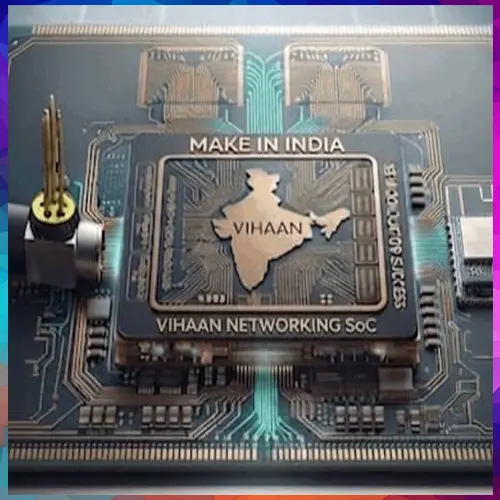
THE GREAT SHAREPOINT BREACH: How Zero-Day Vulnerabilities Exposed Hundreds of Organizations Worldwide

Technology Disruption

THE GREAT SHAREPOINT BREACH: How Zero-Day Vulnerabilities Exposed Hundreds of Organizations Worldwide

For RICHARD HARBRIDGE, Microsoft MVP and migration strategist at ShareGate , the breach represents more than just a security incident—it's a clarion call for organizational transformation. "Today's Microsoft breach is a critical reminder for organizations still relying on legacy SharePoint systems," Harbridge emphasized. "If you're running SharePoint Server 2016, 2019, or SPSE and haven't patched, the first step is immediate isolation and emergency remediation." Nation-state actors and ransomware groups exploit critical flaws in Microsoft's enterprise collaboration platform, triggering an urgent modernization imperative The cybersecurity world was jolted awake in late July 2025 when researchers at Eye Security discovered something alarming: a sophisticated campaign targeting Microsoft SharePoint servers had been quietly compromising organizations worldwide. What started as routine threat hunting quickly revealed one of the most significant zero-day exploitation campaigns of the year, affecting hundreds of companies, government agencies, and critical infrastructure operators across the globe. At the heart of this digital siege was CVE- 2025-53770, a critical vulnerability with a maximum CVSS score of 9.8 that allowed attackers to execute code remotely on vulnerable SharePoint servers without any authentication. But this wasn't just another security flaw —it was a devastating bypass of patches Microsoft had released just weeks earlier, demonstrating how quickly threat actors can adapt their tactics to stay ahead of defensive measures. THE SCOPE OF DEVASTATION The numbers paint a sobering picture of the attack's reach. Eye Security tracked more than 75 breaches, including compromises at US federal and state agencies, energy companies, universities, and an Asian telecommunications provider. Reports indicate hundreds of organizations were ultimately affected, with victims spanning from European government agencies to a state legislature in the eastern United States. The breach campaign caught the attention of the highest levels of US cybersecurity leadership. The U.S. Cybersecurity and Infrastructure Security Agency (CISA) was made aware of the exploitation by a trusted partner and immediately reached out to Microsoft to take action, according to Acting Executive Assistant Director for Cybersecurity Chris Butera. The urgency was evident when CISA added CVE-2025- 53770 to its Known Exploited Vulnerabilities (KEV) catalog on July 20, 2025, signaling immediate risk to critical infrastructure. THE TECHNICAL ANATOMY OF TOOLSHELL 2.0 The attack campaign, dubbed " ToolShell ," represents a sophisticated evolution of exploitation techniques that security researchers first observed at the Pwn2Own hacking competition in Berlin in May 2025. CVE-2025-53770 is a bypass of the fix for CVE-2025-49704, while CVE-2025-53771 is a bypass of the fix for CVE-2025-49706—both vulnerabilities that Microsoft had patched in their July 2025 Patch Tuesday release. The attack chain operates in two devastating stages. First, attackers send a POST request to /_layouts/15/ ToolPane . aspx using a crafted Referer header to bypass authentication. Then, with authenticated access to the vulnerable endpoint, they exploit an insecure deserialization vulnerability by submitting a malicious payload in the POST body. What makes this attack particularly insidious is its persistence mechanism. The malicious activity involves delivering ASPX payloads via PowerShell, which is then used to steal the SharePoint server's MachineKey configuration, including the ValidationKey and DecryptionKey , to maintain persistent access. As cybersecurity expert Jake Williams noted, "With these keys in hand, attackers can craft forged VIEWSTATE payloads that SharePoint will accept as valid—enabling seamless remote code execution. This approach makes remediation particularly difficult—a typical patch would not automatically rotate these stolen cryptographic secrets, leaving organizations vulnerable even after they patch." STATE-SPONSORED ACTORS AND RANSOMWARE GROUPS JOIN THE FRAY The exploitation campaign attracted a rogues' gallery of threat actors that reads like a who's who of global cybercrime. Microsoft observed two named Chinese nation- state actors, Linen Typhoon and Violet Typhoon, exploiting these vulnerabilities targeting internet-facing SharePoint servers. Additionally, another China-based threat actor, tracked as Storm-2603, was observed exploiting these vulnerabilities to deploy ransomware. This convergence of nation-state actors and cybercriminals underscores the vulnerability's strategic importance. SharePoint's deep integration with Microsoft's platform, including services like Office, Teams, OneDrive and Outlook, makes it especially valuable to attackers because a compromise doesn't stay contained—it opens the door to the entire network. The ransomware angle adds another layer of urgency to the threat landscape. Security researchers have documented how Storm-2603 exploited these vulnerabilities to distribute Warlock ransomware, demonstrating how zero-day vulnerabilities can quickly become weapons in ransomware arsenals. THE MODERNIZATION IMPERATIVE For Richard Harbridge , Microsoft MVP and migration strategist at ShareGate , the breach represents more than just a security incident—it's a clarion call for organizational transformation. "Today's Microsoft breach is a critical reminder for organizations still relying on legacy SharePoint systems," Harbridge emphasized. "If you're running SharePoint Server 2016, 2019, or SPSE and haven't patched, the first step is immediate isolation and emergency remediation." Harbridge's assessment of the situation is stark: if the telltale spinstall0.aspx file is present on a system, organizations should "assume full compromise." This means taking servers offline, rotating all service credentials and machine keys, scanning for persistence tools like ToolShells , and rebuilding any machines showing signs of tampering. But Harbridge sees an opportunity in this crisis. "The cloud version of SharePoint isn't vulnerable to this," he noted. "Every hour an organization remains on-premises increases its exposure and the operational burden on IT. It's time to treat modernization as part of your incident response strategy, not just a future initiative." The migration path he advocates involves moving to SharePoint Online, which benefits from "real-time threat detection, automated logging, and continuous patch cycles that outpace adversaries." Tools like ShareGate's migration suite can facilitate this transition by moving terabytes of content with full fidelity, including metadata and permissions, with zero downtime. CYNTHIA KAISER, SVP of Halcyon's Ransomware Research Center and former Deputy Director of the FBI's Cyber Unit, brings a law enforcement perspective to the crisis that's particularly sobering. "Right now, people should be just as worried about what happened as what happens next," Kaiser warned. "Once these vulnerabilities are discovered, we have historically seen ransomware groups quickly operationalize them against victims." THE RANSOMWARE CONNECTION Cynthia Kaiser, SVP of Halcyon's Ransomware Research Center and former Deputy Director of the FBI's Cyber Unit, brings a law enforcement perspective to the crisis that's particularly sobering. "Right now, people should be just as worried about what happened as what happens next," Kaiser warned. "Once these vulnerabilities are discovered, we have historically seen ransomware groups quickly operationalize them against victims." Kaiser's concern extends beyond the immediate exploitation. "Once these criminals are in a network, they can hide, lie in wait, and cause untold damage to a company," she explained. Her recommendation focuses on behavioral detection: "Organizations should be thinking seriously about whether they have the right tools that detect and stop ransomware activity at the behavioral level before disruption occurs." This perspective aligns with broader industry observations about the evolving threat landscape. Unit 42 and other organizations, including Microsoft, have observed widespread active exploitation of these vulnerabilities, with telemetry revealing a clear evolution in the SharePoint ToolShell attack campaign progressing through two distinct phases. DETECTION AND RESPONSE CHALLENGES The SharePoint vulnerabilities present unique challenges for detection and response teams. The Canadian Centre for Cyber Security noted that AMSI may not consistently offer comprehensive protection against this form of exploitation, as threat actors frequently adapt their methods to evade detection. Organizations are urged to look for specific indicators of compromise, including the presence of the file C:\PROGRA1\ COMMON1\MICROS1\WEBSER1\16\ TEMPLATE\ LAYOUTS\ spinstall0 . aspx and network logs showing scanning or exploitation attempts from specific IP addresses, particularly since July 17, 2025. Microsoft has provided detailed hunting queries for organizations using their security tools, focusing on the creation of the spinstall0.aspx file and process creations where w3wp.exe spawns encoded PowerShell involving suspicious file paths. THE BROADER SECURITY IMPLICATIONS The SharePoint breach illuminates several critical trends in the cybersecurity landscape. First, the speed at which threat actors can bypass vendor patches demonstrates the arms race between defenders and attackers. Microsoft patched CVE-2025-49704 and CVE-2025-49706 in the July 2025 Patch Tuesday release, but threat actors recently found new paths to exploit the same core logic, prompting Microsoft to assign new CVEs and release emergency fixes. Second, the incident underscores the strategic value of enterprise collaboration platforms to threat actors. SharePoint servers often serve as gateways to broader corporate networks, containing sensitive documents, user credentials, and connections to other critical business systems. Third, the involvement of multiple nation-state actors and ransomware groups in exploiting the same vulnerabilities highlights how quickly valuable exploits proliferate across different threat actor communities. MICROSOFT'S RESPONSE AND REMEDIATION Microsoft's response to the crisis evolved rapidly as the scope of the threat became clear. The company released security updates that fully protect customers using all supported versions of SharePoint affected by CVE-2025-53770 and CVE-2025-53771, urging customers to apply these updates immediately. The company's remediation guidance emphasizes multiple layers of protection: applying the latest security updates, configuring Antimalware Scan Interface (AMSI) integration in SharePoint, deploying Microsoft Defender Antivirus on all SharePoint servers, and rotating SharePoint server ASP.NET machine keys and restarting IIS. For organizations unable to immediately patch, Microsoft recommends disconnecting affected servers from the internet until updates can be applied, or implementing authentication gateways to limit unauthenticated traffic. LESSONS FOR THE INDUSTRY The SharePoint breach offers several critical lessons for organizations and the cybersecurity industry as a whole. First, the incident demonstrates that patch bypass vulnerabilities are becoming increasingly common and sophisticated, requiring organizations to think beyond traditional patch management cycles. Second, the rapid exploitation of these vulnerabilities by multiple threat actor groups underscores the need for behavioral detection capabilities that can identify malicious activity even when using novel techniques. Third, the incident highlights the security advantages of cloud-native solutions over on-premises infrastructure, particularly for collaboration platforms that are frequent targets of attack. Looking Forward: The Cloud Imperative As organizations assess the damage and plan their response, many are reaching the same conclusion as Harbridge : the future lies in cloud migration. The SharePoint incident serves as a powerful case study in the security benefits of moving away from on-premises infrastructure that requires constant vigilance and rapid patching. Cloud-based SharePoint Online demonstrated its resilience during this crisis, remaining unaffected by vulnerabilities that devastated on-premises deployments. This immunity stems from Microsoft's ability to implement protections and patches across its cloud infrastructure more rapidly and comprehensively than individual organizations can manage on their own systems. For Chief Information Security Officers and IT leaders, the breach presents an opportunity to accelerate digital transformation initiatives that may have been progressing slowly due to cost or complexity concerns. The potential impact of a successful SharePoint compromise —including data theft, ransomware deployment, and lateral movement throughout corporate networks— may justify the investment required for cloud migration. THE BOTTOM LINE The SharePoint zero-day exploitation campaign represents more than just another cybersecurity incident—it's a fundamental challenge to how organizations think about infrastructure security and modernization. With hundreds of organizations compromised and nation-state actors actively exploiting these vulnerabilities, the incident serves as a stark reminder that legacy on-premises systems present increasingly untenable risks in today's threat landscape. For organizations still running on- premises SharePoint servers, the message from security experts is clear: immediate patching is essential, but long-term security requires a fundamental shift toward cloud- based solutions that can provide the rapid response and comprehensive protection that modern threats demand. As Harbridge noted, "It's not just about recovering from CVE- 2025-53770—it's about making sure the next zero-day doesn't land on your doorstep." The race between attackers and defenders continues to accelerate, but this incident has shown that organizations with the right architecture and response capabilities can weather even the most sophisticated attacks. The question now is whether other organizations will learn from this crisis and take the steps necessary to protect themselves against the next inevitable wave of attacks.