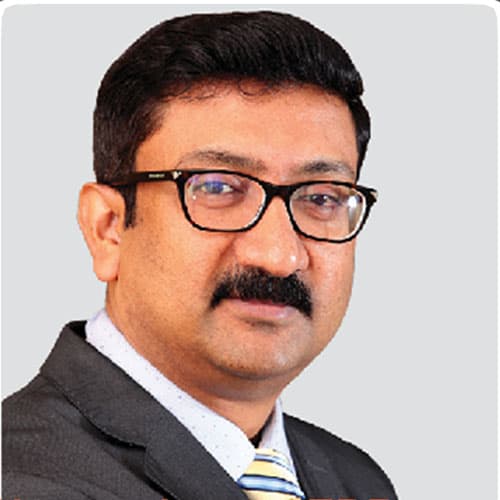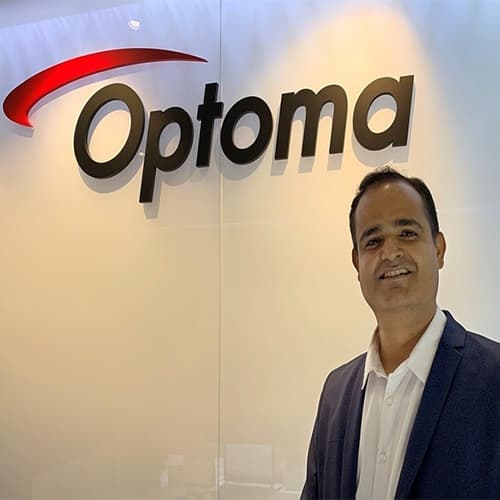

Veeam Software launched its VeeamON Tour India 2026 in Mumbai, bringing together enterprise leaders, government stakeholders, partners and customers to address data governance, protection and trust as AI adoption accelerates. The event focused on DPDP compliance, data localization, ransomware resilience, sovereign-ready infrastructure and AI governance, while showcasing innovations including the DataAI Command Platform and Veeam Data Platform. Speaking on the sidelines, Sandeep Bhambure, Vice President and Managing Director, India & SAARC, Veeam Software highlighted how these solutions help organizations strengthen security, ensure compliance and enable workload portability across evolving hybrid, virtualized and containerized IT environments.
AI, how does Veeam plan to help enterprises balance rapid AI adoption with strong data compliance, privacy, and security governance?
One of the biggest inhibitors to AI adoption at enterprise scale has been the absence of a dedicated AI and data trust layer. Existing security frameworks from the pre-AI era were primarily designed around preventing unauthorised human access to sensitive data through perimeter-based security models such as network and application security. However, these approaches are no longer sufficient in the AI era because organisations now also need controls for AI agents, not just humans.
At the same time, the unstructured data landscape is expanding rapidly. Globally, nearly 230 zettabytes of information are expected to be created, with almost 90% of it being unstructured data. In the BI era, enterprises largely operated on structured and transactional data. However, the AI era is fundamentally driven by unstructured data. This means that large volumes of enterprise data that previously remained dormant are now becoming accessible and usable through LLMs and AI agents.
Alongside this, the threat landscape is becoming increasingly sophisticated. AI agents themselves are now emerging as one of the biggest threats to enterprise data security, with one in eight cyberattacks being carried out by AI agents and a significant number of attacks originating from shadow data or shadow AI environments.
For enterprises, the challenge of scaling AI securely has therefore become extremely complex. The missing layer between enterprise data sources, AI models, AI control planes and industry-specific agents is the AI and data trust layer. This is precisely what Veeam is addressing through the Data AI Command Platform.
Through this single platform, Veeam enables customers to manage security, compliance, governance, privacy and data resilience within one integrated framework. Traditionally, organisations would have needed multiple disconnected products to achieve these capabilities, resulting in fragmented environments and operational complexity. The Data AI Command Platform instead delivers these foundational capabilities through a unified architecture designed specifically for AI-scale environments.
At the core of the platform is the Data Command Graph, which provides enterprises with complete visibility into their data estate at a granular level. This allows organisations to understand whether data is mission-critical, whether it contains PII, how frequently it is being accessed, who or what is accessing it and whether it is relevant to regulatory frameworks such as GDPR, DPDP or RBI- related compliance requirements.
With the upcoming Veeam Data Platform V13.1, is Veeam seeing a clear shift from legacy hypervisors to open-source and container-based environments, and how is it capitalising on this transition?
Yes, we are seeing a growing number of organisations moving even mission- critical applications away from traditional Broadcom VMware environments toward alternative hypervisors and increasingly toward containerised environments as well. Application modernisation is happening at a significant scale, particularly within the financial services industry.
As enterprises modernise workloads from traditional virtualised environments into Kubernetes and other container platforms, the earlier approaches to data protection and resilience no longer remain sufficient. Organisations now require native Kubernetes backup and recovery capabilities specifically designed for these modern environments.
This is an area where Veeam is helping customers through its Kasten solution, which is designed to support Kubernetes-native backup and recovery requirements.
Veeam already supports a broad range of hypervisors and has been helping enterprises migrate workloads from one hypervisor platform to another. Because of the way Veeam’s backup architecture works, customers can back up workloads from virtually any virtualised platform and recover them onto another platform. This flexibility is becoming increasingly valuable as enterprises explore hypervisor portability strategies.