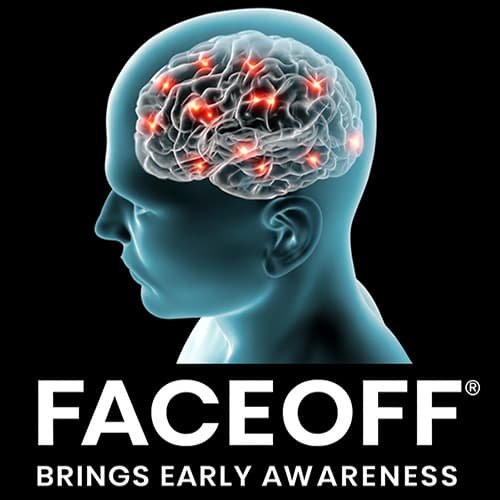
Autoimmune encephalitis is a rare, often misunderstood neurological disorder in which the body’s immune system mistakenly attacks healthy brain cells. This inflammation disrupts key cognitive functions — memory, thinking, language, and behaviour.
Early symptoms often resemble stress, fatigue, anxiety, or age-related decline, making the condition difficult to identify. As it progresses, individuals may experience confusion, seizures, hallucinations, or sudden changes in personality. Timely diagnosis and treatment are critical, as early medical intervention dramatically improves recovery outcomes.
FaceOff Technologies Can Help in Early Awareness & Digital Health Support
While Face Technologies cannot diagnose or treat autoimmune encephalitis, its AI-powered behavioural and cognitive analytics can play an important preventive and supportive role in the broader health ecosystem:
1.AI-Based Cognitive Pattern Monitoring
Face Technologies’ behavioural-AI systems can detect subtle changes in reaction time, attention, facial cues, or speech patterns. These early deviations often appear during neurological inflammation and can prompt users or caregivers to seek timely medical evaluation.
2. Identity-Protected Health Data Platforms
Through secure identity verification and privacy-preserving data management, Face Technologies enables safe sharing of sensitive health records with neurologists and caregivers — essential in managing long-term neurological illnesses.
3. Real-Time Anomaly Alerts
AI models can flag unusual behavioural shifts in patients already diagnosed with autoimmune conditions, helping families monitor worsening symptoms or cognitive decline between clinical visits.
4. Safer Tele-Neurology Interactions
With deepfake-proof identity verification, Face Technologies ensures that consultations, health data exchanges, and remote monitoring are secure from impersonation, fraud, or misinformation.
5. AI Tools for Patient Support Ecosystems
Cognitive-assistive features, reminders, mood-tracking, and digital logs help patients and caregivers document symptoms more accurately — improving the quality of conversations with doctors.
In summary, Face Technologies does not replace medical care. But it strengthens early detection, protects health data, supports remote monitoring, and ensures secure digital interactions, enabling faster clinical intervention — which is crucial in conditions like autoimmune encephalitis.