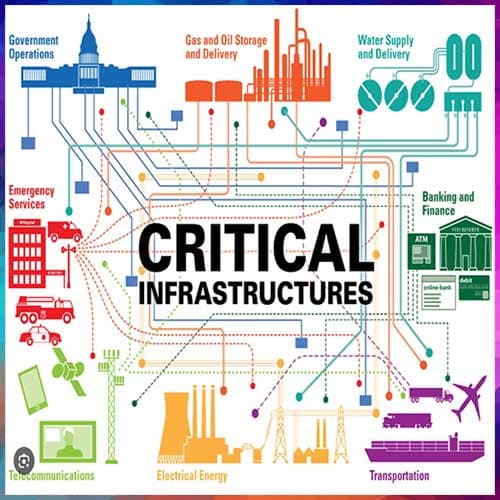
Cyberattacks against critical infrastructure are becoming a serious global concern as threat actors increasingly target operational technology, industrial control systems and internet-connected devices. Recent U.S. government advisories have warned of ongoing exploitation of programmable logic controllers across water, wastewater, energy and government infrastructure. Some incidents have resulted in operational disruption and financial losses.
The threat has become particularly concerning with the emergence of AI-assisted attacks. U.S. agencies including the FBI, CISA and NSA have warned that attackers can use AI-generated scripts to accelerate reconnaissance and attacks against industrial environments. This significantly reduces the technical barrier for adversaries and increases the speed at which attacks can evolve.
A separate recent attack on Micro-Comm, a U.S. supplier of programmable logic controllers used in wastewater processing, reportedly resulted in the theft of around 644 GB of data comprising approximately 850,000 files. The FBI is investigating the incident. Authorities have said this breach appears separate from other attacks linked to Iranian cyber activity.
These developments underline an important lesson for India. As the country rapidly digitizes banking, telecom, manufacturing, power, transportation and government infrastructure, cybersecurity capabilities must extend beyond deploying security products. Organizations need professionals capable of understanding what their systems are telling them through logs.
This is where platforms such as Wazuh can become valuable learning tools. Wazuh collects and analyzes logs from endpoints, applications and network devices, applying decoding and rule matching to identify suspicious activities and generate security alerts. It also supports threat detection, incident response and compliance monitoring.
For India's young cybersecurity professionals, learning practical log analysis could therefore be as important as understanding theoretical security concepts. Building hands-on labs around Wazuh, SIEM operations, threat hunting, incident investigation and MITRE ATT&CK can help students understand how seemingly insignificant events can collectively reveal an intrusion.
However, Wazuh or any SIEM should not be treated as a complete security solution by itself. Critical infrastructure protection also requires network segmentation, strong identity controls, vulnerability management, secure configurations, endpoint protection, continuous monitoring and skilled human analysis.
The message for India's youth is clear: learn to read the digital footprints attackers leave behind. In an AI-driven threat environment, professionals who can correlate logs, identify anomalies and investigate attacks will become increasingly valuable to enterprises, government agencies and security operations centres.
Perhaps it is time to encourage India's next generation of cyber defenders to “WAZUH” their way into cybersecurity—not merely learning tools, but learning how to think like defenders.