
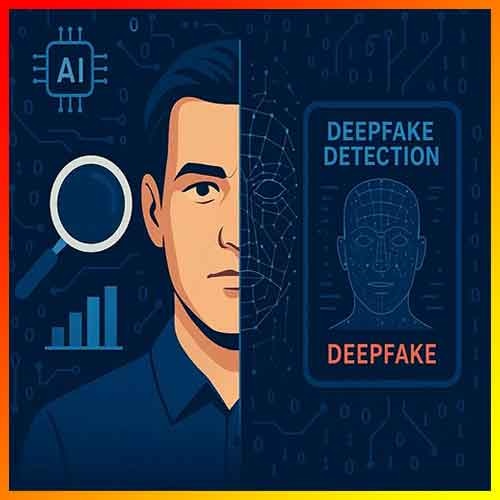
The rise of generative AI has reshaped cybersecurity, enabling attackers to impersonate trusted individuals through scalable social engineering. Large Language Models (LLMs) now power sophisticated voice and video deepfakes, challenging traditional defense mechanisms. Faceoff Technologies has recently introduced the solution for Deepfake detection through Multomodal AI Models.
Recent threat reports reveal alarming trends. CrowdStrike's 2025 Global Threat Report recorded a 442% surge in voice phishing (vishing) within a year, driven by AI impersonations. Verizon's Data Breach Investigations Report continues to rank social engineering among the top breach patterns. Notably, North Korean threat actors are using deepfakes to infiltrate organizations through fake identities in online job interviews.
Three key factors amplify this threat:
1. AI-driven deception is cheap and scalable, requiring minimal reference data.
2. Virtual platforms expose trust gaps, with inherent assumptions about user identities.
3. Detection tools rely on probability, not proof, which is inadequate for high-stakes interactions.
Relying on user vigilance or AI-based detection alone is no longer sufficient. As deepfakes improve, prevention must pivot to provable trust models.
Effective defense requires:
â— Cryptographic Identity Verification for meeting access.
â— Device Integrity Checks to block compromised endpoints.
â— Visible Trust Indicators during interactions, providing real-time authenticity assurance.
Prevention should create environments where impersonation becomes impossible, safeguarding critical conversations like board meetings, financial transactions, and sensitive collaborations. Moving beyond detection, this proactive approach ensures AI-driven attacks are stopped before they infiltrate.