

As AI-powered cybercrime accelerates, the financial industry is rapidly moving beyond passwords and one-time authentication toward continuous, behavior-based identity verification. Indian behavioral biometrics company FaceOff Technologies is positioning itself at the forefront of this transformation with a suite of AI and machine learning solutions designed to detect fraud before money ever leaves an account.
FaceOff's platform continuously analyzes thousands of behavioral, application, device, and network signals—including keystroke dynamics, touch gestures, mouse movements, device handling patterns, and contextual intelligence—to distinguish legitimate users from fraudsters in real time. By combining behavioral biometrics with AI-driven risk analytics, the platform aims to identify account takeovers, synthetic identities, and sophisticated fraud attempts at the earliest stages of a digital banking session.
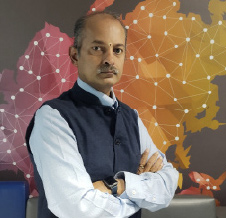
According to Dr. Deepak Kumar Sahu, Founder & CEO of FaceOff Technologies, behavioral intelligence has become one of the strongest indicators of digital trust because every individual interacts with devices in a unique way that is extremely difficult for criminals or AI-generated attacks to replicate.
"Behavioral signals provide a powerful way to distinguish legitimate users from fraudsters. When intelligence is securely shared across financial institutions, AI becomes even more effective at identifying emerging fraud patterns before they become large-scale attacks," said Dr. Sahu.
He noted that account takeovers, scams, and identity fraud now cost the global economy more than US$1 trillion annually, with generative AI dramatically increasing the scale and sophistication of phishing, deepfake, and social engineering attacks. Rather than waiting until a payment transaction occurs, FaceOff focuses on identifying suspicious behavior during login, account access, and customer interaction—intercepting threats before they reach the point of payment.
This represents a fundamental shift in cybersecurity strategy. Traditional fraud detection systems typically analyze transactions after they are initiated, whereas behavioral biometrics continuously verify identity throughout the customer journey. Instead of relying solely on passwords, OTPs, or one-time biometric checks, modern platforms establish trust by continuously validating who the user actually is, based on behavior, biometrics, device intelligence, and contextual risk.
Another key differentiator is the growing value of collaborative behavioral intelligence. Fraud detection models become significantly more accurate as they learn from larger and more diverse attack patterns. A criminal's behavioral fingerprint often appears differently across organizations, but AI models trained on intelligence gathered from multiple institutions can recognize emerging threats far earlier than isolated systems operating independently.
For India's BFSI sector, this capability is increasingly strategic. As digital banking adoption accelerates and AI-driven fraud becomes more sophisticated, financial institutions are seeking sovereign, homegrown security platforms that provide advanced fraud prevention while keeping critical identity intelligence within national regulatory and compliance frameworks.
The broader market is also entering a period of consolidation as global payment and cybersecurity leaders move further upstream—from detecting fraudulent transactions to preventing fraudulent access itself. That shift raises the competitive bar for behavioral biometrics vendors while reinforcing the importance of indigenous AI platforms capable of delivering continuous authentication, explainable AI, and privacy-first fraud prevention tailored to India's banking ecosystem.
As cyber threats evolve from static attacks to intelligent, adaptive campaigns, the future of digital trust is no longer based on what customers know, but on how they behave. Behavioral AI is emerging as one of the strongest foundations for securing the next generation of financial services—and FaceOff Technologies aims to ensure that fraud is stopped long before a payment is ever made.

See What’s Next in Tech With the Fast Forward Newsletter









Tweets From @varindiamag
Nothing to see here - yet
When they Tweet, their Tweets will show up here.