
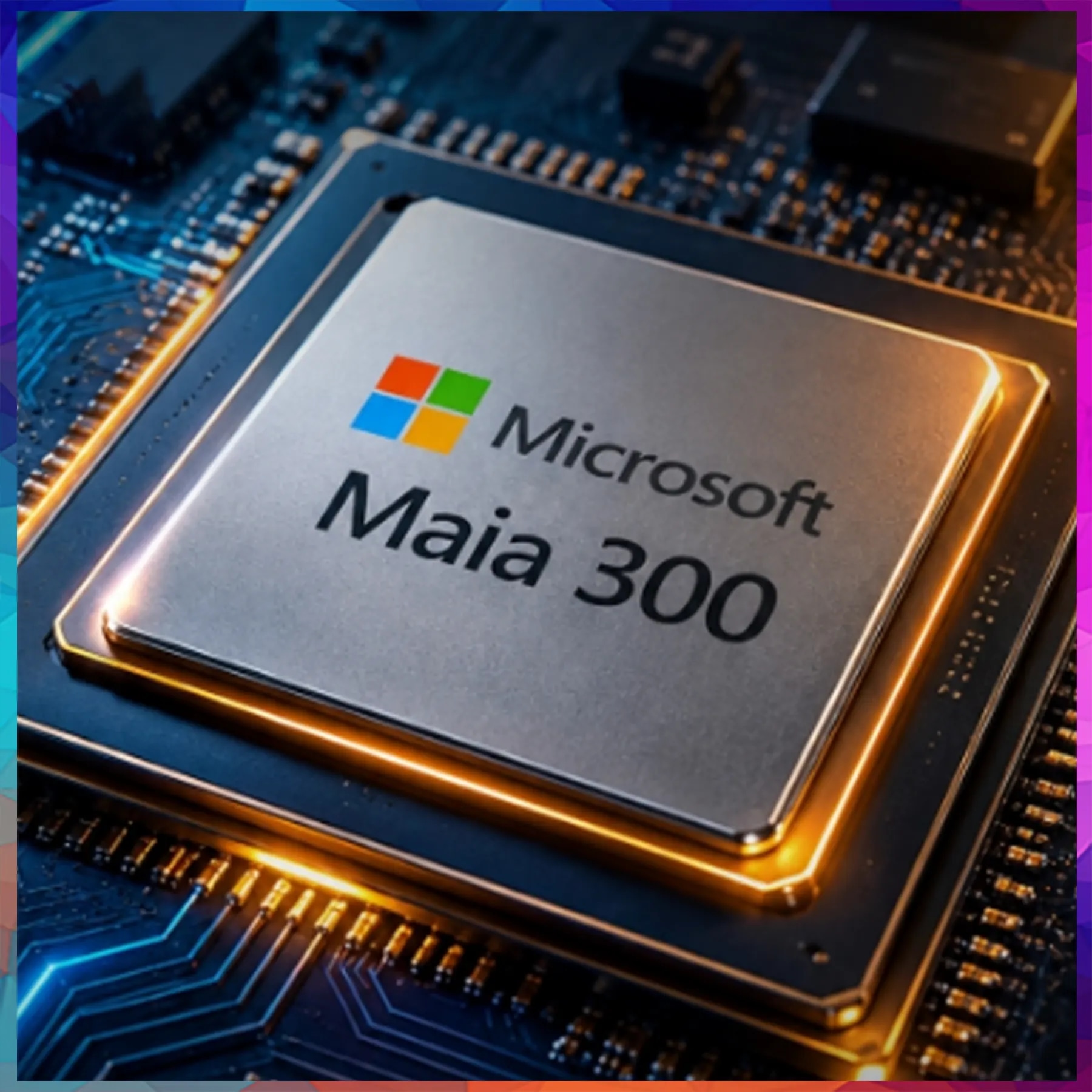
The third-generation processor promises 40 per cent more AI tokens per unit of power, with production deployment planned for 2027 as Microsoft seeks to run more of its AI services on its own hardware.
Microsoft has introduced Maia 300, the third generation of its in-house artificial intelligence chip, signalling a push to run more of its AI services on its own hardware rather than leaning heavily on processors from Nvidia and AMD. The company plans to begin production deployment in 2027, aiming to make the Maia family the main system for handling AI requests across its products.
CEO Satya Nadella announced the chip on X, describing it as the company’s biggest bet yet on its own silicon. He said Microsoft would scale Maia deployments to multi-gigawatt capacity from next year. The move reflects a wider trend among technology firms, which are building custom chips to improve performance and keep a lid on the cost of running AI as demand for computing keeps climbing.
Efficiency and performance claims
Microsoft says Maia 300 is built to deliver more performance while consuming less power. The company claims it will produce 40 per cent more AI tokens per unit of power than leading GPU-based systems. Tokens are the units of text or data an AI model processes, so higher output for the same electricity can make AI services cheaper to operate.
The company also says a rack holding 96 Maia 300 accelerators can reach up to seven times the token throughput of a comparable Maia 200 setup. The chip is aimed at demanding workloads, including complex reasoning, longer conversations and agent-style tasks that involve multiple steps.
Maia 300 uses a chiplet-based design that separates computing, memory control and input-output functions. This lets each part of the chip use the technology best suited to its role.
Will Nvidia and AMD be sidelined?
Not entirely. Microsoft wants its own chips to take on a larger share of inference, the stage at which trained AI models respond to user requests. Nvidia and AMD hardware, however, will remain part of its infrastructure, particularly for training AI models.
Nvidia’s graphics processing units are still widely used for AI work, and Microsoft has depended on them to power its cloud and support AI development. Building its own processors gives the company an additional option as capacity demands rise, and could help control operating costs, since electricity is a major expense for large data centres.
Track record and what it means for users
Microsoft launched its first Maia chip in 2023, followed by Maia 200 in January 2026. The company says Maia 200 is already handling production workloads in services such as Microsoft Copilot, GitHub Copilot and Microsoft Foundry.
For customers, the benefits are not guaranteed. Microsoft has not announced any price cuts, though greater chip efficiency could lower the cost of running AI services and let the company handle more requests on the same power. It has indicated that parts of Microsoft 365 Copilot could become faster with Maia 300, but real-world gains will depend on how the chip is deployed and how individual services are optimised.
The performance figures cited are Microsoft’s own claims and have not been independently verified.