
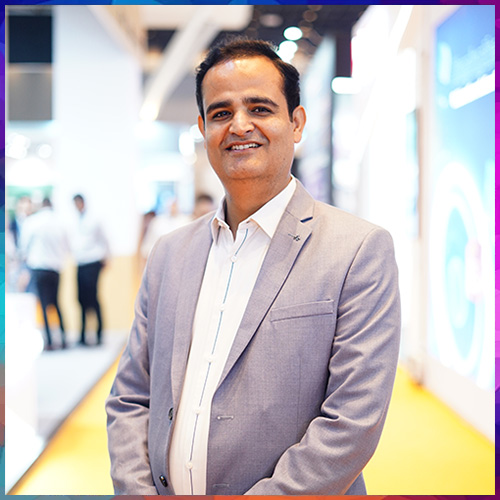
By Mr. Vijay Sharma, Managing Director, Optoma India
Walk into an actual Indian classroom, and you'll quickly realise it tells a very different story than a product demo ever could. A projector that looks flawless under studio lighting has to somehow hold up against a window with no curtains, a power supply that occasionally dips, and a teacher who has exactly forty minutes to get through a lesson plan. This is the real test for AV technology in Indian education, and increasingly, it's shaping the entire direction of the industry.
Why the Classroom Is the Toughest Test There Is
A solution may look genuinely impressive in a controlled demonstration, but its real value only becomes clear once it's placed inside an actual classroom, dealing with changing light through the day, limited on-site technical support, and a teacher working within a fixed lesson plan who simply doesn't have time to troubleshoot. This is where practical intelligence starts to matter. Features like adaptive brightness and colour, intelligent framing for hybrid classes, and interactive annotation directly change how a lesson feels for both teacher and student. The classroom is quietly pushing the whole industry to move beyond spec sheets, toward technology that genuinely improves participation, collaboration, and learning, without adding complexity to an already busy school day.
A Market Growing Alongside Real Classroom Need
This shift is happening against the backdrop of genuine, measurable momentum. The global EdTech and smart classroom market is valued at around USD 254.67 billion in 2026, and is projected to nearly double by 2030, growing at close to 19.6% a year. In India specifically, government programmes are accelerating this in real, tangible ways. The PM SHRI scheme alone is upgrading 14,500 schools with smart classrooms and digital libraries, backed by an outlay of ₹27,360 crore, while Delhi's CM SHRI initiative is working to convert thousands of classrooms into AI-enabled smart classrooms. What's genuinely encouraging is that Tier-2 and Tier-3 schools are increasingly leading this adoption curve, not lagging behind it.
Rethinking What "The Right Fit" Actually Means
Schools today need to evaluate technology based on how well it fits the realities of their classrooms, rather than simply comparing specifications or price points on paper. Reliability, ease of installation, low maintenance, connectivity, and total cost of ownership are becoming just as important as any single feature. In many Tier-2 and Tier-3 schools, a solution genuinely needs to work without additional civil work, specialised infrastructure, or recurring consumable costs, and local service and technical support matter just as much as the product itself. Most importantly, technology should adapt to the classroom, not the other way around. A solution that stays useful and dependable across multiple academic years is, in the end, simply the better investment.
Closing the Gap Between What's Possible and What's Practical
One of the biggest gaps in Indian education right now sits between what technology can offer and what a classroom can realistically support. Infrastructure remains genuinely challenging in rural and semi-urban schools, where power, connectivity, and technical expertise can be limited. Teacher training matters just as much, since adoption tends to struggle whenever educators receive equipment without the methodology or support to use it well. There's also real value in stronger interoperability between displays, classroom software, and content platforms, since solutions built primarily around metro classrooms don't always translate smoothly to district-level schools. Designing around these everyday realities, and making technology simpler, more reliable, and scalable across very different classroom environments, is where the industry's real opportunity lies.
From Content Delivery to Genuine Classroom Collaboration
Projectors and displays are quietly evolving from simple content-delivery tools into far more interactive, intelligent classroom platforms. The value isn't just a bigger or sharper image anymore; it's enabling teachers and students to interact with content more naturally. Capabilities like adaptive brightness and colour based on surrounding light, intelligent content framing for hybrid or recorded classes, and interactive touch and annotation are turning a simple projector into a genuine collaboration tool, letting teachers annotate, run activities, and bring in multimedia content without constantly switching between devices. The next generation of projection will be defined by intelligence, interaction, and adaptability, working with the classroom exactly as it is.
What This Means for Sustainable Adoption
Making this shift meaningful will require a genuine change in how technology is designed, procured, and implemented, favouring integrated solutions over scattered, siloed tools, and weighing reliability and total cost of ownership alongside the initial purchase price. Teacher training remains equally essential, because technology only creates real outcomes once educators feel comfortable weaving it into how they actually teach. Above all, technology needs to adapt to a classroom's existing conditions, rather than asking the classroom to be redesigned around it, and that, more than any single feature, is what will make digital adoption in Indian schools genuinely sustainable.

See What’s Next in Tech With the Fast Forward Newsletter




Tweets From @varindiamag
Nothing to see here - yet
When they Tweet, their Tweets will show up here.