


Artificial intelligence is no longer simply another technology cycle. It is becoming the operating system of modern business, reshaping how organisations make decisions, serve customers, manage talent and create value. The question is no longer whether AI will affect your industry, but how quickly you can redesign around it. Said Mr. Mike Walsh,CEO-Tomorrow said on his keynote address in Global Next 2026 Summit 2026 held on 2nd to 4th September in Singapore being organised by Redington.
For decades, digital transformation meant converting physical processes into digital ones. AI changes the equation. Instead of merely digitising existing workflows, organisations can now rethink the workflow itself—using machines that predict, generate, reason and increasingly act autonomously.
This shift will fundamentally change competitive advantage. Tomorrow's winners will not necessarily be companies with the most data, employees or technology. They will be organisations capable of combining human judgement with machine intelligence at extraordinary speed.
Mr. Mike Walsh further said,Leadership must change accordingly. In an algorithmic organisation, leaders cannot make every decision themselves. Their role increasingly becomes designing the systems, rules and culture through which better decisions can be made continuously.
AI agents will accelerate this transformation. They will move beyond answering questions to coordinating workflows, analysing information, communicating with customers and executing increasingly complex business processes.
But automation alone is not transformation. If you apply AI to an inefficient process, you may simply create inefficiency at machine speed. Reinvention requires questioning why the process exists before deciding how AI should improve it.
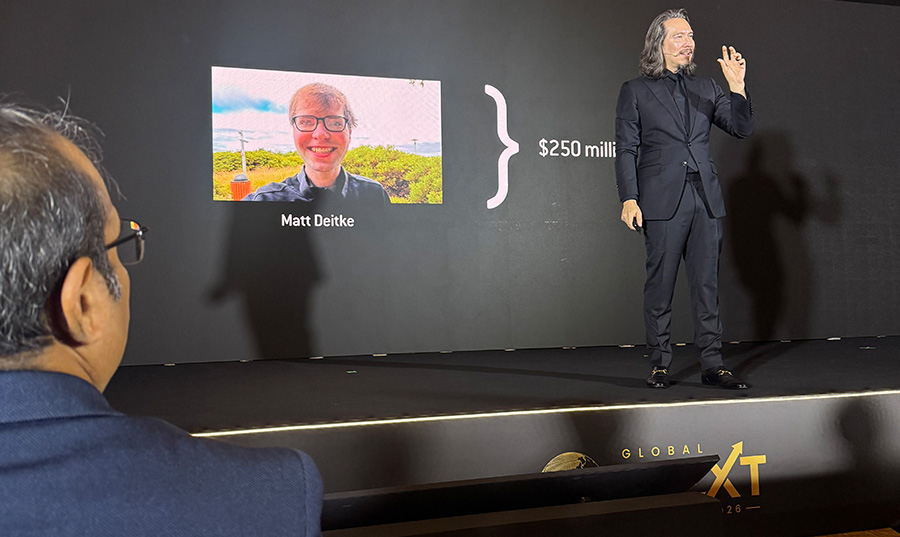
The workforce will also evolve. The future is less about humans competing against machines and more about people learning to orchestrate them. AI literacy will become a fundamental leadership and workforce capability.
That makes trust critical. As algorithms influence consequential decisions, organisations must ensure transparency, accountability, security and responsible governance. Intelligence without trust cannot become sustainable business infrastructure.
Every organisation should therefore ask three questions: What decisions can AI improve? What processes can AI reinvent? And what uniquely human capabilities should we strengthen as machines become more capable?
Finally Mike Walsh said, the AI revolution will ultimately reward organisations prepared to redesign themselves—not simply adopt new tools. The future belongs to algorithmic leaders who understand that AI is not just rewriting technology. It is rewriting every business.

See What’s Next in Tech With the Fast Forward Newsletter


Tweets From @varindiamag
Nothing to see here - yet
When they Tweet, their Tweets will show up here.


