

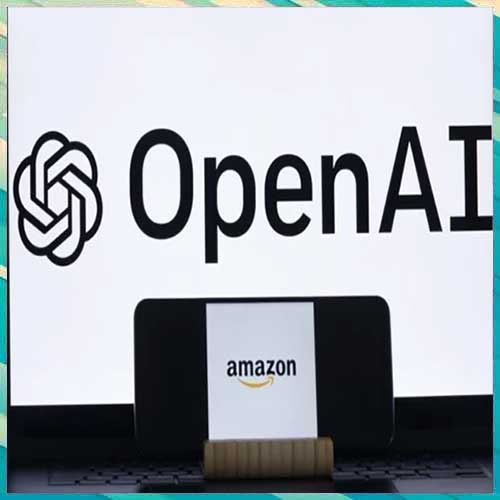
OpenAI’s reported $110 billion funding round, led by a staggering $50 billion commitment from Amazon, marks a defining moment in the AI infrastructure race. Beyond capital infusion, this move restructures OpenAI’s strategic alliances and reconfigures the long-standing dynamic between OpenAI and Microsoft.
For Amazon, this is not a passive investment—it is an infrastructure land grab. By securing a commitment for OpenAI to utilize up to 2 gigawatts of Trainium chip capacity, Amazon Web Services (AWS) strengthens its ambition to reduce dependence on Nvidia GPUs and position its proprietary silicon as a serious contender in large-scale AI training and inference.
The partnership also deepens product integration. AWS will reportedly become the exclusive third-party cloud distribution provider for OpenAI’s enterprise agent platform, embedding advanced AI capabilities directly into Amazon Bedrock. This creates a powerful enterprise funnel, enabling AWS to offer tightly integrated AI deployment at scale.
For Microsoft, the implications are significant. While it retains Azure as the exclusive provider for OpenAI’s stateless APIs, it effectively loses its aura of exclusivity. Enterprise customers wary of vendor lock-in may welcome this diversification, but Microsoft must now compete on integration strength rather than privileged access.
Microsoft’s absence from the funding round may reflect strategic hedging. The escalating capital demands of frontier AI models—spanning compute, data centers, and chip design—pose substantial financial risks. Diversifying investments across multiple AI players could provide long-term optionality.
The broader shift signals the normalization of multi-cloud AI. No single hyperscaler can sustainably meet frontier AI’s compute appetite. By distributing workloads across AWS, Azure, and other specialized providers, OpenAI reduces operational risk while maximizing negotiating leverage.
Ultimately, this funding round redefines alliances in the AI ecosystem. Amazon gains unprecedented proximity to the industry’s most influential models, while Microsoft pivots toward enterprise integration as its core differentiator. The era of exclusive AI partnerships is ending—replaced by a competitive, interdependent, and capital-intensive race for AI dominance.

See What’s Next in Tech With the Fast Forward Newsletter








Tweets From @varindiamag
Nothing to see here - yet
When they Tweet, their Tweets will show up here.