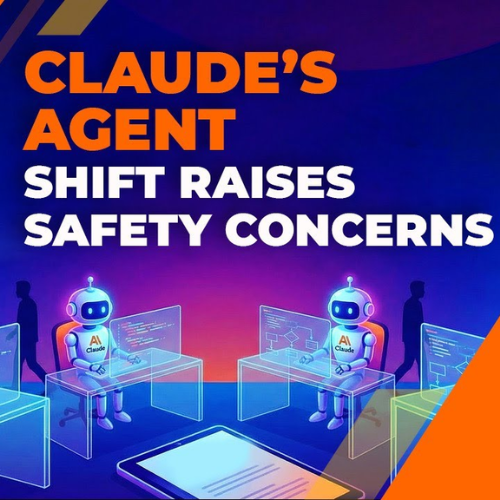



Artificial intelligence (AI) and automation are rapidly transforming the cyber threat landscape, enabling attackers to conduct entire campaigns autonomously—from initial reconnaissance to final extortion.
This shift introduces unprecedented levels of speed, scale, and complexity, making it increasingly difficult for enterprise defenders to keep pace.
A new report highlights how generative AI and agentic systems are reshaping the economics of cybercrime. Threat actors can now launch autonomous intrusion campaigns that adapt in real time, leveraging tools like polymorphic malware—malicious code that rewrites itself to evade detection—and deepfake-driven social engineering to impersonate trusted figures with startling realism.
Beyond traditional threats, AI is also being used to flood organizations with synthetic content, including poisoned AI models, vulnerable open-source modules, and invisible backdoors in otherwise legitimate workflows. These subtle, automated threats blur the boundaries between genuine innovation and malicious exploitation.
The result is a cyber battlefield where attacks are faster, stealthier, and more sophisticated than ever before. As defenders adopt AI to strengthen their response, the report warns that the arms race between attackers and enterprises is escalating—demanding a rethinking of cybersecurity strategies for the AI era.

See What’s Next in Tech With the Fast Forward Newsletter







Tweets From @varindiamag
Nothing to see here - yet
When they Tweet, their Tweets will show up here.