
boAt Crest report highlights how Indians are using wearables to build everyday fitness habits
The boAt Crest Data Trend 2025 report, based on anonymised app insights, reveals how Indians across age groups use smart wearables for fitness, sleep, AI-driven wellness features and realistic activity goals.
India’s wearables and audio brand boAt has released the boAt Crest Data Trend 2025 report, offering a detailed look at how users across age groups are engaging with fitness and wellness features on its smartwatch platform. The report is based on anonymised and aggregated data from the boAt Crest app, which serves as the companion fitness and wellness hub for millions of smartwatch users.
The findings come at a time when wearable adoption continues to rise, with a large share of Indian consumers using health apps or connected devices to monitor daily activity, sleep and overall wellbeing. According to boAt, the report provides insight into real-world usage patterns, from exercise preferences and step counts to sleep tracking and AI-powered wellness tools.
Youth drive activity, seniors show consistency
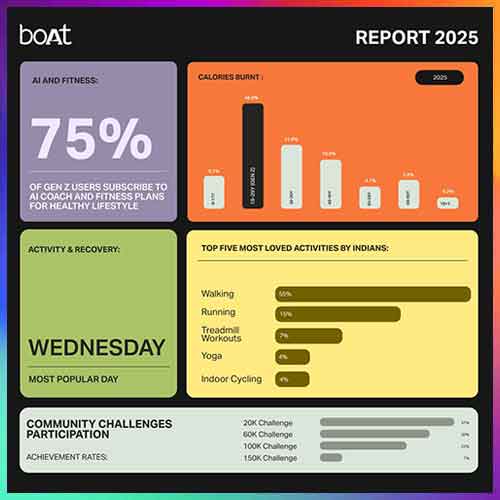
Data from 2025 shows that users logged more than 6.5 million activity sessions on the platform, with the 18–29 age group emerging as the most active, followed closely by those aged 30–39. Walking dominated activity choices, accounting for 55% of users, while running, treadmill workouts, yoga and indoor cycling made up the rest of the top five.
In total, boAt Crest users collectively recorded over one trillion steps during the year. The 18–29 age group averaged the highest daily steps at nearly 5,800, while users aged 60–69 maintained over 5,500 steps per day, highlighting sustained fitness engagement even among older users.
AI features and realistic goals gain traction
The report also points to strong adoption of AI-driven features, particularly among younger users. More than three-fourths of smartwatch users engaging with AI-powered tools and structured fitness plans were from Gen Z, signalling growing demand for personalised and adaptive wellness experiences.
Community challenges emerged as another key engagement driver. Among step-based challenges ranging from 20,000 to 150,000 steps, the 20,000-step goal saw the highest participation, contributing to half of total challenge activity. This trend suggests users favour achievable targets that support long-term habit building over more extreme fitness goals.
Midweek patterns also stood out, with Wednesdays recording the highest levels of both activity and sleep tracking, while weekends saw relatively lower engagement.
Commenting on the findings, boAt’s Chief Product Officer Shyam Vedantam said the data reflects a behavioural shift in how Indians approach wellness, with AI helping users focus on consistency rather than extremes. He added that future wearable innovation will increasingly centre on intelligent personalisation, predictive insights and products that adapt to real-life usage patterns.

See What’s Next in Tech With the Fast Forward Newsletter








Tweets From @varindiamag
Nothing to see here - yet
When they Tweet, their Tweets will show up here.