



The global deepfake detection market- covering tools that identify AI-generated or synthetically manipulated videos, images, and audio—remains early-stage but is expanding at breakneck speed. Fuelled by the widespread availability of generative AI tools, deepfake incidents have surged at over 200% year-over-year, pushing businesses and governments toward urgent adoption of detection and verification technologies.
As deepfake threats escalate, the sector is witnessing a critical inflection point driven by two competing forces:
(1) An explosion of malicious synthetic media ("sewage technology"), and
(2) The emergence of quantum-enhanced detection systems capable of outperforming classical models.
Market analysis for November 2025–November 2026 indicates a steep trajectory: the global deepfake detection market is currently valued at USD 1.0 billion, with projections pointing toward USD 1.4–1.6 billion by late 2026. This represents a 42–48% CAGR, translating into an incremental USD 400–600 million expansion in just 12 months—outpacing even the 200% annual rise in deepfake incidents.
Key Growth Drivers
1. Deepfake Incident Explosion
● 179 incidents in Q1 2025 alone, surpassing all of 2024 by 19%.
● 8 million deepfake files projected globally by end-2025 (up from 500,000 in 2023—a 900% content growth).
● Deepfakes now account for:
-
- 6.5% of all cyberattacks (a 2,137% jump since 2022).
- 1 in 20 identity verification failures.
●Financial losses:- USD 200 million lost in Q1 2025 in North America.
- U.S. generative-AI fraud projected to hit USD 40 billion by 2027 (32% CAGR).
●BFSI budgets toward verification and anti-fraud tools are increasing by 20–30%.
2. Rising Global Adoption & Regulatory Tailwinds
● By mid-2025, 49% of global businesses experienced audio/video deepfake attacks, up from 25.9% in 2024.
● Gartner predicts that by 2026, 30% of enterprises will consider standalone authentication unreliable without deepfake safeguards.
● Major regulatory pushes:
-
- U.S. FDIC deepfake fraud guidelines (coming late-2025).
- EU AI Act requirements for high-risk sectors.
- India’s DPDP Act rollout, which increases security and compliance obligations for all data-processing entities.
3. Quantum Computing's Dual-Edged Impact
Quantum computing introduces new challenges and transformative advantages:
● Threat: Quantum-powered model training could produce deepfakes that are harder to detect, accelerating the 200% incident surge.
● Opportunity: Quantum ML tools like QT-CNNs and QSVMs are demonstrating:
-
- 10–20% accuracy improvements in early pilots.
- Up to 50% faster training through entanglement and superposition.
- By 2026, quantum-hybrid detection systems may secure 5–10% market share.
Sector-Wise Growth Outlook (2025–2026)
|
Sector |
Current Share (USD Bn) |
Growth (12M) |
Projected 2026 (USD Bn) |
Key Drivers |
|
Finance (BFSI, Crypto) |
0.60 |
45–50% |
0.87–0.90 |
1,740% fraud surge; post-quantum IDV mandates |
|
Media & Entertainment |
0.15 |
40–45% |
0.21–0.22 |
550% rise in video deepfakes; streaming verification |
|
Government & Public Sector |
0.10 |
42–48% |
0.14–0.15 |
Election disinformation; 56 political impersonations in Q1 2025 |
|
Healthcare |
0.08 |
38–42% |
0.11–0.12 |
Telehealth identity theft; synthetic patient data |
|
Retail/Telecom/Enterprise |
0.07 |
40–45% |
0.10–0.11 |
BEC via voice cloning; 703% credential phishing growth |
Total Market: USD 1.0B → USD 1.43–1.50B (2026)
Quantum pilots add an extra 5–10% uplift.
DPDP Act, Privacy Law, and the Role of Quantum-Native Cybersecurity (QNC)
India’s Digital Personal Data Protection (DPDP) Act focuses on security of currently collected personal data but does not yet fully address AI-generated synthetic identities, deepfake-based impersonations, or quantum-era threats.
For DPDP and global privacy frameworks to succeed, regulators and industry must extend compliance to include:
- AI-generated datasets
- Synthetic identity detection
- Quantum-safe storage
- Post-quantum communication channels
This is where Quantum-Native Cybersecurity (QNC), Quantum Key Distribution (QKD), and AI insights engines like ACE become essential.
QNC and QKD offer:
● Tamper-proof cryptographic channels
● Zero-trust identity verification
● Post-quantum secure storage of AI-generated risk intelligence
● Sector-wide hardware-level adoption via alliance-driven vendor ecosystems
Cost Impact on Industry
With DPDP compliance and quantum-driven cybersecurity integration, hardware and infrastructure costs will rise—but in a highly optimisable range.
“The hardware infra cost can be optimised and may slightly increase also, but it will be up to 15–20%.”
This aligns with the Financial Express report predicting 10–30% cost escalation for DPDP readiness, while quantum-enabled systems can reduce long-term operational overhead through automation, keyless encryption, and high-efficiency data handling.
Risks & Opportunities Ahead
Risks
● Quantum-enhanced deepfakes could reduce classical detection accuracy by 20–30%.
● Supply-chain bottlenecks in NISQ-era devices may temporarily limit quantum adoption to 10% penetration.
● 900% growth in synthetic content increases verification burdens.
Opportunities
● Early-movers like Reality Defender and quantum-AI partnerships could capture 15–20% market share.
● Integration of post-quantum cryptography (e.g., Falcon, Dilithium) will secure 44% of the North American market.
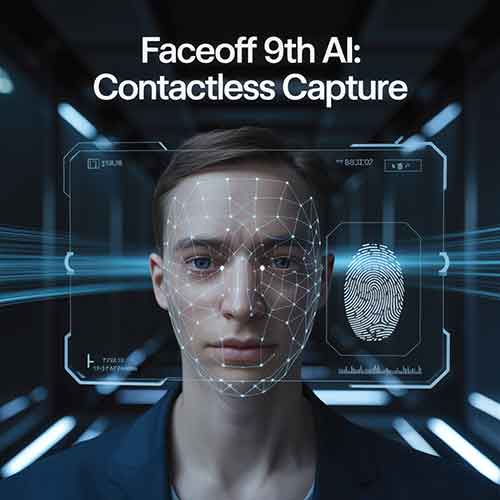
● Platforms like FaceOff, with quantum-hybrid enhancements, could scale SOM from 2% to 5% in BFSI and public-sector opportunities.
Conclusion
The deepfake detection ecosystem is on a steep upward trajectory, projected to reach USD 1.4–1.6 billion by November 2026, powered by unprecedented incident growth and rapid quantum innovation.
With DPDP compliance, privacy laws, and quantum-native cybersecurity converging, the next 12 months will define the digital trust infrastructure for governments, enterprises, and critical sectors.
In this landscape, hybrid quantum-AI platforms—not just classical detection—will become the backbone of global identity verification and fraud prevention systems.

See What’s Next in Tech With the Fast Forward Newsletter




Tweets From @varindiamag
Nothing to see here - yet
When they Tweet, their Tweets will show up here.