


Kolkata: Synthetic business fraud is rapidly becoming one of the most damaging forms of financial crime, with fraudsters creating convincing but entirely fake companies at minimal cost and extracting large sums from banks lenders and government systems. Experts warn that weak state controls and over reliance on document based verification have allowed this threat to scale into a billion dollar problem.
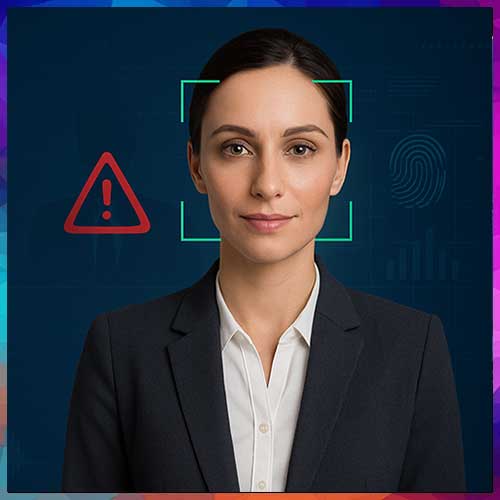
In this environment FaceOff is emerging as a powerful tool to help institutions detect and prevent synthetic business fraud by focusing on the human behavior behind corporate identities. Unlike traditional Know Your Business systems that validate registrations licenses and tax records FaceOff analyzes how business representatives behave during digital onboarding verification calls and ongoing compliance interactions.
FaceOff works by capturing and interpreting multiple behavioral and physiological signals during live or recorded interactions with company directors authorized signatories and beneficial owners. Facial emotion analysis detects stress anxiety and emotional suppression that often appear when individuals provide fabricated information about ownership revenue or operations. Eye movement analysis identifies abnormal gaze patterns and cognitive strain that can signal information fabrication rather than genuine recall.
Speech sentiment analysis and audio tone evaluation allow FaceOff to distinguish between spontaneous speech and rehearsed scripted responses. Synthetic business operators frequently reuse the same language patterns across multiple entities and FaceOff can identify these repetitions even when company names documents and addresses differ. Voice characteristics can also be compared across interactions enabling the system to flag cases where a single operator appears to control several unrelated businesses.
Posture and movement analysis provide additional insight into behavioral authenticity. Over controlled body language delayed responses and rigid posture are commonly observed when individuals are attempting to manage deception over extended verification sessions. Where regulations permit FaceOff can also correlate behavioral cues with physiological indicators such as heart rate patterns to identify sudden stress spikes during sensitive questions related to ownership funding sources or transaction intent.
One of FaceOff’s most significant strengths is its ability to build cross entity behavioral intelligence. Synthetic businesses rarely operate in isolation. They are often created in clusters to exploit credit lines payment gateways or procurement systems. FaceOff enables institutions to link behavioral signatures across multiple onboarding attempts creating a human centric network view of fraud activity that traditional KYB systems cannot provide.
For banks and fintech companies this means earlier detection of high risk entities before credit exposure or transaction losses occur. For government agencies and regulators FaceOff provides an additional oversight layer that strengthens weak controls without increasing paperwork burdens for legitimate businesses. By focusing on behavioral consistency FaceOff also reduces false positives allowing genuine small and medium enterprises to onboard faster and with greater trust.
As synthetic business fraud continues to evolve experts agree that paper based verification alone is no longer sufficient. FaceOff demonstrates how behavioral artificial intelligence can close the gap by revealing the human truth behind corporate identities and helping institutions stay ahead of an increasingly sophisticated fraud ecosystem.

See What’s Next in Tech With the Fast Forward Newsletter






Tweets From @varindiamag
Nothing to see here - yet
When they Tweet, their Tweets will show up here.