

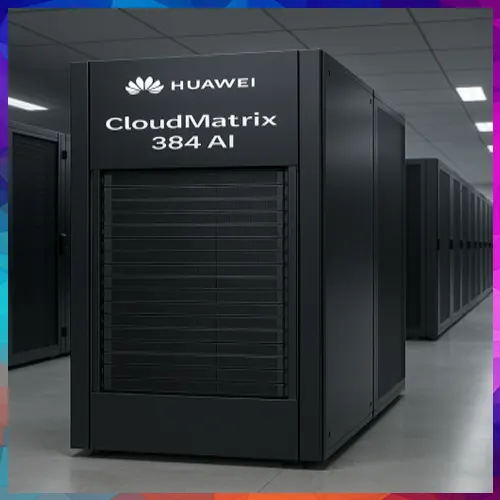
Huawei Technologies has rolled out its latest AI computing platform, the CloudMatrix 384, positioning itself as a serious contender in the race for AI infrastructure dominance within China. With 384 of Huawei’s 910C chips working in tandem, the system has been described by experts as a potential competitor to Nvidia’s most advanced product, the GB200 NVL72, which runs on 72 B200 chips. The unveiling comes amid growing efforts in China to reduce reliance on foreign AI hardware.
The company claims that its “supernode” architecture enables extremely high-speed interconnection between chips, delivering powerful system-level performance despite lower individual chip strength.
The performance stems from Huawei's system design capabilities, which compensate for weaker individual chip performance through the use of more chips and system-level innovations, analysts said.
This latest announcement underscores Huawei’s push to expand in the AI hardware market despite US export controls. Huawei, under heavy U.S. export restrictions, has emerged as a leading domestic supplier of AI chips and computing platforms. Acknowledging the competition, Nvidia CEO Jensen Huang said in May that Huawei had been “moving quite fast” and specifically cited the CloudMatrix system.
Huawei Cloud CEO Zhang Pingan confirmed in June that the CloudMatrix 384 was already up and running on the company’s cloud infrastructure. Analysts believe its performance edge lies in system architecture and scalability rather than raw chip power.

See What’s Next in Tech With the Fast Forward Newsletter









Tweets From @varindiamag
Nothing to see here - yet
When they Tweet, their Tweets will show up here.