


OpenAI has accused Chinese artificial intelligence startup DeepSeek of systematically extracting outputs from U.S. AI models in an effort to train competing systems, according to a memo submitted to U.S. lawmakers.
In the memo sent to the U.S. House Select Committee on Strategic Competition between the United States and the Chinese Communist Party, OpenAI said it had identified accounts linked to DeepSeek employees that were attempting to bypass access restrictions on its models, reported Reuters.
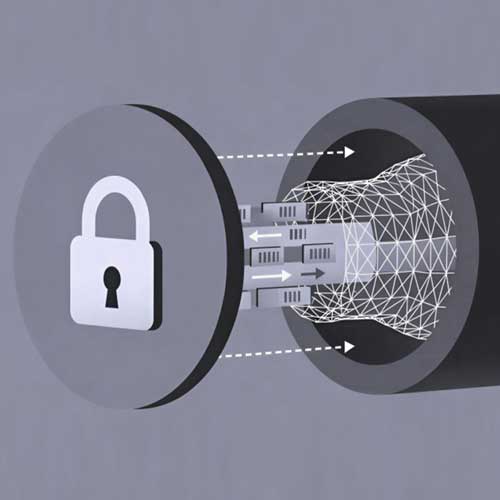
OpenAI alleged that these accounts used obfuscated third-party routing mechanisms and other masking techniques to conceal their origin while accessing U.S. AI systems. The company said DeepSeek employees also developed code to programmatically collect large volumes of model outputs, which were then used for training through a process known as distillation.
Distillation allows a newer or smaller AI model to learn by evaluating the responses of a more capable model, effectively transferring knowledge without direct access to proprietary training data. While commonly used within research and enterprise settings, OpenAI said the technique raises concerns when applied without authorization and across national boundaries.
“OpenAI has observed ongoing efforts to free-ride on the capabilities developed by OpenAI and other U.S. frontier labs,” the company said in the memo.
Hangzhou-based DeepSeek drew global attention early last year after releasing AI models that rivaled some of the most advanced offerings from U.S. companies, intensifying concerns in Washington that Chinese firms could narrow the AI gap despite U.S. export controls on advanced chips and computing infrastructure.
OpenAI also claimed that Chinese large language model developers are cutting corners on safety practices during training and deployment. The company said it routinely removes users suspected of attempting to extract model outputs for the purpose of building competing systems.
Silicon Valley executives have previously praised DeepSeek’s models, including DeepSeek-V3 and DeepSeek-R1, which are available globally and have been cited as evidence of China’s accelerating AI capabilities.
The allegations add to mounting scrutiny in Washington over how U.S. AI technologies may be indirectly enabling foreign competitors. Lawmakers on the House select committee have been examining whether existing safeguards are sufficient to protect U.S. leadership in artificial intelligence amid intensifying geopolitical competition.
OpenAI did not specify whether it is seeking regulatory action but said it continues to strengthen monitoring and enforcement mechanisms to prevent unauthorized access to its models.

See What’s Next in Tech With the Fast Forward Newsletter









Tweets From @varindiamag
Nothing to see here - yet
When they Tweet, their Tweets will show up here.