

Breaking News
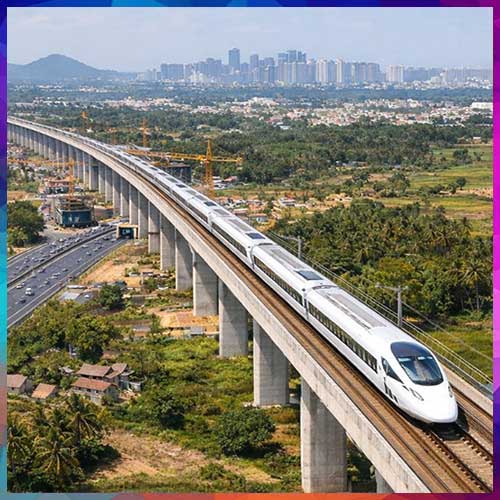
A proposed high-speed rail corridor between Bengaluru and Hyderabad is gaining momentum after discussions between the central government and the Karnataka government on land acquisition and route alignment. The ambitious project aims to significantly reduce travel time between the two major technology hubs to around two hours.
Announced as part of the Union Budget earlier this year, the planned 626-kilometre high-speed rail corridor is expected to become one of the fastest intercity connections in South India once completed. Currently, train journeys between the two cities can take anywhere from eight to nearly 19 hours depending on the service. Even premium trains such as the Vande Bharat Express take more than eight hours, while flights, though shorter in air travel time, often involve additional delays due to airport procedures and city traffic.
Route and stations across three states
According to preliminary plans, the corridor will feature around 12 stations across Karnataka, Andhra Pradesh, and Telangana. Within Karnataka, three stations are expected at Alipura (in Gauribidanur taluk), Devanahalli near Bengaluru airport, and Kodihalli in Bengaluru Rural district.
Kodihalli is likely to emerge as a major interchange point, particularly if the proposed Bengaluru–Chennai high-speed rail line is also routed through the area. Before entering Karnataka, the train route is expected to include stations in cities such as Mahbubnagar, Kurnool, Anantapur, and Hindupur, strengthening connectivity across multiple regions.
High-Speed Technology and Project Progress
The proposed bullet train is designed to operate at a maximum speed of 350 kmph, with an expected operational speed of around 320 kmph. The majority of the corridor will be built on elevated tracks along a new alignment, separate from existing railway lines, ensuring uninterrupted high-speed travel.
Currently, surveys for the project are being carried out by RITES Limited, and the Detailed Project Report (DPR) is expected to be submitted by March 2026. Following this stage, land acquisition—particularly in Karnataka—will become a priority for project authorities. Karnataka’s Infrastructure Development Minister M. B. Patil has reportedly assured cooperation with the central government to accelerate the process, including appointing a nodal officer to facilitate coordination and approvals.
Once completed, the high-speed corridor is expected to transform travel between Bengaluru and Hyderabad by offering faster connectivity, boosting business mobility, and strengthening economic links between the two major technology and commercial centres in South India.

See What’s Next in Tech With the Fast Forward Newsletter









Tweets From @varindiamag
Nothing to see here - yet
When they Tweet, their Tweets will show up here.