

Deep Space Energy raises €350K to advance radioisotope power for satellites and lunar missions
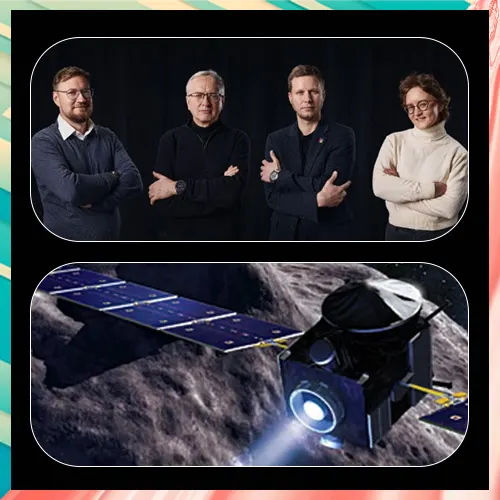
Latvian startup secures private backing and European public contracts to commercialise next-generation radioisotope generators, targeting resilient defence satellites and future Moon exploration programmes as Europe pushes for greater space and energy sovereignty.
Latvia-based Deep Space Energy has secured €350,000 in a pre-seed funding round led by Outlast Fund and angel investor Linas Sargautis, alongside €580,000 in public contracts and grants from the European Space Agency, NATO DIANA and the Latvian government. The fresh capital will support the development of a new radioisotope-based power generator aimed at strengthening Europe’s sovereign space and defence capabilities.
The company is developing a compact energy system that converts heat from naturally decaying radioisotopes—derived from nuclear waste—into electricity. Founder and CEO Mihails Ščepanskis said the technology requires significantly less fuel than traditional radioisotope thermoelectric generators currently used in space missions.
Strengthening satellite resilience
“Our technology, which has already been validated in the laboratory, has several applications across the defence and space sectors. First, we’re developing an auxiliary energy source to enhance the resilience of strategic satellites. It provides the redundancy of satellite power systems by supplying backup power that does not depend on solar energy, making it crucial for high-value military reconnaissance assets,” Ščepanskis says.
The company clarified that the generator is not intended for weaponisation. Instead, it will support dual-use satellites operating in Medium Earth Orbit, Geostationary Orbit and Highly Elliptical Orbit—regions critical for surveillance, missile warning systems and secure communications.
Scepanskis noted that recent geopolitical tensions have underscored Europe’s reliance on external satellite intelligence and highlighted the need for greater autonomy in space infrastructure.
“As Europe is trying to become more independent, it is imperative to produce satellites with advanced capabilities on our own. Our technology provides an auxiliary energy source for satellites, which makes them more resilient to non-kinetic attacks and malfunctions," he adds.
Powering the emerging moon economy
Beyond Earth orbit, Deep Space Energy is targeting lunar missions under programmes such as Artemis and other European initiatives. The company’s system is designed to power rovers during the Moon’s prolonged nights and in permanently shadowed regions where solar energy is unreliable.
Investor Egita Poļanska of Outlast Fund said the company represents a breakthrough in space energy innovation, while Linas Sargautis highlighted the Baltics’ growing role in advanced space technologies.
With improved efficiency and reduced fuel requirements, Deep Space Energy aims to accelerate lunar exploration timelines and reduce mission costs, positioning Europe as a stronger player in the evolving space economy.

See What’s Next in Tech With the Fast Forward Newsletter






Tweets From @varindiamag
Nothing to see here - yet
When they Tweet, their Tweets will show up here.