The e-commerce platform is looking to turn short-form entertainment into a new engagement and monetisation channel, as rising viewer interest creates opportunities across advertising, branded content and commerce-led storytelling.
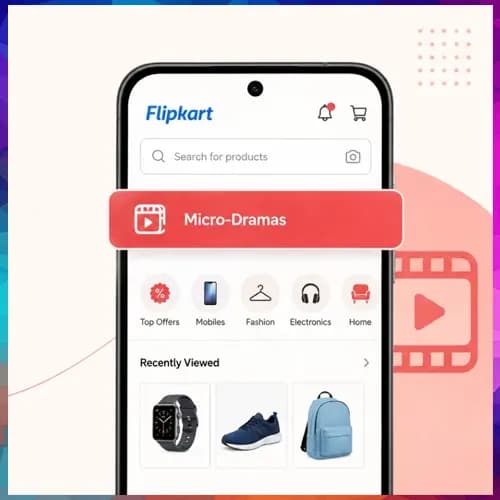
Flipkart is preparing to launch a dedicated micro-drama offering within its main app, marking a new step in the company’s efforts to expand its content and commerce ecosystem. The platform is expected to introduce the service through a separate tab in the coming days.
The Walmart-owned company has partnered with content players including Terribly Tiny Tales (TTT) and Pratilipi to develop short-form scripted shows exclusively for its platform. The company is also expected to feature content from Pinkvilla, the entertainment business it acquired in 2025 for an estimated ₹70–80 crore.
The move is aimed at increasing the amount of time consumers spend on Flipkart and encouraging them to engage with the app beyond shopping. It also gives the e-commerce company another potential revenue stream as it continues to explore businesses beyond traditional online retail and quick commerce.
Micro-dramas emerge as a new entertainment battleground
Flipkart’s entry comes as short-form scripted entertainment gains momentum among Indian consumers. Several specialised platforms have entered the segment, including Kuku TV from IPO-bound Kuku, Eloelo’s Story TV, Dashverse’s DashReels and ShareChat’s Quick TV.
The Indian micro-drama market crossed $300 million in 2025 and is projected to expand significantly over the next few years. Industry estimates cited in the report put the market at around $1.5 billion by the end of 2026 and potentially $4.5 billion by 2030.
Major streaming platforms are also exploring the format. JioHotstar’s micro-drama service has reportedly already crossed 100 million users, highlighting the scale of consumer interest and the potential for short episodic stories to become a significant entertainment category.
Content could create new advertising opportunities
For Flipkart, micro-dramas could eventually serve a purpose beyond keeping users engaged. The company could potentially use the content environment to offer brands product placements, integrated advertising and commerce-linked storytelling, creating a connection between entertainment and transactions.
Advertisers are increasingly showing interest in the format. Saregama-owned Pocket Aces has indicated that brands are setting aside specific budgets for micro-drama campaigns, suggesting that marketers are beginning to consider the category as an independent advertising opportunity.
However, retaining audiences remains a challenge. Pocket FM recently discontinued its Pocket TV micro-drama application within months of launch, citing rising competition and a decision to concentrate resources on its core audio business. Its CEO Rohan Nayak had highlighted sustained engagement as a bigger challenge after the initial user-acquisition phase.
Flipkart’s strategy will therefore depend not only on attracting viewers but also on keeping them engaged. If successful, micro-dramas could help the company build a stronger entertainment layer around its commerce platform while opening opportunities across advertising, content and shopping.