
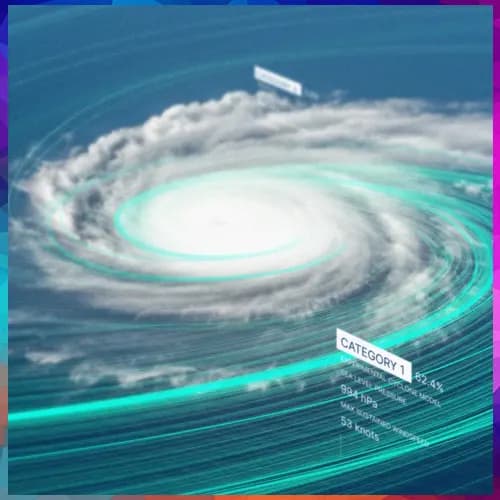
Google's WeatherNext ability to track both the approach as well as the intensity of the hurricane has played a key role in helping the US National Hurricane Center (NHC) confidently predict Hurricane Melissa's rapid intensification and eventual landfall in Jamaica.
Because the forecast came five days in advance, authorities and residents had significantly more time to prepare for the storm. One of the biggest challenges in hurricane forecasting has long been predicting rapid intensification. Such events are notoriously difficult to forecast and are particularly dangerous.
Developed with the help from Google DeepMind and Google Research, the AI-powered weather model aims to address this forecasting challenge by improving predictions of both a storm’s path and its intensity. Created under Google’s Earth AI initiative, WeatherNext has been trained on decades of global weather data as well as specialised datasets focused on severe tropical cyclones, allowing it to detect patterns that conventional forecasting models may miss.
The model can also generate 50 different "what-if" scenarios, giving meteorologists a broader range of possible outcomes and helping them make more informed forecasting decisions.