

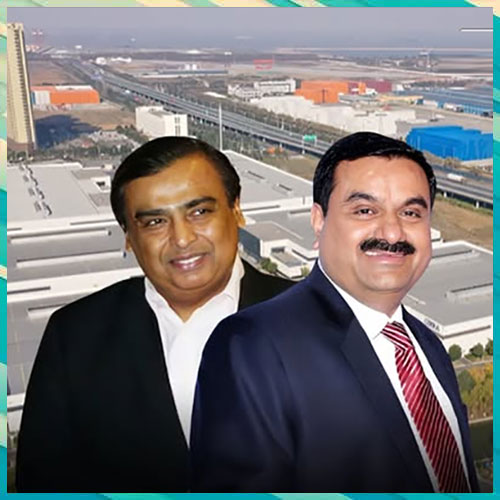
Massive investments announced at the AI Impact Summit 2026 in New Delhi signal India’s push toward sovereign AI infrastructure, renewable-powered hyperscale data centres, and global competitiveness in next-generation computing capacity.
India’s ambition to become a global artificial intelligence powerhouse received a major boost at the 2026 AI Impact Summit in New Delhi, where Adani Group and Reliance Industries together pledged investments worth $210 billion to develop hyperscale data centre infrastructure across the country.
The announcements, among the largest private commitments to digital infrastructure in India, are expected to significantly expand domestic AI computing capacity and reduce reliance on overseas cloud and processing resources.
Competing visions for AI scale
Adani Group outlined a $100 billion investment plan spread over the next decade. The company aims to build up to five gigawatts of renewable energy-powered data centre capacity by 2035. Through its data centre venture, the group plans to integrate green energy generation with AI-ready infrastructure, positioning sustainability at the core of its expansion strategy.
Reliance Industries, meanwhile, announced a $110 billion commitment over seven years. A key highlight is a major rollout in Jamnagar, Gujarat, where over 120 megawatts of capacity is expected to go live by late 2026. The initiative is aligned with Reliance’s broader digital and telecom ecosystem ambitions, including AI-led services.
Industry leaders, global technology firms and policymakers attended the summit, underscoring India’s growing importance in the global AI race.
Strategic impact on India’s digital future
The scale of these investments reflects the surging demand for AI computing power, as data centres become critical infrastructure for cloud services, generative AI, analytics and edge computing. Large-scale AI workloads require vast processing capability and stable energy supply, making hyperscale facilities essential.
Experts say the twin commitments could accelerate job creation, attract global technology partnerships and strengthen India’s position as a regional AI hub in Asia. With AI workloads consuming increasing amounts of electricity, the integration of renewable energy also signals a shift toward more sustainable infrastructure development.
If executed as planned, the projects could transform India’s digital backbone by the end of the decade, supporting next-generation AI innovation and enterprise adoption at scale.

See What’s Next in Tech With the Fast Forward Newsletter








Tweets From @varindiamag
Nothing to see here - yet
When they Tweet, their Tweets will show up here.