

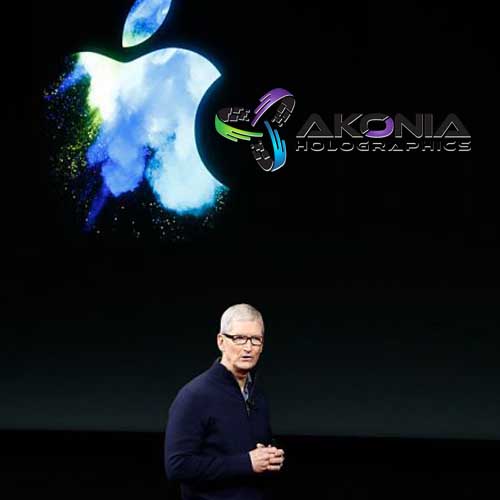
Apple has confirmed the acquisition of small start-up named Akonia Holographics , that makes lenses for Augmented Reality glasses which has prompted discussion of the firm's potential plans to launch its own augmented reality headset.
Technology is moving towards implementation of AR, VR and MR, which of great demand to drive the market and the Financial details of the acquisition have not been disclosed. Founded in 2012 by a group pf holography scientists, Colorado-based Akonia calls itself the "world leader in systems and materials for holography and had originally focused on holographic data storage before shifting its efforts to creating displays for augmented reality glasses.
Akonia said its display technology allows for “thin, transparent smart glass lenses that display vibrant, full-color, wide field-of-view images.” The firm has a portfolio of more than 200 patents related to holographic systems and materials.
The company has developed a form of technology called the HoloMirror which overlays a level of augmented reality (AR) on to physical environments,it is like thin, transparent smart glass lenses that display vibrant, full-color, wide field-of-view images . Akonia claims that HoloMirror's display performance "exceeds that of any other commercial technology," and says that the solution is suitable for low-cost consumer AR headsets.
Apple buys smaller companies from time to time, and we generally don’t discuss our purpose or plans,” the iPhone maker said in a statement. In 2013, Apple acquired a small Israeli firm called PrimeSense that made three-dimensional sensors. The iPhone X, launched last year, used a similar sensor to power facial recognition features.
The Oculus Go, Samsung Gear VR, and FTC Vive, among other VR headsets, have also proven the case for consumer-based AE & VR applications. To stay ahead of the competition, Apple is also currently working on a cordless headset for VR which spots two 8K displays and may be available by 2020.
Apple's most sought device will potentially be powered by a five-nanometer processor , which can Produce crystal clear optical displays thin and light enough to fit into glasses similar to everyday frames with images bright enough for outdoor use and suited to mass manufacturing at a relatively low price and would be used as a reference design for future Mac systems.
Lastly, there is no end of technology to evolve, any new feature comes with a cost, accordingly other vendors also uses, various new features to influence consumers attention. Now a question comes to my mind after buying the latest gazettes, weather one uses all available features or they buy the product for show-up and a feel factor on they are not beyond the technology.

See What’s Next in Tech With the Fast Forward Newsletter









Tweets From @varindiamag
Nothing to see here - yet
When they Tweet, their Tweets will show up here.