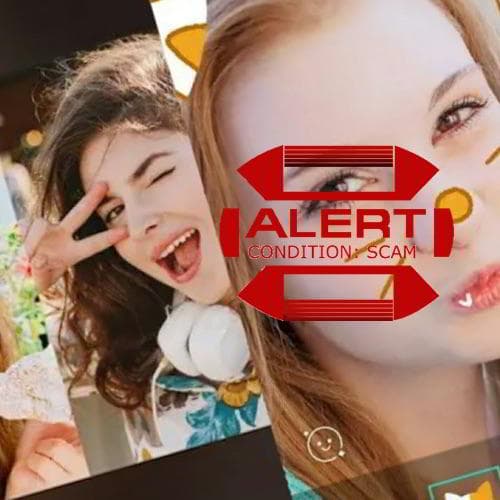
Japanese IT security company Trend Micro has revealed that most of the 'Beauty Camera' apps on Google Play Store are fake and they are used to collect user data, especially pictures when it is installed or updated. Some apps redirect users to phishing websites also. These apps have millions of downloads, and a large number of the downloads originated from Asia, mainly in India. While some of these apps send pornographic content to users, others redirected them to phishing or promotional websites.
Google has now removed these 29 ‘Beauty Camera’ apps from Play Store.
“We discovered several beauty camera apps (detected as AndroidOS_BadCamera.HRX) on Google Play that are capable of accessing remote ad configuration servers that can be used for malicious purposes. A user downloading one of these apps will not immediately suspect that there is anything amiss, until they decide to delete the app,” Trend Micro said in a blogpost.
The top three apps - Pro Camera Beauty, Cartoon Art Photo, and Emoji Camera, each got over a million downloads.
A number of these apps were also found to be pushing several full screen ads when users unlocked their devices, including malicious ads, such as fraudulent content and pornography, that will pop up via the user’s browser. “During our analysis, we found a paid online pornography player (detected as AndroidOS_PornPlayer.UHRXA) that was downloaded when clicking the pop up,” Trend Micro claimed.
Since these malicious apps looked as legitimate as possible, users found it difficult to determine where the malicious content was coming from. Some of these apps redirect to phishing websites that ask for personal information such as addresses and phone numbers. Some of the apps seemingly allowed users to “beautify” their pictures by uploading them to the designated server.
Trend Micro found that when a user uploads an image into Edit in the app, instead of getting a final result with the edited photo, the user gets a picture with a fake update prompt in nine different languages. The authors can collect these photos uploaded in the app, and possibly use them for malicious purposes - for example as fake profile pictures on social media. Reportedly, these ‘beautify’ apps can also hide themselves like the ones mentioned above.