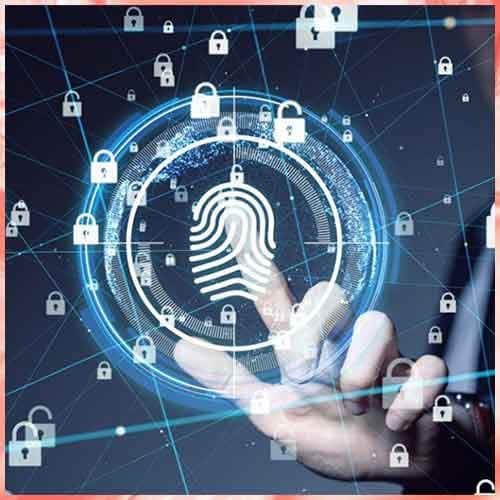
Traditional authentication verifies a user primarily at the point of entry through passwords, OTPs, passkeys, devices, fingerprints or facial recognition. However, successful login does not necessarily prove that the same legitimate user remains in control throughout a session. NIST describes session monitoring, or continuous authentication, as the ongoing evaluation of session characteristics to detect possible fraud.
This becomes particularly important for e-commerce transactions, banking and payments, AWS/GCP/Azure cloud services, enterprise applications, privileged accounts, and sensitive or classified portals. Instead of relying solely on a one-time authentication event, behavioural biometrics can continuously assess whether the person interacting with a system behaves like the legitimate user.
Dr. Deepak Kumar Sahu, Founder of FaceOff Technologies, said, “Leading technology companies are increasingly leveraging image, graphical and behavioural signals to detect risky sign-ins, as traditional identifiers such as passwords, cookies and IP addresses can be compromised through sophisticated phishing, session hijacking and AI-driven attacks. The future of authentication lies in continuously verifying who the user is, whether the user is genuinely present, and whether their behaviour is consistent with a trusted interaction.
Behavioural signals can include keystroke cadence,Micro-Expressions, Eye & Gaze Dynamics, Head & Facial Movement, Posture & Body Behaviour, Voice & Speech Behaviour and Liveness Behaviour.This should complement—not simply replace-existing MFA. Microsoft already uses behavioral and contextual signals to identify risky sign-ins and can trigger additional authentication (Microsoft Entra ID Protection) or block access when behavior deviates from expected patterns, at the same time, Google has significantly advanced its account recovery and risk-adaptive authentication capabilities by launching a biometric feature called Selfie Video Sign-In.The opportunity is to make authentication more continuous, adaptive and transaction-aware, especially before high-value or high-risk actions.
The objective of Biometric Liveness & Video Injection Prevention is to verify that users are live and genuine while detecting deepfakes, recorded media and synthetic video-injection attacks.
Dr.sahu further said, our research team in FaceOff ,introduced Behaviour Biometric Analysis as an AI-driven Trust Layer that evaluates behavioral and multimodal signals during digital interactions to generate a dynamic assessment of user authenticity and risk. Rather than asking only “Did the user authenticate?”, the approach continuously asks “Is this still the genuine user, and can this interaction be trusted?” This can strengthen onboarding, continuous authentication and high-risk transaction authorization by enabling Proceed, Step-Up Verification, Escalate and Block decisions based on changing risk.