

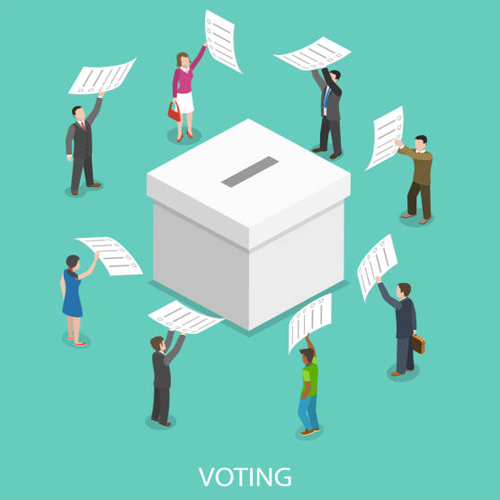
Blockchain is being actively implemented into a great number of business and social processes. Voting is one of the procedures where blockchain can be extremely useful as it is able to ensure a higher level of accuracy and fairness.
The Japanese city of Tsukuba has successfully tested a blockchain-based voting system. The Japanese government has gathered 119 votes from residents on the issue of local development programs. Voters are asked to pick from a pool of technology applications like internet-of-things (IoT) and artificial intelligence.
The newly introduced system combines the opportunities of an identity verification machine with a decentralized network. When an ID card is put on the machine for verification, a voter needs to select a program that he or she considered to be the most appropriate. When the selection is made, the data is encrypted and stored by the system via the tamper-proof distributed network.
The blockchain-based voting system works similar to normal voting, except that votes are entered electronically on a decentralized ledger to prevent any falsification of information.
Voters have to use their 12-digit social security number and unique user-set passwords to cast a vote. Some participants though had some difficulties in entering their passwords for voting as they don’t remember their combinations.
Tsukuba Mayor Tatsuo Igarashi comments that he had thought it would be a complicated procedure but surprisingly he has found it easy.
However, it is practically impossible to see whether a vote is counted or not. Due to these factors, election boards and organizations may be afraid to use these systems. It is said that if post-testing improvements facilitate the entire procedure, residents living in mountainous areas, remote islands and foreign countries may use this system for voting.
Japan is not the only country that is working on application blockchain technology for their voting campaigns. In August the Ukrainian Central Election Commission is studying the possibilities of NEM’s blockchain to use it for enhancing the procedure of local and national elections.
Even Switzerland has announced its plans to conduct the first blockchain-based test vote. The authorities of the state of West Virginia took a decision to offer military staff serving abroad a possibility to participate in the midterm elections via a mobile voting app.

See What’s Next in Tech With the Fast Forward Newsletter








Tweets From @varindiamag
Nothing to see here - yet
When they Tweet, their Tweets will show up here.