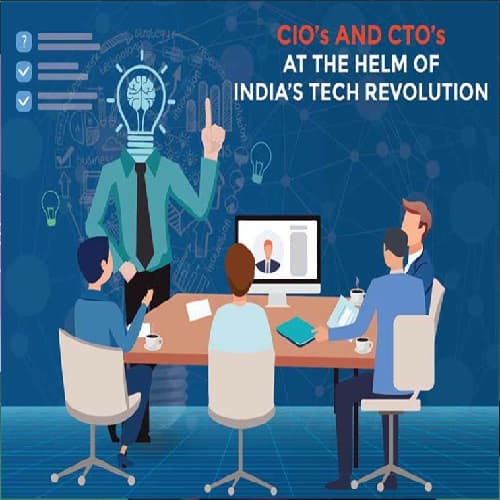
India’s digital transformation is accelerating at an unprecedented pace, and at the heart of this movement are the Chief Information Officers (CIOs), Chief Technology Officers (CTOs) and CXOs who are guiding organizations through complex technology adoption journeys. In an era defined by rapid innovation, cyber threats, and rising consumer expectations, these technology leaders are playing a strategic role not only in driving business growth but also in building digital resilience.
THE TRENDS
Across industries - from BFSI and healthcare to manufacturing and retail - CIOs and CTOs in India are embracing cutting-edge technologies such as Artificial Intelligence (AI), Machine Learning (ML), cloud computing, 5G, and Internet of Things (IoT). These technologies are not just modernizing legacy systems but also transforming how businesses interact with customers, manage operations, and make real-time decisions. Many enterprises are moving toward hybrid and multi-cloud infrastructures to gain agility and scalability, while automation and AI are being used to streamline repetitive tasks, enhance data analysis, and support faster innovation cycles.
Another trend that is gaining momentum is the increased focus on cybersecurity and data governance. With high-profile data breaches and stringent regulations on the rise, organizations are placing more importance on securing their digital assets. The implementation of India's Digital Personal Data Protection (DPDP) Act has been a major turning point in this context. As a result, the role of the Data Protection Officer (DPO) - a new and increasingly critical profile - is coming to the forefront. DPOs are responsible for ensuring that personal data is handled in compliance with privacy regulations, managing data protection risks, and creating a culture of trust within the organization.
DIGITAL LEADERSHIP RELOADED
While CIOs and CTOs continue to lead digital transformation initiatives, they are now also expected to work closely with DPOs to ensure that innovation does not come at the cost of compliance. This collaborative approach between technology heads and data privacy officers is expected to become a norm as India strengthens its digital economy.
Looking ahead, CIOs and CTOs in India see several trends shaping the future of tech adoption. There is a strong push toward GenAI applications, cybersecurity mesh architectures, low-code/no-code platforms, and the use of advanced analytics for customer personalization. Sustainability is also becoming an important part of the technology strategy, with green IT practices gaining traction.
Furthermore, the mindset of the technology leadership is shifting from just "cost-center management" to "value creation." Digital initiatives are now being directly linked to revenue growth, customer satisfaction, and operational efficiency. CIOs and CTOs are no longer working in silos — they are becoming key voices at the boardroom table, helping shape the future of their organizations in a digital- first world.
2025 AND BEYOND..
In conclusion, the Indian tech leadership landscape is evolving rapidly, with CIOs, CTOs, and DPOs working together to ensure that digital transformation is secure, scalable, and sustainable. Their efforts will define how well organizations thrive in an increasingly data- driven and regulation-heavy environment. Below are the excerpts from key industry evangelists...
---------------------------------------------------------------------------------------------------------------------------------------------
Human Vigilance Becomes Key to Corporate Security
 ADV. (DR.) PRASHANT MALI
PRESIDENT - CYBER LAW CONSULTING (ADVOCATES & ATTORNEYS)
As Indian enterprises advance their digital transformation journeys, CIOs and CTOs are becoming strategic business enablers rather than just tech support leaders. The adoption of technologies like Generative AI (GenAI), hybrid cloud, 5G, edge computing, IoT, blockchain, and sustainable tech is accelerating. AI-powered cyber threats are on the rise, making cybersecurity a top priority. In response, businesses are embracing Zero Trust models, AI-led threat detection, and automation for faster, smarter protection.
CIOs are now expected to understand business strategy and collaborate closely with CEOs, while CTOs steer future tech direction and innovation. CISOs lead the charge on cybersecurity, and a rising new role — the Data Protection Officer (DPO) — is emerging as crucial for ensuring compliance with privacy laws like India’s DPDP Act.
Security awareness is also evolving. Organizations are moving from passive training to interactive simulations and real-life examples, fostering a culture of shared responsibility. Leadership engagement and continuous communication are reinforcing this security-first mindset.
Although the DPO role can legally overlap with others in India, it's generally advised to keep it independent to avoid conflicts of interest. The future of tech leadership in India hinges on collaboration among these specialized roles to drive growth, ensure resilience, and navigate the complex digital landscape responsibly.
--------------------------------------------------------------------------------------------------------------------------
AI-Powered Threats Raise the Stakes for CISOs in the Cybersecurity Battlefield
 DR. PANKAJ DIKSHIT
CTO - GEM, GOVT. OF INDIA
As AI and automation continue to evolve, leadership roles such as CIO and CTO are being redefined, with many organizations considering merging these roles due to overlapping responsibilities. Despite this convergence, the role of the Chief Information Security Officer (CISO) remains distinct and critical, driven by regulatory demands and the need for domain-specific cybersecurity oversight. The rise in data privacy concerns has also led to an increased demand for dedicated Data Protection Officers (DPOs), especially with the implementation of stricter data laws.
Generative AI is reshaping industries by automating roles traditionally filled by entry- and mid-level professionals, particularly in engineering, design, and software development. While it enhances efficiency and accuracy, AI also introduces significant risks. Malicious actors can exploit AI to develop malware, launch cyberattacks, and create other digital threats. This makes the CISO's role more demanding than ever, requiring constant vigilance, updated knowledge, and a global perspective to defend against fast- evolving cyber risks.
India, while not a leader in AI hardware manufacturing like Nvidia, has excelled in applying tech innovations for public good. Through initiatives such as Aadhaar, NPCI, GeM, and GSTN, India has demonstrated its strength in leveraging digital tools to improve governance and citizen services, setting a global example in effective tech utilization.
---------------------------------------------------------------------------------------------------------------------------
CIOs Drive Innovation Amid AI, Security, and Sustainability Priorities
 DR. RAVI MUNDRA
HEAD- IT INFRASTRUCTURE, CLOUD & CYBER, ATLANTIC, GULF & PACIFIC COMPANY (AG&P)
In 2025, enterprises will be reshaped by transformative technologies such as AI, Generative AI, edge computing, and hybrid cloud. These innovations will power intelligent automation, reduce latency for real- time applications, and streamline operations. With cyber threats growing more sophisticated, organizations are embracing zero-trust models, AI-powered threat detection, and human-centric cybersecurity awareness programs. Measures like multi-factor authentication (MFA), phishing simulations, and security KPIs are becoming standard across industries.
AI-SOCs (Security Operations Centers), IAM (Identity & Access Management), deception technologies, and Secure Access Service Edge (SASE) frameworks are enabling real-time detection and response, fortifying enterprises against dynamic threats. Automation reduces routine workload, allowing security teams to focus on critical issues.
CIOs are evolving into strategic leaders, aligning tech investments with business goals and spearheading digital transformation. They collaborate closely with CEOs and CFOs to enhance customer experience, ensure compliance with data privacy laws, and promote ethical AI use. Their responsibilities now span hybrid work strategies, cloud adoption, and secure IT environments. While CIOs, CTOs, and CISOs may share data protection duties in smaller firms, larger or highly regulated organizations increasingly require dedicated Data Protection Officers (DPOs) to ensure impartial compliance. As digital ecosystems grow more complex, collaboration among these leadership roles is vital to building secure, innovative, and resilient enterprises.
-------------------------------------------------------------------------------------------------------------------------------
A Preventive Approach is Critical to Healthcare Cybersecurity
 DR. SUSHIL MEHER,
RETIRED HEAD – IT, AIIMS
In today’s digital era, cyber threats are evolving rapidly, particularly in data-sensitive sectors like healthcare. As attackers use advanced tools to exploit vulnerabilities, organizations must stay updated and adapt quickly. India’s new Digital Personal Data Protection (DPDP) Act is a significant development, especially for healthcare, where patient data is increasingly digitalized and highly valuable—often sold for $30 to $300 on the dark web.
Originally preceded by the unimplemented DISHA law, the DPDP Act is expected to influence its finalization. The act mandates strict data protection, allowing only authorized medical personnel access to patient records. However, this introduces a critical challenge: ensuring robust cybersecurity without hampering operational efficiency, such as delaying emergency care due to access restrictions.
CIOs in healthcare are now expected to be strategic leaders, ensuring compliance, securing patient data, and integrating technology while overcoming resistance to change. With DPDP enforcement looming, organizations are preparing to appoint Chief Data Officers (CDOs) to oversee compliance, though many roles remain unfilled.
Security teams are adopting AI-powered, proactive strategies, balancing safety with seamless workflows. Healthcare providers must continuously update their skills and systems to stay ahead. As compliance becomes legally binding, the focus is on safeguarding data without disrupting care—through adaptable, security-first approaches that support both clinicians and patients.
--------------------------------------------------------------------------------------------------------------------------------
Embedding Security by Design for Enterprise Preparedness
 DR. HARSHA THENNARASU,
FOUNDER & CISO, HKIT SECURITY SOLUTIONS
Artificial Intelligence (AI) and Machine Learning (ML) are transforming enterprises by enhancing efficiency, streamlining operations, and enabling smarter business decisions. These technologies can identify global business opportunities, replacing traditional marketing methods and mitigating operational challenges. As businesses evolve, the role of the CIO has shifted from a technical overseer to a strategic leader—now regarded as a “Chief Involvement Officer”—who aligns technology with business goals, enabling innovation and growth.
Cybersecurity is increasingly embedded into enterprise culture through security-by-design practices. This includes employee awareness programs, cross-functional audits, simulation exercises, and policy revamps. Organizations are focusing 80% of their efforts on awareness and 20% on technology, emphasizing continuous employee training and cybersecurity certifications. Recruitment now prioritizes candidates with cybersecurity knowledge, while secure practices like Single Sign-On (SSO) and QR-based logins are being implemented.
Automation is pursued with a deep understanding of current processes, applying a “Trust, but audit” approach to ensure secure and efficient operations. All C-level roles, including CEO, CFO, and CISO, are becoming active participants in digital transformation, compliance, and security efforts. While CIOs, CTOs, or CISOs may oversee data protection, the appointment of a dedicated Data Protection Officer (DPO) with legal expertise is recommended for ensuring compliance and avoiding regulatory penalties.
-------------------------------------------------------------------------------------------------------------------------------
Enterprise AI Demands a Unified, Intelligence-Driven Data Strategy
 ARVIND SINGH
CHIEF TECHNOLOGY & PRODUCT OFFICER,
PURAVANKARA LIMITED
In 2025, enterprises will be increasingly shaped by sustainability mandates and evolving regulatory frameworks. Governments worldwide are prioritizing green technologies, compelling organizations to reduce their carbon footprints and adopt innovative, eco-friendly practices.
Robotic Process Automation (RPA) will streamline operations by handling repetitive tasks through intelligent bots, enhancing productivity. Generative AI (GenAI) will mature with practical industrial use cases, while quantum and edge computing will offer real-time processing and immense computational power. Extended Reality (XR), encompassing AR, VR, and MR, will redefine marketing, training, and collaboration through immersive engagement.
Blockchain will gain enterprise relevance beyond cryptocurrencies, especially through smart contracts that minimize intermediaries and cut operational costs. Cybersecurity will be integral to tech strategies, focusing on AI-driven threat detection, zero-trust frameworks, and Secure Access Service Edge (SASE) to secure digital environments.
Enterprises are embedding cybersecurity and data governance into their culture via robust training, leadership involvement, and automated tools. Predictive analytics, intelligent incident responses, and automatic patch management will strengthen security. SASE will evolve with ZTNA integration, reducing tool complexity and enhancing efficiency.
The CIO’s role will expand from IT oversight to a strategic leadership position. As technologies converge, CIOs, CISOs, CTOs, and DPOs increasingly share responsibilities, with many SMEs consolidating roles to improve agility, compliance, and innovation.
---------------------------------------------------------------------------------------------------------------------------------
Converging Leadership Roles in Mid-Sized Enterprises
 ASHIS ROUT
SR. VP – IT, HDFC BANK
Technology will continue to revolutionize industries, with BFSI leading in innovation. Generative AI is poised to transform productivity across sectors, while Quantum Computing will advance applications in healthcare, materials science, and data breach protection. AI-driven cybersecurity will gain prominence, enabling predictive threat detection and defense against zero-day attacks. Additionally, green technologies and circular economy models will see increased adoption.
The role of the CIO has evolved beyond managing IT infrastructure to becoming a strategic leader responsible for innovation, digital transformation, customer experience, and aligning technology with business goals. CIOs now collaborate closely with business leaders to drive value creation using emerging technologies like cloud, big data, AI, and cybersecurity.
With rising cyber threats, CIOs and CISOs play a crucial role in ensuring robust data protection. Organizations are fostering a security-first culture through leadership-driven initiatives, continuous employee training, policy integration, and reward systems. Key steps include leading by example, education, embedding security in business processes, recognizing secure behavior, and addressing the human element.
Zero Trust and AI are becoming central to cybersecurity strategy, especially for neutralizing AI-based threats. While larger firms have distinct CIO, CISO, and DPO roles, mid-sized firms often merge these. DPOs require legal expertise and data privacy knowledge to ensure regulatory compliance and safeguard personal data.
----------------------------------------------------------------------------------------------------------------------------------
NexGen Technologies are Transforming Enterprises
 ASHOK RAMCHANDRA JADE,
GLOBAL CIO - (CIC), KIRLOSKAR
BROTHERS LIMITED
In 2025, enterprises are being reshaped by key technology trends including generative AI, edge computing, 5G, IoT, and hybrid/multi-cloud strategies that improve efficiency, decision-making, and connectivity. Quantum computing is starting to impact finance and logistics, while composable applications and low-code/no-code platforms offer flexibility and empower non-technical users. Digital twins and sustainable IT practices are gaining traction across industries.
Cybersecurity is now a board-level concern, with organizations adopting AI-driven threat detection, zero-trust models, and comprehensive employee training to build a security-first culture. Simulated attacks, real-time drills, and automated compliance tools reinforce cyber hygiene. Security is integrated into onboarding, while leadership promotes accountability and awareness across all levels.
The CIO role is evolving into that of a strategic business enabler—driving digital transformation, customer experience, AI adoption, and sustainability. CIOs now work closely with CEOs and boards to align technology with business goals, champion agile practices, and lead new product development.
CTOs are focused on leveraging emerging technologies like quantum computing and edge AI for scalability and innovation. CISOs are shifting from compliance to proactive cyber resilience using advanced threat intelligence. DPOs ensure data privacy and regulatory compliance in a stricter legal environment. Together, these roles collaborate to future-proof enterprises, manage digital risks, and foster ethical, sustainable, and innovation-led growth.
-----------------------------------------------------------------------------------------------------------------------------------
Composable & Low-Code Solutions Enable Rapid Business Agility
 BALWANT SINGH
GROUP CISO & DPO, DHARAMPAL
SATYAPAL LIMITED (DS HEADQUARTERS)
Today, AI and Machine Learning drive operational intelligence in manufacturing through predictive maintenance, quality control, and automation. Edge computing enhances real-time decision-making by processing data near its source, vital for smart factories, while IoT expands connected devices for deeper insights into production and logistics. Cybersecurity evolves with behavior-based threat detection, identity-first security, and zero-trust frameworks. Cloud-native architectures and digital twins improve scalability and simulate manufacturing processes, collectively boosting agility, efficiency, and resilience.
Creating a security-first culture demands continuous engagement beyond policies, including regular training, phishing simulations, role-based workshops, and onboarding integration. Encouraging cyber hygiene through rewards and internal campaigns helps embed security awareness across all organizational levels.
AI and automation form the core of modern cybersecurity, enabling proactive threat detection and swift incident response with minimal human intervention. The Zero Trust model, emphasizing “never trust, always verify,” integrates identity and access management, micro-segmentation, and real-time monitoring to minimize risks and enhance visibility.
The CIO’s role has evolved into a strategic business leader driving digital transformation, aligning technology with business goals, and fostering innovation in sectors like manufacturing and FMCG. While CIOs, CTOs, and CISOs manage technology execution and security, the Data Protection Officer (DPO) ensures independent oversight of data privacy compliance, maintaining organizational accountability under regulations like the DPDP Act. Maintaining role distinctions ensures effective governance and trust.
----------------------------------------------------------------------------------------------------------------------------------
CIOs Now Drive Strategic Growth, Not Just IT Management
 BHARAT B. ANAND
GROUP CIO AND CTO, CONNECT GLOBAL
Today, AI offers both opportunities and challenges for organizations, especially in safeguarding sensitive data. While AI—particularly supervised and unsupervised models—can enhance threat detection and pattern recognition, it must be applied with caution. Rather than replacing human intelligence, AI serves as augmented intelligence, supporting better decision-making. Despite significant advancements since the 2010s, AI is still evolving, and organizations must stay agile to keep up.
The role of the Chief Information Officer (CIO) has transformed from managing IT infrastructure to driving strategic innovation across the organization. CIOs are now instrumental in aligning technology initiatives like AI adoption with overall business goals, requiring ongoing learning and adaptability.
Cybersecurity has become a shared responsibility, demanding vigilance from every individual. From using banking apps to handling internal data, employees must be aware of cyber risks. Building a cybersecurity-first culture through regular training, awareness programs, and zero-trust security frameworks is essential to mitigate threats and ensure organizational resilience.
As data volumes explode from numerous devices, managing and analyzing this information remains a key challenge. Diverse formats and sources complicate threat detection, demanding innovative solutions.
With cyber threats constantly evolving, even as large firms strengthen defenses, small businesses often struggle due to limited resources. To level the playing field, it’s crucial to democratize cybersecurity and make protection accessible to organizations of all sizes.
----------------------------------------------------------------------------------------------------------------------------------
AI: The Financial Sector’s Newest Cybersecurity Ally
 BHASKAR RAO,
CISO, THE BHARAT CO-OPERATIVE BANK (MUMBAI) LTD.
Cybersecurity is one of the most critical challenges in the financial sector, especially for banks that manage sensitive customer data and financial transactions. Banks implement multiple security measures such as protecting applications, securing data centers, and using micro-segmentation to defend their networks. However, cybersecurity is an ever-evolving field. As threats change daily, what worked yesterday may not be effective today. Financial institutions must continuously upgrade not just specific systems but their entire security infrastructure to stay ahead.
Resource disparities also affect how banks manage cybersecurity. While large banks can afford advanced technologies, smaller and cooperative banks often depend on third-party vendors, leaving potential security gaps. The shortage of skilled cybersecurity professionals further complicates the issue.
The role of the Chief Information Security Officer (CISO) is more demanding than ever. CISOs must ensure data protection, comply with regulations, and adapt to new threats—all while managing evolving technologies. Artificial Intelligence (AI) is becoming a key asset in this effort. AI can detect anomalies, consolidate threat data, generate reports, and respond to incidents faster than humans.
Far from being a threat, AI is increasingly seen as an essential tool to enhance cybersecurity. As it continues to advance, AI will play a vital role in making financial institutions more secure and resilient in a rapidly digitizing world.
-----------------------------------------------------------------------------------------------------------------------------------
2025 to witness The Rise of Agentic AI and Ethical Tech
 DR. BISWAJIT MOHAPATRA
HEAD, CUSTOMER SOLUTIONS AND CIO ADVISORY, AMAZON WEB SERVICES
By 2025, Agentic AI—AI that can act independently—will become a powerful force, driving massive shifts across industries. To handle its impact responsibly, AI Governance Platforms will become essential to ensure ethical usage and policies. At the same time, neuromorphic computing (which mimics how the human brain works) and quantum computing will evolve, pushing organizations to adopt post-quantum cryptography for future-proof cybersecurity.
The push for sustainability will inspire innovations in energy-efficient computing, while ambient intelligence—technology that works quietly in the background—will become a daily norm. Robots capable of multiple tasks will soon integrate into both homes and workplaces.
As tech advances, the role of the CIO is transforming. Today’s CIO is no longer just an IT manager but a strategic leader responsible for business innovation, digital ecosystems, customer experience, and cybersecurity. Alongside CIOs, CISOs, CTOs, and DPOs are evolving to focus on AI governance, zero- trust security, data ethics, and sustainability.
Security culture must now be built across entire organizations. This includes Zero Trust Architecture, AI-powered threat detection, and automated responses. Success depends on strategic planning, technical skills, and adapting to rapid change. Leadership roles are overlapping more than ever, demanding collaboration, ethical focus, and a shared vision for a secure and sustainable digital future.
-------------------------------------------------------------------------------------------------------------------------------------
From Cost Center to Catalyst: The CIO’s Strategic Leap in Digital Healthcare
 BOHITESH MISRA
CTO, AVEXA SYSTEMS PVT LTD
Digital healthcare is getting transformed by technologies like AI-powered diagnostics, predictive analytics, and generative AI for clinical decisions. Blockchain will ensure secure data exchange, while edge computing supports real-time patient monitoring. Quantum computing will boost drug discovery and genomics research. 5G and the Internet of Medical Things (IoMT) will enhance telemedicine and wearable tracking, while cloud-native systems and low-code platforms will drive fast innovation. Ensuring ethical AI, regulatory compliance, and cybersecurity will remain vital for creating intelligent and secure patient- first ecosystems.
The CIO’s role is expanding from IT management to strategic business leadership. CIOs now drive innovation, align tech with business goals, and enhance customer experiences using AI, cloud, and data analytics. They manage cybersecurity, risk, and compliance, while also encouraging cross-functional collaboration and enabling agility through automation. Increasingly, CIOs are becoming value creators and not just cost managers.
A security-first culture is essential. This means strong leadership support, implementing Zero Trust Architecture, continuous employee training, clear policies, incident drills, and even gamified incentives to promote awareness. Enterprises are using AI, automation, and zero-trust frameworks for cybersecurity. As CIOs, CTOs, CISOs, and DPOs evolve into strategic enablers, collaboration between them will ensure secure, innovative, and compliant growth in a digital and AI-driven future.
-------------------------------------------------------------------------------------------------------------------------------------------
CIOs Are Paving the Digital Path for the Construction Industry
 DEEPAK KUMAR PANDA
GM – IT, NATIONAL HIGHWAY INFRA INVESTMENT MANAGERS PRIVATE LIMITED
In 2025, the construction and tolling industries are undergoing rapid digital transformation, driven by cutting-edge technologies and strategic leadership from Chief Information Officers (CIOs). Technologies like Building Information Modelling (BIM) have evolved into multi-dimensional tools, incorporating cost (5D) and sustainability data (6D) to enhance planning and project delivery.
Digital Twins are now widely adopted for real-time monitoring and lifecycle management of assets. AI and Machine Learning are transforming workflows by optimizing resource use, improving safety, and enabling predictive analytics. Drones and aerial surveying offer faster, safer, and more accurate site data collection, replacing manual inspections.
Immersive technologies such as AR, VR, and MR are closing the gap between digital design and on-site execution, reducing errors and improving collaboration. IoT and smart sensors power real-time tracking, automation, and predictive maintenance, while cloud-based construction management platforms ensure seamless collaboration and remote decision-making.
CIOs are leading this evolution, no longer confined to backend IT roles. They are now strategic enablers, aligning technology with business goals, implementing ERP and tolling platforms, securing digital infrastructure, and championing data-driven innovation. By fostering cross-functional partnerships and piloting emerging tech, CIOs are turning infrastructure into smart, resilient, and future-ready ecosystems, paving the way for long-term growth and efficiency.
----------------------------------------------------------------------------------------------------------------------------------------------
Enterprise Tech in 2025: Where CIOs Lead, Innovation Follows
 GAURAV RANADE,
CTO
NETPOLEONS INDIA
In 2025, enterprises are navigating a rapidly shifting technological landscape shaped by transformative trends. AI adoption is accelerating, driving automation, analytics, and predictive insights across sectors. Quantum computing, though still emerging, is gaining traction in finance and pharma, while edge computing and 5G enable real-time processing and smart connectivity through IoT. Sustainability tech supports green IT goals, and hyper-automation combines AI with RPA to streamline workflows. Meanwhile, cybersecurity evolves through zero-trust models and quantum-resistant measures to combat sophisticated threats.
The Chief Information Officer (CIO) has become a strategic driver, aligning technology with core business goals like growth, ESG targets, and customer experience. CIOs work alongside C-suites, using tools such as predictive analytics and immersive technologies to shape decisions, enhance products, and ensure enterprise agility.
Cybersecurity culture is now embedded organization-wide, beginning with role-specific training and phishing simulations, reinforced by leadership, AI tools, and zero-trust policies. Enterprises also leverage AI and automation to detect threats, streamline compliance, and fortify operations.
Leadership roles are increasingly collaborative. CIOs drive strategy, CTOs lead tech development, CISOs proactively manage risks, and DPOs oversee data privacy. While their responsibilities overlap, each role brings distinct expertise. Together, they form a unified front, propelling enterprises toward resilience, innovation, and long-term success in a digitally complex era.
-------------------------------------------------------------------------------------------------------------------------------------------------
Merging Innovation with Integrity in a Tech-First World
 JASPREET SINGH (PARTNER)
CLIENTS & MARKETS LEADER - ADVISORY SERVICES, GRANT THORNTON
In 2025, enterprises are embracing next-gen technologies to drive efficiency, resilience, and smarter decision-making. Generative AI is revolutionizing operations with faster fraud detection, personalized services, and smarter lending, while governance frameworks ensure ethical and compliant AI use. Cybersecurity strategies now rely on AI-powered threat detection, zero-trust models, and preparations for quantum-level threats. Cloud-native and multi-cloud architectures offer agility and cost control, while edge computing and private 5G support real-time responsiveness at scale.
Technologies like digital twins and AR/VR are optimizing industrial workflows, and sustainable tech adoption—through energy-efficient infrastructure and circular IT—has become central to operational strategies. Tools for detecting deepfakes and augmenting human workforces reflect enterprises’ commitment to information integrity and adaptability in an evolving threat landscape.
A proactive, security-first culture is taking root, driven by simulated cyberattacks, interactive training, and strong leadership. Policies are backed by automated tools, continuous reminders, and recognition programs, with “security champions” embedded across departments to promote vigilance.
CIOs are now central to enterprise success—not just managing IT but leading digital transformation, embedding AI, cloud, and blockchain while collaborating closely with the C-suite. Their role is distinct from those of CTOs, CISOs, and DPOs, each of whom brings vital, non-overlapping expertise to ensure compliance, innovation, and digital trust in a rapidly changing technological world.
-------------------------------------------------------------------------------------------------------------------------------------
CIOs Emerging as Visionary Leaders Powering Enterprise Transformation in 2025
 LALIT TRIVEDI
CIO & CISO GLOBAL, FLEXM
In 2025, enterprises are being reshaped by ten powerful technology trends: Generative AI, quantum computing, AR/VR, advanced machine learning, cybersecurity advancements, advanced robotics, blockchain, edge computing, IoT, and autonomous systems. These innovations are redefining operational agility, customer engagement, and data-driven decision-making across industries.
Amid this shift, CIOs are emerging as strategic visionaries—no longer limited to IT management. They are aligning technology with broader business goals, shaping digital strategies, leveraging data analytics, and contributing directly to enterprise growth. Their role blends leadership, innovation, and culture- building, requiring cross-functional collaboration and deep business acumen. The modern CIO is a core player in steering organizational direction and enabling digital-first models.
A parallel transformation is taking place in cybersecurity. Organizations are adopting a continuous, security-first culture, championed by CISOs who integrate protection strategies across all levels of the enterprise. Security today demands ongoing employee engagement, cross-department collaboration, and recognition programs to encourage vigilance and accountability.
With AI becoming integral, enterprises are focusing on data governance, system integration, and employee reskilling. AI initiatives emphasize responsible use, performance monitoring, and ethical alignment, while fostering a culture of innovation and adaptability.
Finally, while CXO roles are converging, the Data Protection Officer (DPO) remains distinct due to legal responsibilities. Though overlap exists, independence and compliance needs keep the DPO function separate for safeguarding data integrity.
----------------------------------------------------------------------------------------------------------------------------------------------
CIOs - New Guardians of Growth, Security & Digital Transformation
 PRASENJIT MUKHERJEE
AVP (HEAD IT & DIGITAL), JWIL INFRA LTD.
The role of the CIO has undergone a major transformation, evolving from a traditional IT manager to a strategic leader deeply embedded in all business processes. As part of senior management or the board, today’s CIO is expected to drive business growth, agility, stability, and customer experience—making digitalisation and IT the essential backbone of modern enterprises.
With rising digital adoption comes heightened vulnerability. As cyber threats expand, CIOs must ensure a secure business environment through structured security frameworks, posture and compliance audits, and ongoing employee training. A robust IT strategy now demands a holistic approach—balancing security solutions, policies, audits, and human awareness.
Process automation and system integration are central to digital transformation. However, distinct architectures are needed for IT and OT automation, and implementing models like Zero Trust requires business-wide collaboration. The growing use of public AI services, due to cost constraints, introduces new risks, making strict agreements with providers and strong data protection strategies essential.
With increasing pressure to reduce human and operational costs while driving high growth, CIOs, CTOs, and CISOs are being called upon to deliver agile, tech-driven solutions. As automation (RPA, AI, ML) takes over more functions, these roles will only grow in significance. Still, DPO responsibilities remain distinct and should ideally function independently, supporting IT leadership in compliance and data protection.
-----------------------------------------------------------------------------------------------------------------------------------
Organizations are modernizing data architectures and building “AI factories”
 SANDIP PRADHAN
CIO,
CENTURY PLYWOOD
Enterprises are embracing transformative technologies like Agentic AI—autonomous systems capable of multi-step decision-making—and Ambient Invisible Intelligence, which integrates contextual computing into daily workflows. Spatial computing revolutionizes collaboration via mixed-reality interfaces, while AI governance platforms ensure ethical, compliant model deployment. Simultaneously, post-quantum cryptography readies firms for quantum threats, and hybrid computing blends cloud, edge, and on- premise systems for optimal performance.
CIOs are evolving into enterprise value orchestrators, driving cross-functional innovation and aligning IT with business outcomes. They are reshaping cloud vendor management, embedding sustainability in tech roadmaps, modernizing data architectures, and piloting generative AI to balance innovation with legacy system constraints. Upskilling the workforce in digital fluency is a key focus.
Security is being ingrained into organizational culture—starting from recruitment to ongoing role- based training and threat simulations. Zero-Trust frameworks, powered by predictive AI and automation, enable real-time access verification, streamline incident response, and enhance resilience through low-code orchestration and AI-driven identity proofing.
Leadership roles are evolving: CIOs focus on business alignment, CTOs lead digital innovation, CISOs act as strategic risk officers, and DPOs enforce privacy governance and advise on ethical data usage. While some smaller firms may merge roles, best practices advocate for a dedicated DPO to ensure regulatory compliance and impartial oversight. These shifts reflect a move from siloed IT operations to pervasive, intelligent infrastructures driving sustainable, secure, and agile enterprise growth.
------------------------------------------------------------------------------------------------------------------------------------------
Build a Security-First Culture Through Tech-Driven, Proactive Strategies
 SANJAY KUMAR DAS
NATIONAL CYBER SECURITY SCHOLAR DEPARTMENT OF IT & ELECTRONICS,
GOVERNMENT OF WEST BENGAL (WBCS)
The enterprise technology landscape in 2025 is driven by advanced, integrated trends designed to boost resilience, privacy, and proactive security. AI-driven automation is streamlining operations and enabling predictive decision-making, while the transition to post-quantum cryptography (PQC) is safeguarding data against emerging quantum threats. Zero-trust architectures (ZTA) are becoming foundational, enforcing continuous verification, and AI is increasingly embedded into cybersecurity strategies for predictive threat intelligence.
Decentralized Identity (DID) systems are improving user privacy and control, while confidential computing and blockchain innovations are enhancing data integrity. A standout strategy is Continuous Threat Exposure Management (CTEM), which takes a proactive stance in identifying, assessing, and mitigating vulnerabilities across complex digital ecosystems. CTEM extends beyond traditional endpoint monitoring, incorporating asset inventory, exposure mapping, behavioral analytics, and real-time threat modeling.
Organizations are also integrating AI with security orchestration (SOAR), automation, and behavioral- based zero-trust authentication. Cybersecurity mesh architectures and federated learning are helping ensure secure, scalable, and privacy-preserving operations across hybrid environments.
While CIOs, CTOs, and CISOs continue to play evolving roles in governance and security, the emphasis is on collaboration around CTEM, predictive analytics, and AI governance. This future-focused strategy positions enterprises to manage cyber risk holistically, ensuring digital transformation remains secure, compliant, and resilient in the face of accelerating threats.
--------------------------------------------------------------------------------------------------------------------------------------------
Mastering Modern Cloud: Strategies for Agility, Edge, Security, and Skill Development
 SHAIK J. AHMED
HEAD OF CYBERSECURITY SOLUTIONS, LENOVO INDIA
Organizations are optimizing cloud environments by mapping workloads to their ideal platforms— public cloud for scalability, private for sensitive data, and on-prem for legacy systems. Using tools like Kubernetes and Terraform standardizes deployments and enhances portability. Prioritizing open-source and cloud-agnostic architectures helps reduce vendor lock-in. Regular audits of costs and performance ensure continued flexibility.
To support real-time processing, edge computing places lightweight nodes near data sources, handling local tasks like security monitoring or equipment diagnostics. These systems sync with the central cloud to share aggregated insights. Scalability, governance, and patch management remain key challenges.
Cybersecurity is critical in multi-cloud environments. Unified encryption, access policies, CSPM, and zero-trust models help safeguard data across platforms. Automation and team training are essential to manage the growing threat landscape. Embracing adaptability and curiosity is key to thriving in today’s rapidly evolving cloud landscape.
Amid rapid tech growth and stricter data laws, CIOs, CTOs, CISOs, and DPOs are becoming strategic leaders. CIOs now drive digital transformation, while CTOs lead innovation and tech adoption. CISOs manage cyber risk and resilience, advising business leaders. DPOs ensure compliance with privacy laws like India’s DPDP Act, focusing on consent, user rights, and breach response. The Act mandates robust data governance, reshaping UI/UX, compliance, and cross-border data flows, pushing enterprises to align tech, legal, and ethical priorities.
------------------------------------------------------------------------------------------------------------------------------------------------
C-Suite Executives Unlocking New Revenue Streams Through Technology
 SHIKHA SHARMA
SR. MANAGER & HEAD (IT), PSRI HOSPITAL
The enterprise landscape in 2025 is being reshaped by transformative technology trends. Artificial Intelligence (AI) is revolutionizing healthcare through advancements in diagnostics, personalized medicine, and administrative efficiency. AI systems streamline scheduling, billing, and patient records, while predictive analytics enable early health risk identification. Telemedicine platforms and virtual assistants enhance accessibility and engagement, and AI accelerates drug discovery by analyzing vast datasets. These innovations are improving both patient care and operational efficiency.
Other key trends include identity-first security architecture, the evolution of digital workplaces, multi-cloud strategies, and the expansion of the Internet of Things (IoT). Modern CIOs are now strategic business enablers, aligning digital initiatives with business goals, driving innovation, and enhancing customer experiences. They promote data-driven decision-making and integrate emerging technologies such as AI, blockchain, and IoT while ensuring cybersecurity compliance.
To build a security-first culture, organizations are investing in leadership-driven initiatives, comprehensive employee training, and robust cybersecurity policies. Automation, AI, and zero-trust frameworks are integrated into security strategies to identify threats, contain them swiftly, and enforce strict access controls.
The roles of CIOs, CTOs, CISOs, and DPOs are evolving. CIOs and CTOs drive innovation and technology adoption; CISOs handle cybersecurity risks; and DPOs ensure data privacy compliance. While roles may overlap, combining them can lead to conflicts of interest, especially for DPOs tasked with independent oversight.
--------------------------------------------------------------------------------------------------------------------------------------------------
2025 will be the year of Agentic AI and the Strategic Shift in Tech Leadership
 SIVA SUBRAMANIAN L
IT DIRECTOR ENGINEERING, NETAPP
In 2025, enterprises are embracing transformative technologies to drive innovation, efficiency, and resilience. Artificial Intelligence (AI) and Machine Learning (ML) are advancing rapidly, with Agentic AI systems autonomously executing tasks and enhancing decision-making. Hybrid Cloud Management enables businesses to balance private infrastructure with public cloud services for optimal performance and cost-efficiency. FinOps is emerging as a critical discipline that merges finance with DevOps to track and manage cloud spending in real time.
Cybersecurity remains a top priority, with innovations such as Disinformation Security strengthening identity validation and Quantum-Safe Cryptography preparing enterprises for future threats posed by quantum computing.
The role of Chief Information Officers (CIOs) is evolving beyond IT operations. They are now strategic business enablers, aligning AI initiatives with corporate goals, leading digital transformation, and driving innovation. Chief Technology Officers (CTOs) focus on identifying and integrating emerging technologies, while Chief Information Security Officers (CISOs) develop robust cybersecurity frameworks. Data Protection Officers (DPOs) ensure data privacy compliance and manage evolving regulatory risks.
Organizations are integrating AI, automation, and zero-trust frameworks into security strategies. This includes real-time threat detection, automated policy enforcement, and rigorous access controls. A strong security-first culture is also promoted through leadership commitment, regular training, clear policies, and investment in advanced tools. Together, these trends and evolving roles are reshaping how enterprises operate and innovate in a tech-driven future.
---------------------------------------------------------------------------------------------------------------------------------------------
Digital Hygiene Starts with Clear Business Policies
 SONAM MALLIK
HEAD -IT, INTERARCH BUILDING SOLUTIONS LIMITED
The enterprise technology landscape is undergoing rapid transformation, driven by generative AI, cloud-first strategies, and multi-cloud architectures. These advances enable intelligent automation, data- driven decision-making, and greater organizational agility. Cybersecurity mesh and zero-trust frameworks are reinforcing digital resilience, while composable platforms and digital twins enhance modularity and real-time responsiveness. Edge computing, accelerated by 5G, supports decentralized intelligence, and hyperautomation is streamlining complex business workflows. Organizations are also embracing sustainable technology, aligning IT operations with ESG goals. AI-powered tools are improving employee experiences, particularly in hybrid work environments, by making work more efficient, adaptive, and personalized.
Simultaneously, enterprises are embedding security-first cultures through regular training, phishing simulations, leadership engagement, and integration of cyber hygiene into daily operations. AI and automation are being deployed to strengthen threat detection, automate response, and ensure compliance, while zero-trust models enforce continuous verification and least-privilege access.
The roles of CIOs, CTOs, CISOs, and DPOs are evolving into strategic leadership functions. CIOs and CTOs are leading digital transformation and innovation, CISOs are managing risk proactively, and DPOs are ensuring compliance with data privacy regulations. While collaboration is essential, role clarity is critical—especially for maintaining compliance and avoiding conflicts of interest in larger organizations. Together, these leaders are shaping the future of business through integrated, secure, and forward-looking technology strategies.
-----------------------------------------------------------------------------------------------------------------------------------------------
Security Must Be Woven Into the Fabric of Daily Business Operations
 SUNIL GUBRANI
HEAD OF IT, FRATELLI WINES PVT. LTD.
Enterprise technology is rapidly evolving with ten key trends shaping the landscape: Agentic AI is automating decision-making; AI governance platforms are improving ethical oversight; disinformation security tools are combating synthetic content; energy-efficient and hybrid computing methods are optimizing performance while reducing energy use. Technologies like spatial computing, polyfunctional robots, neurological enhancements, and post-quantum cryptography are redefining human-tech interaction and security. Ambient wireless sensors are enhancing real-time operational insights.
Concurrently, the Chief Information Officer (CIO) role is transforming. CIOs are now strategic leaders driving digital transformation, aligning tech with business goals, enhancing customer experiences, fostering innovation, and collaborating closely with other C-suite executives. Their role includes ensuring cybersecurity and compliance, making them integral to modern business strategy.
A security-first culture is also vital. Organizations must secure executive buy-in, offer continuous training, integrate security into daily operations, promote open communication, and reward responsible behavior. This collective vigilance strengthens cybersecurity.
Lastly, roles like the Data Protection Officer (DPO), CIO, CTO, and CISO must remain distinct to avoid conflicts of interest. The DPO’s role—ensuring compliance with data protection laws like GDPR— requires independence. Assigning DPO responsibilities to IT/security leaders can compromise regulatory compliance. Organizations, especially larger ones, should maintain clear role boundaries for effective, unbiased data protection.
------------------------------------------------------------------------------------------------------------------------------------------------
AI & GenAI to Drive the Enterprise Landscape in 2025
 VINOD KUMAR GUPTA
CHIEF INFORMATION SECURITY OFFICER, PAYTM MONEY
Security is a top priority, with a shift toward a security-first culture. Organizations are adopting continuous cybersecurity training, zero-trust frameworks, and behavioral metrics to foster resilience. Integrated IT strategies now leverage AI for threat detection, automate compliance, and implement zero- trust architectures.
The enterprise landscape is being transformed by rapid technological advancements and evolving leadership roles. Key trends include widespread adoption of AI and Generative AI to enhance automation, decision-making, and customer engagement. Edge computing and IoT are enabling real-time data processing in sectors like healthcare and manufacturing, while early-stage quantum computing is beginning to tackle complex problems in optimization and cryptography. Hyper automation is also gaining momentum, blending RPA, AI, and low-code platforms for streamlined operations.
The role of the CIO is evolving from traditional IT oversight to that of a strategic business enabler. CIOs are now leading digital transformation efforts, monetizing data, and collaborating across the C-suite to enhance customer experience and business agility.
Leadership roles are becoming more specialized: CIOs focus on aligning tech with business goals, CTOs on innovation, CISOs on resilience, and DPOs on privacy compliance. While small businesses may combine responsibilities, dedicated DPOs remain critical in regulated environments to ensure legal independence and data protection compliance.
---------------------------------------------------------------------------------------------------------------------------------------------------
Innovation, Security, and Evolving Leadership Must Align for Digital Trust
 DR. VISHWAJEET SINGH
CIO, INTUITIVE TRAVEL SOLUTIONS PRIVATE LIMITED
The enterprise landscape in 2025 is being reshaped by transformative technologies and evolving leadership roles. AI and generative AI are driving hyper-automation, personalization, and decision-making across industries. Cloud-native, hybrid, and multi-cloud strategies are now standard, helping organizations balance agility, cost, and security. Edge computing continues to rise, enabling real-time processing for mission-critical operations. Simultaneously, cybersecurity is becoming more intelligent, with organizations adopting AI-driven threat detection, zero-trust architectures, and quantum-safe encryption.
The CIO’s role has evolved from IT management to business innovation leadership. CIOs are working hand-in-hand with CFOs and CMOs to align IT strategies with business objectives, leveraging AI and analytics to deliver measurable outcomes. Digital initiatives are no longer standalone—they are central to revenue, customer engagement, and competitive advantage.
A security-first culture is now non-negotiable. Organizations are embedding cybersecurity into everyday workflows with continuous training, role-specific awareness programs, zero-trust access policies, and cyberattack simulations. Proactive security strategies now integrate AI for real-time threat detection and automated response, improving both defense and operational efficiency.
Leadership roles are converging: CIOs focus on digital strategy, CTOs on emerging tech, CISOs on resilience, and DPOs on compliance. Strong collaboration across these functions is essential to secure digital trust while driving innovation. In regulated sectors, dedicated DPOs are critical for navigating increasingly complex data privacy laws.