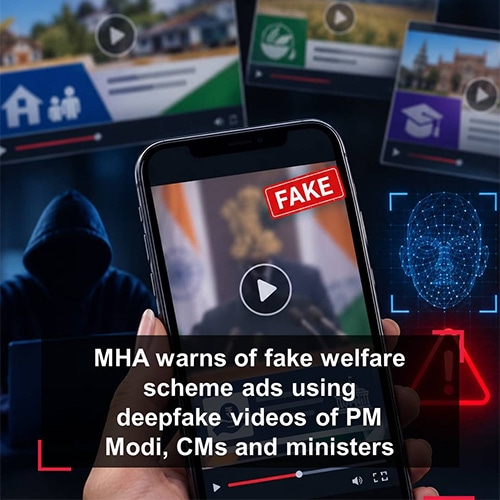
India's Ministry of Home Affairs (MHA) has warned citizens about a growing cyber fraud involving fake government welfare scheme advertisements circulating on Facebook and Instagram. Fraudsters are exploiting public trust in government initiatives to steal money and sensitive personal information.
The fraudulent advertisements reportedly use manipulated photographs, deepfake videos and impersonated endorsements featuring Prime Minister Narendra Modi and other senior ministers. These fabricated promotions falsely promise financial assistance, subsidies and benefits under government schemes.
Cybercriminals attract victims through sponsored social media advertisements that redirect them to deceptive websites or registration portals. Users are encouraged to submit personal details, banking information or mobile numbers to claim supposedly guaranteed benefits.
The fraud often culminates in demands for registration charges, processing fees or UPI payments. Once victims transfer money, the promised benefits never materialise, while their financial information may become vulnerable to further exploitation.
The warning highlights how artificial intelligence and deepfake technologies are making online impersonation increasingly convincing. Fraudsters can fabricate official-looking announcements, misuse government identities and exploit social media advertising systems to reach large audiences.
Citizens should verify welfare announcements through official government websites, avoid suspicious payment links and never disclose OTPs, UPI PINs or banking credentials. Suspected fraud can be reported through the National Cyber Crime Reporting Portal or helpline 1930.
The larger concern is the weaponisation of digital advertising and synthetic media against public trust. Stronger advertisement verification, proactive deepfake detection and faster removal of fraudulent promotions are essential to protect citizens and strengthen accountability across social media platforms.