

Breaking News
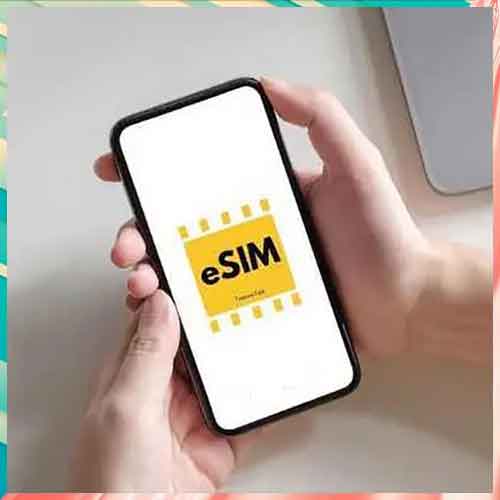
Embedded SIMs (eSIMs) and integrated SIMs (iSIMs) are reshaping enterprise mobility and IoT deployments, offering remote provisioning, simplified device management, and enhanced design flexibility. However, the transition from physical SIMs introduces new security challenges that enterprises must navigate carefully.
Unlike traditional removable SIM cards, eSIMs are embedded in devices, while iSIMs are integrated directly into the processor’s System-on-Chip (SoC). This evolution eliminates the need for physical handling, enabling remote activation and profile management. Enterprises can deploy devices globally, update connectivity profiles over-the-air, and improve operational efficiency while reducing supply chain risks.
Sachin Arora, Head of Connectivity and IoT at Giesecke+Devrient India, explains, “iSIM is more compact and efficient than eSIM, saving space and power while maintaining carrier-grade security.” Gartner analyst Rishi Padhi adds that the redesign has enabled device makers to reclaim space for batteries or sensors, boosting performance in smartphones, wearables, and industrial IoT devices.
Security Advantages and Emerging Threats
eSIMs and iSIMs employ advanced encryption, tamper-resistant secure elements, and GSMA-compliant remote provisioning standards, making them harder to steal or manipulate than traditional SIMs. Digital authentication and public key infrastructure ensure traceability and prevent unauthorized access. Enterprises can disable compromised devices remotely, improving network visibility and compliance.
However, experts caution that digital convenience brings new risks. Threats now include SIM cloning, spoofing, over-the-air attack vectors, and malicious provisioning. Rahul Tandon, Senior VP at IDEMIA Secure Transactions, notes that AI-driven devices and IoT connectivity expand the attack surface, requiring robust identity and lifecycle management.
Industry leaders recommend combining strong cryptography, secure execution environments, and Zero Trust frameworks to safeguard enterprise networks. Behavioral measures, such as default security opt-ins and employee training, are equally critical to mitigate human error, the weakest link in security.
Enterprise Implications
For businesses, eSIMs offer scalable, traceable, and programmable connectivity that simplifies global operations. Remote onboarding, unified endpoint management, and instant activation streamline workflows, while digital logs aid compliance audits. Yet, vigilance remains essential to counter digital attacks, insider misuse, and profile compromise.
As enterprises adopt eSIM and iSIM technologies, security evolves alongside flexibility. While these next-generation SIMs unlock operational benefits, companies must balance innovation with proactive defense against emerging cyber threats.

See What’s Next in Tech With the Fast Forward Newsletter









Tweets From @varindiamag
Nothing to see here - yet
When they Tweet, their Tweets will show up here.