
Google is supporting a research initiative that could reshape how the world thinks about electronic waste by transforming retired smartphones into functional computing clusters. The project, published on Google's research blog on June 12, 2026, describes a process called "phone cluster computing"The project, published on June 12, 2026, on Google's research blog, describes a process called phone cluster computing, developed in partnership with researchers at the University of California San Diego.
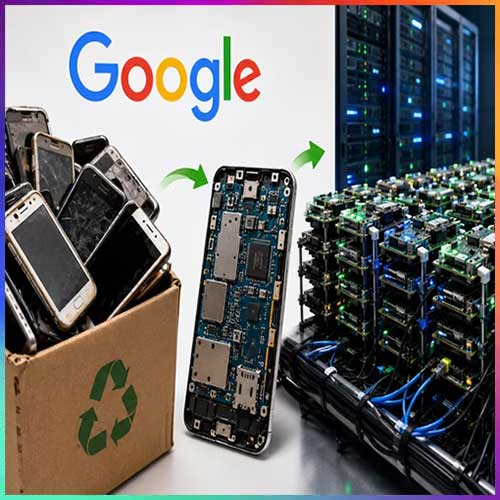
The method involves extracting motherboards from decommissioned smartphones and stripping away unnecessary components such as displays, batteries, cameras, and casings, then networking the remaining processors, memory, and storage into clustersInstead of using complete smartphones, researchers remove components that are not required for computing tasks, including displays, batteries, cameras and external casings. With Google's support, UC San Diego plans to deploy a data center built from approximately 2,000 retired Pixel smartphonesWith Google's support, the University of California San Diego plans to deploy a data centre built from 2,000 Pixel smartphones that will provide hundreds of researchers and students with low-cost, low-carbon cloud computing.
The scale of the underlying problem is significant: roughly 1.5 billion smartphones are sold globally each year, with most decommissioned within two years, often sitting unused in drawers rather than being recycled1.5 billion smartphones are sold annually, and most are decommissioned less than two years later. Most of these unwanted smartphones are neither discarded nor recycled but languish in junk drawers and storage units. The motivation goes beyond cost savings—manufacturing new computing hardware carries a substantial carbon footprint that reuse can help avoid"It takes a spectacular amount of energy to manufacture modern, high-performance computer technology. The paper explores how to make computing more sustainable by finding new uses for devices society has already paid the carbon cost to manufacture".

The full system is targeted for launch in fall 2026 and is expected to support computer science coursework, including systems programming and parallel computing, while serving as a testbed for understanding how consumer-grade hardware holds up under sustained data-center-style workloadsThe cluster is expected to support computer science courses, including Systems Programming and Parallel Computing, while also providing valuable insights into how consumer-grade hardware performs under continuous, data-centre-style workloads.

For now, this remains a university research project rather than a commercial productFor now this is a university research project, not a product you can sign up for. But the underlying idea, that billions of discarded phones worldwide could be networked into useful computing infrastructure, has much bigger implications. Still, analysts note that scaling this approach raises real operational challenges around networking, orchestration, and reliability that institutions will need to navigateRepurposing consumer devices for cluster compute can lower hardware churn and costs, but it raises operational, networking, and orchestration challenges that institutions will need to address.
The diagram illustrates the core process: a retired smartphone is stripped down to its motherboard (removing display, battery, and casing), and these motherboards are then networked together into clusters that can support real computing workloads — from AI inference to academic research environments — offering a low-cost, low-carbon alternative for non-hyperscale computing needs.

See What’s Next in Tech With the Fast Forward Newsletter







Tweets From @varindiamag
Nothing to see here - yet
When they Tweet, their Tweets will show up here.