
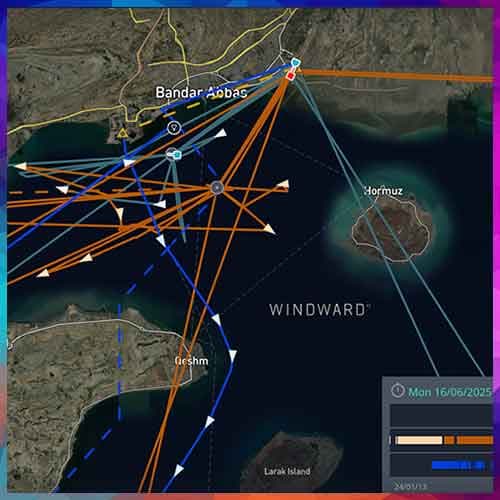
The Strait of Hormuz is witnessing a new dimension of conflict—electronic warfare targeting navigation systems. Reports of GPS jamming and spoofing are raising serious concerns about maritime safety in one of the world’s busiest and most strategic oil routes.
Modern shipping relies heavily on GPS for positioning, direction, and speed. However, these satellite signals are inherently weak when they reach Earth, making them vulnerable to interference. This dependency has turned into a critical risk in conflict-prone zones.
Two primary techniques are being observed. Jamming disrupts signals entirely, causing navigation systems to fail or freeze. Spoofing, a more advanced method, manipulates signals to display false coordinates, misleading ships about their actual location and course.
In narrow waterways like Hormuz, even minor navigational errors can trigger major accidents. Large vessels have limited maneuverability, and incorrect positioning can lead to collisions, groundings, or disruptions in global oil supply chains.
The threat extends beyond navigation. Increasing digitization of ships exposes propulsion, engine controls, and onboard systems to cyberattacks, including ransomware and coordinated system breaches.
Compounding the risk is a gap in crew preparedness. Training often focuses on basic cyber hygiene, while advanced threats like signal manipulation remain under-addressed. Simultaneously, traditional navigation skills are fading.
This growing overdependence on digital systems without adequate resilience is alarming. The Hormuz situation underscores a broader reality: cyber-physical warfare is now a frontline risk, demanding urgent investment in redundancy, training, and secure navigation frameworks.