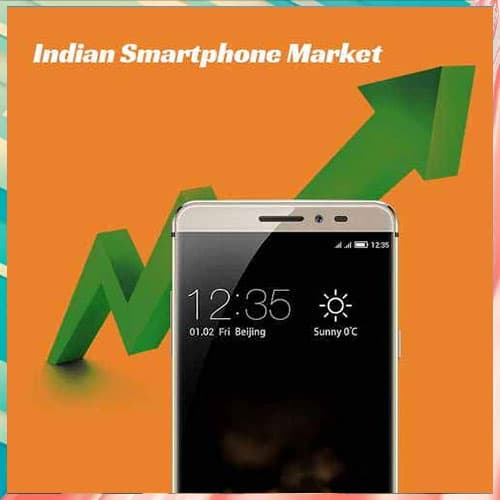
India’s smartphone market ended 2025 largely flat, with shipments rising marginally by 0.5% year on year to 152 million units, according to the latest data from International Data Corporation (IDC).
After a weak start to the year, shipments recovered in the middle quarters before losing momentum again toward year-end. Fourth-quarter shipments fell 5% year on year to 34 million units, as post-festive inventory correction and cautious consumer spending softened demand.
Despite muted volumes, pricing pressure intensified. Average selling prices (ASPs) rose 8% year on year to a record $282 in 2025, while fourth-quarter ASPs increased 4% to $279. IDC attributed the rise to higher memory costs and a depreciating rupee, which dampened demand across both new and existing models.
India remained Apple’s fourth-largest global market in 2025, after the United States, China and Japan. Apple shipped a record 14 million iPhones in India, growing 16% year on year — the fastest growth among its top five markets. The company ranked fifth by volume with a 10% share but led by value, capturing 29% of the market. The iPhone 16 alone accounted for 4% of total smartphone shipments during the year.
At the segment level, growth was uneven. The entry-level category (sub-$100) expanded 18% year on year, increasing its share to 16%, led by Xiaomi and vivo, while Motorola posted the fastest growth. In contrast, the mass-budget segment ($100–$200) declined 8%, with its share shrinking to 41%.
The entry-premium ($200–$400) segment fell 5%, though vivo, Samsung and Motorola recorded gains. Premiumisation was most visible in higher tiers: the mid-premium ($400–$600) segment grew 23%, while the premium ($600–$800) category expanded 37% year on year, the fastest among all price bands. Apple dominated both segments, driven by the iPhone 16 and earlier flagship models.
The super-premium segment ($800 and above) grew 7%, with Apple retaining leadership and Samsung sharply increasing shipments on the back of its Galaxy Ultra models.
On the chipset front, Qualcomm-based smartphones grew 23% year on year, raising their share to 30%, while MediaTek’s share fell to 46% following a shipment decline.
Offline retail played a key role in sustaining volumes. Offline shipments rose 12% year on year, lifting the channel’s share to 57%, the highest level in six years. Online shipments, by contrast, fell 12%, with promotions increasingly concentrated in premium devices.
Vendor rankings remained unchanged, with vivo maintaining leadership, followed by Samsung and OPPO. Brands such as Motorola, realme and iQOO gained ground, while Nothing emerged as the fastest-growing brand with 45% year-on-year growth.
IDC said that while shipments stagnated, market value grew 9% year on year in 2025, driven by continued premiumisation. Looking ahead, the firm expects volumes to contract in 2026 due to a global memory shortage, even as premium demand and financing options support value growth and accelerate market consolidation.
After a weak start to the year, shipments recovered in the middle quarters before losing momentum again toward year-end. Fourth-quarter shipments fell 5% year on year to 34 million units, as post-festive inventory correction and cautious consumer spending softened demand.
Despite muted volumes, pricing pressure intensified. Average selling prices (ASPs) rose 8% year on year to a record $282 in 2025, while fourth-quarter ASPs increased 4% to $279. IDC attributed the rise to higher memory costs and a depreciating rupee, which dampened demand across both new and existing models.
India remained Apple’s fourth-largest global market in 2025, after the United States, China and Japan. Apple shipped a record 14 million iPhones in India, growing 16% year on year — the fastest growth among its top five markets. The company ranked fifth by volume with a 10% share but led by value, capturing 29% of the market. The iPhone 16 alone accounted for 4% of total smartphone shipments during the year.
At the segment level, growth was uneven. The entry-level category (sub-$100) expanded 18% year on year, increasing its share to 16%, led by Xiaomi and vivo, while Motorola posted the fastest growth. In contrast, the mass-budget segment ($100–$200) declined 8%, with its share shrinking to 41%.
The entry-premium ($200–$400) segment fell 5%, though vivo, Samsung and Motorola recorded gains. Premiumisation was most visible in higher tiers: the mid-premium ($400–$600) segment grew 23%, while the premium ($600–$800) category expanded 37% year on year, the fastest among all price bands. Apple dominated both segments, driven by the iPhone 16 and earlier flagship models.
The super-premium segment ($800 and above) grew 7%, with Apple retaining leadership and Samsung sharply increasing shipments on the back of its Galaxy Ultra models.
On the chipset front, Qualcomm-based smartphones grew 23% year on year, raising their share to 30%, while MediaTek’s share fell to 46% following a shipment decline.
Offline retail played a key role in sustaining volumes. Offline shipments rose 12% year on year, lifting the channel’s share to 57%, the highest level in six years. Online shipments, by contrast, fell 12%, with promotions increasingly concentrated in premium devices.
Vendor rankings remained unchanged, with vivo maintaining leadership, followed by Samsung and OPPO. Brands such as Motorola, realme and iQOO gained ground, while Nothing emerged as the fastest-growing brand with 45% year-on-year growth.
IDC said that while shipments stagnated, market value grew 9% year on year in 2025, driven by continued premiumisation. Looking ahead, the firm expects volumes to contract in 2026 due to a global memory shortage, even as premium demand and financing options support value growth and accelerate market consolidation.