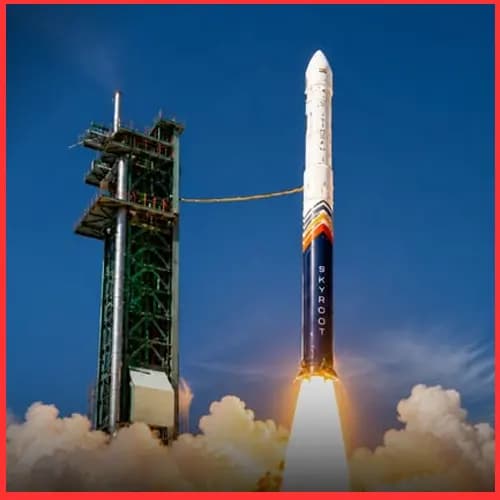
India's first private orbital-class rocket, Vikram-1, successfully placed multiple technology demonstration payloads and postcards, including one from Prime Minister Narendra Modi, into low Earth orbit. The rocket was launched from ISRO's Satish Dhawan Space Centre at Sriharikota.
The launch was delayed more than a half-hour to resolve a last-minute technical problem. The countdown resumed, culminating in the command to ignite Vikram-1’s solid-fueled first stage booster to propel the rocket off the launch pad.
About Mission Aagaman
Named "Mission Aagaman" (arrival), the test flight's launch marks a historic milestone for the country's commercial space sector, executed by Hyderabad-based Skyroot Aerospace. The company termed the mission a "grand success".
Vikram-1 is modest in size compared to India’s larger workhorse rockets. Skyroot’s rocket stands about 72 feet (22 meters) tall, with the capability to place payloads of up to 770 pounds (350 kilograms) into low-Earth orbit. This makes Vikram-1 somewhat larger than the Electron launch vehicle developed by Rocket Lab, the world’s most successful dedicated small satellite launcher.
The flight Saturday went off without any major problems. Three solid-fueled rocket motors fired in succession to reach space, then a small liquid-fueled fourth stage ignited and accelerated to orbital velocity, some 17,000 mph. Live views from onboard cameras showed each phase of the launch sequence.
“We achieved one of the biggest milestones ever in India’s space sector—the first private orbital rocket reaching orbit on the very first attempt,” said Pawan Kumar Chandana, Skyroot’s cofounder and CEO, in remarks to the company’s launch team. “It’s still feels like a dream, and you all made this dream happen.”