

India’s Underwater Robot War Begins
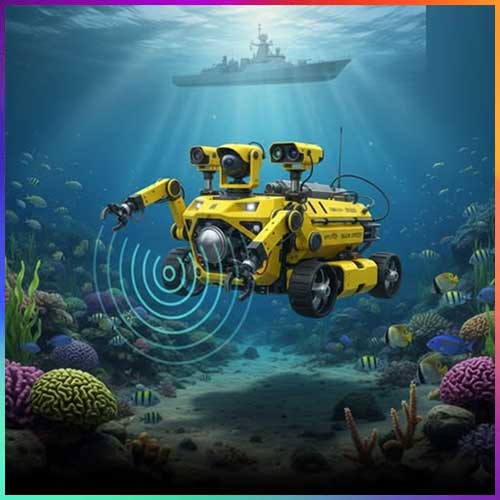
India's deep-tech competition is moving beneath the ocean. Odisha-based Coratia Technologies has secured a ₹66-crore Indian Navy contract for indigenous underwater remotely operated vehicles (UWROVs), signalling the emergence of underwater robotics as a strategic technology market.
Founded in 2021 and incubated at NIT Rourkela, Coratia develops remotely operated vehicles (ROVs) and autonomous underwater vehicles (AUVs). Equipped with cameras, sonar, positioning systems and AI-based inspection capabilities, its robots can inspect locations where sending human divers can be expensive, difficult or dangerous.
The technology has applications far beyond defence. Bridges, dams, ports, ship hulls, offshore infrastructure, pipelines and undersea communication cables all require inspection and monitoring, creating a potentially large dual-use market.
Coratia's Indian Navy contract under the Ministry of Defence's iDEX initiative represents an important validation of indigenous technology. Its Jalasimha platform has undergone open-sea trials and testing beyond 1,485 feet, while integrating sonar, imaging, leak detection and AI-powered analytics.
But Coratia will not have the market to itself. Kochi-based EyeROV has also secured a ₹47-crore Indian Navy order and operates across defence and industrial inspection. Chennai-based Vikra Ocean Tech is developing deep-water ROVs, autonomous surface vessels and amphibious robots.
Competition will therefore increasingly revolve around depth, autonomy, endurance, AI analytics, sensor fusion, payload capability, reliability and cost. Companies capable of combining robotic hardware with intelligent data analysis will have an advantage over those providing inspection hardware alone.
The opportunity is particularly important because subsea infrastructure is becoming strategically critical. Undersea cables carry enormous volumes of international digital traffic, while ports, offshore energy installations and naval infrastructure require continuous monitoring and protection.
India's defence modernisation is simultaneously creating a powerful domestic customer. The Navy is investing across autonomous maritime surveillance, underwater warfare and indigenous platforms, potentially giving Indian startups the scale and operational validation needed to compete internationally.
The next stage could see competition expand from individual robots toward complete AI-powered maritime intelligence platforms connecting underwater vehicles, autonomous surface systems, sonar, computer vision and command centres.
Coratia's ₹66-crore breakthrough therefore represents more than a startup success. It signals the beginning of an indigenous underwater robotics race, where Indian deep-tech companies could challenge imported systems while building technologies for defence, infrastructure and the rapidly expanding blue economy.

See What’s Next in Tech With the Fast Forward Newsletter









Tweets From @varindiamag
Nothing to see here - yet
When they Tweet, their Tweets will show up here.