
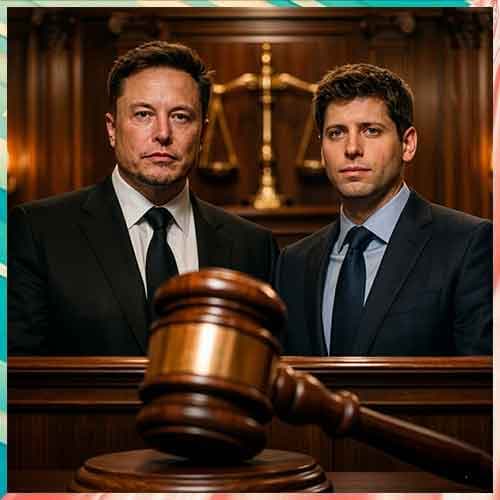
Elon Musk, the CEO of Tesla and SpaceX, is preparing for a significant legal confrontation with Sam Altman, CEO of OpenAI, as tensions escalate over the direction and control of artificial intelligence technology. The upcoming court showdown promises to unravel complex issues surrounding intellectual property, contractual obligations, and the ethical implications of AI development.
The $134 billion legal dispute between Elon Musk and OpenAI CEO Sam Altman is a landmark battle that goes far beyond a simple financial disagreement is set to commence with jury selection on Monday, April 27, 2026, in an Oakland, California federal courtroom. The trial will proceed focused on claims of breach of charitable trust and unjust enrichment.
Trial Structure: Judge Yvonne Gonzalez Rogers has split the proceedings into two phases:
Liability Phase: A jury will determine if any wrongdoing occurred.
Remedies Phase: If liability is found, this phase will determine the appropriate consequences, with the judge retaining final authority.
Background of the Dispute
The roots of the dispute can be traced back to Musk's early involvement with OpenAI, an organization he co-founded in 2015 with the mission of ensuring that artificial general intelligence (AGI) benefits all of humanity. Musk's vision was to create a nonprofit entity that would prioritize safety and ethical considerations in AI development. However, in recent years, as OpenAI transitioned to a capped-profit model, Musk has expressed concerns regarding the organization's alignment with its original mission.
Musk's criticisms have intensified, focusing on the potential risks associated with rapidly advancing AI technologies. He argues that OpenAI’s current trajectory poses existential risks, claiming that Altman’s leadership prioritizes profit over safety. This ideological rift has led Musk to take legal action, asserting that OpenAI has deviated from its foundational principles.
Legal Claims and Implications
The legal proceedings will likely center around several key claims. Musk is expected to argue that OpenAI has misappropriated intellectual property and breached fiduciary duties. His legal team may seek damages and insist on measures to ensure that OpenAI adheres to ethical standards in its AI projects.
This case also raises broader questions about the accountability of tech companies in the AI space. As AI technology continues to evolve rapidly, the legal frameworks governing these innovations are often lagging behind. The outcome of this case could set important precedents regarding corporate responsibility and ethical standards in AI development.
The Stakes for Both Parties
For Musk, this legal battle is not merely about financial restitution; it is a fight for the future of AI governance. He has long positioned himself as a cautionary voice in the tech industry, advocating for regulatory oversight to prevent potential misuse of AI technologies. Winning this case could bolster his influence in shaping AI policy and public perception.
On the other hand, for Altman and OpenAI, the stakes involve defending their operational model and maintaining investor confidence. A favorable ruling for Altman could reinforce OpenAI's position as a leader in AI innovation and mitigate concerns about its ethical commitments.
As the court date approaches, all eyes will be on this legal battle between two titans of the tech industry. The outcome may not only redefine the relationship between Musk and Altman but also influence the broader landscape of AI governance. Both parties are poised to present compelling arguments, making this a pivotal moment in the ongoing dialogue about the future of artificial intelligence.