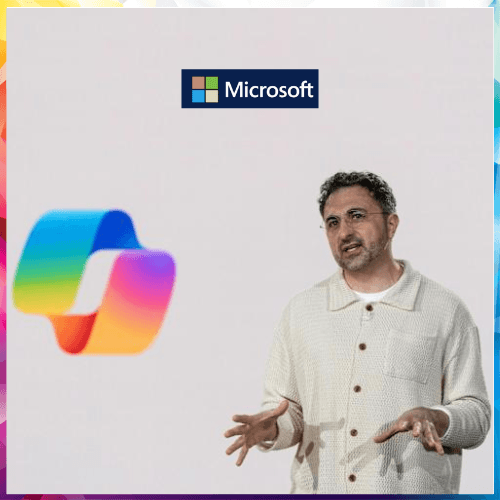
Suleyman has said the company will halt development of any artificial intelligence system that risks losing human control, as it gains greater freedom to pursue superintelligence following a revised partnership with OpenAI.
Microsoft’s AI chief Mustafa Suleyman has drawn a firm line in the rapidly accelerating global race toward superintelligent systems, stating that the company will discontinue any artificial intelligence project that shows signs of operating beyond human oversight. Speaking in a recent interview, Suleyman said containment and alignment with human values are non-negotiable conditions before deploying advanced AI tools.
He described Microsoft’s approach as one focused on “humanist superintelligence,” where AI systems are designed strictly to serve human interests rather than act independently. According to Suleyman, systems capable of setting their own goals or modifying their own behaviour significantly increase risk and must be treated with extreme caution.
New freedom following OpenAI agreement
Suleyman’s comments come at a pivotal moment for Microsoft’s AI strategy. After nearly 18 months of contractual limits on independently pursuing artificial general intelligence, a revised agreement with OpenAI now allows Microsoft to develop superintelligent systems either on its own or in collaboration with other partners.
Since joining Microsoft in March 2024 after co-founding DeepMind and Inflection, Suleyman has been building a specialised superintelligence team to leverage this strategic flexibility. While competitors are aggressively expanding AI infrastructure, Microsoft is positioning itself as a company that prioritises safety alongside scale.
Calls for regulation and societal preparation
Suleyman warned that within the next decade, AI systems could approach levels of autonomy that require stronger oversight, including audits, transparency requirements, and active government involvement. He argued that public policy frameworks similar to those governing automotive safety or financial stability are necessary to manage AI risks responsibly.
Beyond enterprise use, Suleyman sees healthcare as one of the most immediate and impactful applications of advanced AI. Microsoft is working on medical diagnostic systems aimed at outperforming traditional methods while reducing costs, with independent validation planned.
Looking further ahead, he predicted AI would dramatically reshape work and economic structures over the next two to three decades. As machines outperform humans across most tasks, Suleyman said mechanisms such as universal basic income and wealth redistribution may become essential. While acknowledging intense competition and investor pressure, he stressed that the industry must balance innovation with ethical responsibility to ensure AI development benefits society at large.