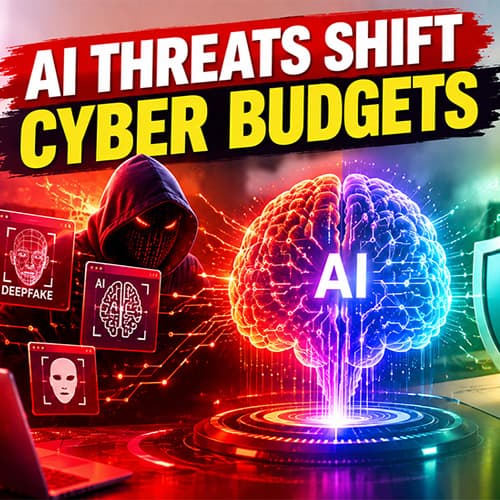

The implementation of India’s Digital Personal Data Protection Act (DPDPA) has pushed organizations to rethink privacy, governance, and cybersecurity strategies. However, the rise of advanced AI ecosystems such as MYTHOS and QWEN has introduced a completely new layer of risk. Enterprises today are no longer dealing only with traditional cyberattacks; they are facing AI-driven threats including deepfake frauds, synthetic identities, autonomous malware, intelligent phishing, and behavioral manipulation attacks. These evolving risks are exposing hidden vulnerabilities across enterprise networks, digital onboarding systems, financial platforms, and customer ecosystems.
The growing adoption of generative AI, Agentic AI, and autonomous decision-making systems has significantly increased the attack surface for enterprises. While organizations focus on DPDPA compliance, many overlook critical blind spots such as AI model vulnerabilities, unsecured data pipelines, insider threats, shadow AI usage, and quantum-era encryption risks. Regulatory bodies including RBI, SEBI, CERT-In, and the Ministry of Electronics and IT have already highlighted the need for stronger governance, AI risk management, and cyber resilience frameworks to safeguard digital infrastructure and sensitive citizen data.
In this emerging environment, enterprises must move beyond compliance-led thinking and adopt proactive, intelligence-driven security architectures. Solutions powered by AI-driven analytics, continuous monitoring, contextual authentication, and post-quantum readiness are becoming essential for protecting enterprise ecosystems. Organizations also need stronger governance around AI ethics, data sovereignty, privacy-centric AI deployments, and secure digital trust frameworks.
MYTHOS Vs QWEN: AI Capability Comparison
| Capability Area | MYTHOS | QWEN |
|---|---|---|
| AI Architecture | Advanced autonomous AI ecosystem | Large Language Model (LLM)-driven framework |
| Cybersecurity Focus | Deep threat intelligence and behavioral analytics | Conversational AI and generative intelligence |
| Deepfake Detection | High contextual anomaly detection | Limited native fraud analytics |
| Enterprise Risk Monitoring | Real-time adaptive monitoring | AI-assisted insights |
| Data Privacy Alignment | Strong governance-centric architecture | Requires enterprise customization |
| Agentic AI Capability | Advanced autonomous decision support | Moderate AI agent functionality |
| Quantum-Readiness Awareness | Focus on future cyber resilience | Emerging capability |
| Industry Use Cases | BFSI, critical infrastructure, defense | Enterprise productivity and automation |
| Threat Correlation | Multi-layered intelligence mapping | Primarily language-driven reasoning |
| Compliance Readiness | Strong alignment with DPDPA and governance | Dependent on deployment environment |
As AI continues reshaping enterprise ecosystems, organizations must strengthen resilience through adaptive cybersecurity, post-quantum preparedness, AI governance, and continuous risk intelligence. The future of digital trust will depend on how effectively enterprises balance innovation, compliance, and intelligent cyber defense in this rapidly evolving AI era.