

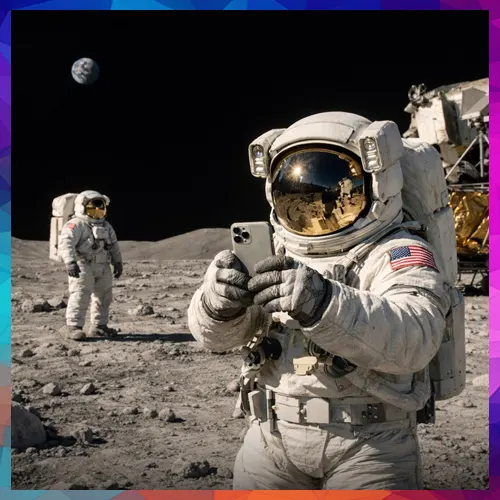
The American space agency has relaxed long-standing restrictions on personal technology, allowing astronauts on upcoming missions, including Artemis II, to carry smartphones into space, signalling a cultural shift toward embracing modern, everyday tools in human spaceflight.
The National Aeronautics and Space Administration (NASA) has approved the use of modern smartphones for astronauts on select upcoming missions, marking a subtle yet meaningful change in how the agency views personal technology in space. The decision will allow crew members heading into orbit—and even toward the Moon—to carry smartphones, including iPhones, during their missions.
NASA Administrator Jared Isaacman confirmed the update, stating that astronauts flying on Crew-12 and the Artemis II mission will be permitted to take smartphones with them. While the agency has traditionally limited personal electronics onboard spacecraft, the move reflects a broader reassessment of legacy rules that have governed astronaut equipment for decades.
Apple has indicated that this will be the first time iPhones are formally approved for extended use in space missions. While specific models have not yet been disclosed, the approval enables astronauts to use familiar devices to capture photos and videos and stay more closely connected with family members back on Earth.
Rethinking old rules for a new era
Isaacman has positioned the decision as more than a lifestyle upgrade for astronauts. He said the agency is actively questioning long-standing internal processes that may no longer align with the pace of modern technology. According to him, astronauts should have access to the same intuitive, powerful tools they use in daily life, as long as safety requirements are met.
Certifying hardware for space remains a complex process. Devices must undergo rigorous testing to ensure they can withstand radiation, extreme temperatures, vibration, vacuum conditions and material safety standards. While these protocols are essential, Isaacman believes some may need updating to avoid unnecessary delays in adopting current-generation technology.
By revisiting these standards, NASA aims to speed up approvals without compromising mission safety.
From legacy cameras to pocket-sized powerhouses
Until now, imaging equipment approved for deep-space missions has often lagged behind consumer technology. For Artemis II, for instance, previously approved cameras included a DSLR model released in 2016, along with older-generation action cameras.
Smartphones, by contrast, offer compact, high-performance cameras capable of capturing photos and video that rival or exceed older space-qualified equipment. Their approval could result in more personal and immersive documentation of future missions, including humanity’s return to lunar orbit.
While smartphones have flown in space before—most notably on private missions and in limited roles during earlier shuttle flights—this marks the first time NASA has formally embraced them for routine astronaut use. As the Artemis programme gathers momentum, the Moon may soon be photographed through the lens of a smartphone.

See What’s Next in Tech With the Fast Forward Newsletter






Tweets From @varindiamag
Nothing to see here - yet
When they Tweet, their Tweets will show up here.