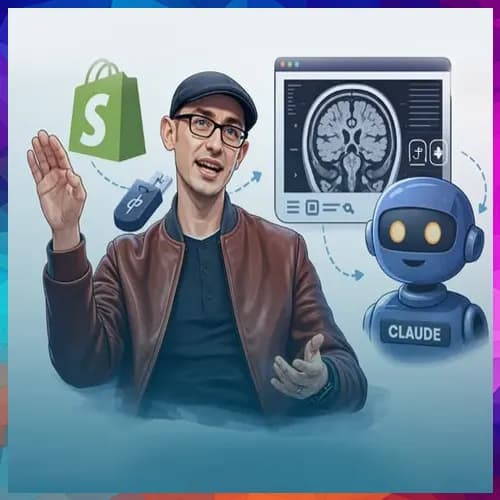
Tobi Lutke revealed how he used an AI assistant to quickly create a web-based viewer for his MRI scan files, highlighting the growing role of artificial intelligence in solving everyday technical and healthcare-related challenges.
The chief executive of Shopify, Tobi Lutke, recently shared how he turned to artificial intelligence to solve a technical problem involving his annual MRI scan files. Instead of installing specialised software to access the medical data, Lutke used an AI tool to build a quick alternative.
According to the entrepreneur, the MRI scan results were provided on a USB drive that required proprietary Windows-based software to open. Since he was working on a Mac device, he chose to experiment with an AI solution rather than search for compatible software.
Lutke explained that he used Claude, an artificial intelligence model developed by Anthropic, to generate a simple web-based viewer for the scan files. By prompting the AI to create an HTML-based interface, he was able to access the data without installing the recommended software.
Sharing the experience on X, Lutke wrote that the AI-generated viewer worked well and even looked better than the original software.
AI as a practical problem-solving tool
Lutke described the incident as an example of how people can develop a habit of using AI tools instinctively to address everyday problems. He suggested that once users experiment with AI frequently, they begin to recognise situations where such tools can quickly provide solutions.
His post has drawn attention amid ongoing discussions about the expanding role of artificial intelligence in software development and other industries. Recent advances in AI coding tools have sparked debate over whether these technologies could significantly change how software engineering work is performed.
The conversation intensified following new AI developments by Anthropic, including updates designed to help professionals automate technical tasks and workflows.
Growing role of AI in healthcare applications
At the same time, artificial intelligence is increasingly being used in healthcare-related applications. Anthropic has also introduced AI tools designed to assist clinicians, insurers and patients with administrative work and access to medical information.
Some versions of Claude now allow users to securely review personal health data such as laboratory results and medical records, helping individuals better understand their health information before consulting with doctors.
Lutke’s example demonstrates how AI is gradually moving beyond specialised technical environments and becoming a practical tool for everyday problem-solving, from coding tasks to interpreting personal medical data.