

India’s leading technology magazine, VARINDIA has recently organized the 14th edition of the Southern India IT Fair (SIITF), reinforcing its status as a flagship event in the country’s technology arena. Over the years, SIITF has evolved into a vital forum where industry leaders, system integrators, solution providers, and domain experts come together to discover emerging trends, drive innovation, and strengthen collaboration across the technology ecosystem.
The landmark event witnessed the presence of distinguished dignitaries, special invitees, senior government officials, industry stalwarts, and key OEMs & partners from the ICT industry.
The evening kickstarted with the auspicious lamp lighting attended by dignitaries like Sanjay Sahay, Ex IPS Founder Director TechConPro; Dr. Arindam Sarkar, Head of the Department of Computer Science and Electronics-Ramakrishna Mission Vidyamandira, Kolkata; Shobha Jagathpal, MD - India CISO- Morgan Stanley; Satish K S, CTO- Zeotap; Satish Kumar Dwibhashi, CIO & CISO- Frontline Fintech; and Dr. Deepak Kumar Sahu, Editor-in-chief, VARINDIA.
Themed “Edge Computing: Powering the Intelligent Edge,” SIITF 2025 showcased the growing importance of edge technologies in shaping the future of digital innovation. Dedicated to the technologists and VAR community of Southern India, the event brought together industry experts to demonstrate how cutting-edge solutions are enabling smarter, faster, and more resilient enterprises.

( L to R): Shobha Jagathpal, MD, India CISO - Morgan Stanley; Dr. Harsha Thennarasu, Chief Cyber Security Advisor Researcher – HKIT Security; Sanjay Sahay, Ex IPS Founder Director TechConPro; Dr. Deepak Kumar Sahu, Editor- in-chief, VARINDIA; Dr. Arindam Sarkar, Head of the Department of Computer Science and Electronics-Ramakrishna Mission Vidyamandira, Kolkata; and Anil Kumar Sahu, Vice President- VARINDIA
The event commenced with a welcome address by Dr. Deepak Kumar Sahu, Editor-in-chief, VARINDIA who highlighted the fact that security analysts identify 2026 as a critical inflection point for identity protection. He further corroborated this with a few datapoints and went on to prove that in this new threat landscape, passwords and one-time codes are no longer sufficient to safeguard sensitive systems and data.
The next speaker to take the stage was Dr. Arindam Sarkar, Head of the Department of Computer Science and Electronics at Ramakrishna Mission Vidyamandira, Kolkata. He delivered an insightful session on how FaceOff Technologies’ “Make in India, Engineered for the World” trust verification platform can help shape the future of secure, ethical, and responsible AI.
Next, Sanjay Sahay, Ex IPS Founder Director TechConPro presented the keynote address for the evening. He shared his perspectives on the intelligent edge and technology-driven security that inspired the audience.
A thought-provoking panel discussion moderated by Dr. Deepak Kumar Sahu, Editor-in-chief, VARINDIA was another highlight of the evening. Themed Technology is redefining its boundaries, the panellists who joined the session were Satish Kumar Dwibhashi, CIO & CISO- Frontline Fintech; Shobha Jagathpal, MD - India CISO- Morgan Stanley; Satish K S, CTO- Zeotap; Dr. Harsha Thennarasu, PhD (Info Sec)- HKIT Security and Pradeepta Mishra, Vice President-AI- Beghou.
SIITF 2025 underscored how edge computing powers the intelligent edge by bringing data processing closer to the source, dramatically lowering latency and enabling real-time decisions. It enhances security, optimizes bandwidth efficiency, and provides the performance needed for next-generation applications. As AI, IoT, automation, and immersive digital experiences continue to expand, edge computing is emerging as a core pillar of modern IT infrastructure.
-------------------------------------------------------------------------------------------------------------------------------------------
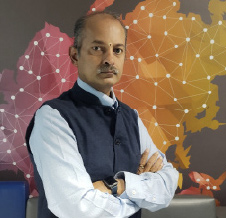
The Intelligent Edge is where AI hype ends and real decisions begin
 SANJAY SAHAY
EX-IPS & FOUNDER AND DIRECTOR, TECHCONPRO
“As we speak about AI, it is important to first remove a few fundamental misconceptions. AI is not a finished solution, nor is generative AI ready to seamlessly deliver enterprise outcomes. MIT research clearly shows that nearly 95% of AI projects fail, and compliance narratives around PII, NIST, and regulations in India remain half-baked and poorly understood. The industry is overly consumed by numbers—trillions of dollars, billion-dollar valuations—while ignoring ground realities. Massive investments can be challenged by far smaller, agile players, proving that scale alone does not guarantee success. AI adoption today is driven more by jargon, borrowed presentations, and hype than by preparedness, research, or real execution. If we do not truly understand where we stand—cloud, edge, or somewhere in between—we risk missing the very purpose of technology-driven transformation.
The Intelligent Edge is where AI, data, and decisions converge, and that convergence must happen as close to the point of data generation as possible. Today, decisions largely converge in boardrooms and centralized data centers, not where data is actually created. This results in latency, inefficiency, and loss of contextual intelligence. Intelligent Edge represents a shift from cloud-only dependence to distributed intelligence powered by edge computing, AI, and IoT, enabling real-time decisions with minimal or no human intervention. From manufacturing floors and campuses to healthcare, smart cities, energy, retail, and agriculture, the edge is where action truly happens. However, edge computing alone is not enough—what matters is actionable intelligence at the edge. Cloud, fog, and edge must coexist as a complementary model, where cloud handles long-term analytics, fog bridges capabilities, and edge delivers immediacy, resilience, and responsiveness.
As we move toward hyperautomation and IoT 2.0, the Intelligent Edge can no longer remain optional; it is becoming a strategic necessity. Benefits such as reduced latency, lower bandwidth costs, improved reliability, compliance, and availability are clear, yet challenges remain—from security vulnerabilities and expanded attack surfaces to data privacy failures and weak governance. Edge insecurity, AI-specific threats, and the absence of robust regulatory oversight further complicate adoption. The future battle will increasingly be AI versus AI, demanding zero-trust architectures, decentralized intelligence, and disciplined execution. While AI has been deliberately simplified and centralized by a few global tech powers, enterprises must build awareness, architecture, and capability to regain control. The Intelligent Edge represents the next wave of distributed intelligence—but only for those willing to move beyond hype and invest in real understanding, research, and execution.”
-----------------------------------------------------------------------------------------------------------------------------------------
Digital identity is the weakest link, and AI is changing everything
 DEEPAK KUMAR SAHU
EDITOR-IN-CHIEF, VARINDIA
“As cyberattacks become increasingly sophisticated and human-like, digital identity has emerged as the weakest link in enterprise security. Stolen credentials and outdated authentication methods continue to be the leading cause of data breaches, unable to keep pace with attackers who now leverage artificial intelligence to execute highly convincing phishing and social-engineering campaigns. Security analysts identify 2026 as a critical inflection point for identity protection. AI-driven emails, voice calls, and messages can replicate tone, context, and intent with alarming precision, making deception far harder to detect. In this evolving threat landscape, passwords and one-time codes are no longer sufficient to safeguard sensitive systems and data.
The narrative in commerce has also shifted. Earlier, many partners worried that traditional e-commerce was eroding their market share. Today, we are entering the Agentic Commerce Revolution—a $10 trillion global opportunity where AI agents are redefining buying and selling, creating new value pools and growth avenues for partners who adapt and innovate. Unlike traditional e-commerce, these agents understand intent, anticipate needs, compare options, negotiate prices, and complete purchases autonomously. This marks a structural shift from platform-led shopping to intent-led orchestration, where consumers simply express needs and AI coordinates across marketplaces, payments, and logistics. For consumers, this delivers hyper-personalized, frictionless experiences; for businesses, success will depend on machine-readable trust, transparent pricing, secure identity, and reliable fulfilment. McKinsey projects that agent-orchestrated commerce could generate nearly $1 trillion in the U.S. by 2030, with global potential between $3 trillion and $5 trillion, potentially approaching $10 trillion as AI ecosystems mature.
Beyond commerce, emerging technologies such as Brain Performance Centers are unlocking human potential through science-backed, non-invasive methods to optimize neurological function, enhance resilience, and support long-term brain health. Leveraging neuroplasticity with cognitive training, EEG-based brain mapping, neurofeedback, and sensory stimulation, these centers deliver highly personalized programs that improve focus, mental clarity, emotional balance, and stress regulation, supporting students, professionals, athletes, and leaders. Guided by resilience, mentorship, and the unwavering belief of partners and peers, we continue to innovate even while running a print publication in a time of industry contraction. The future is being reshaped by AI-driven innovation, amplified by quantum computing technologies such as QNC and QKD, bringing both immense opportunities and complex challenges.”
---------------------------------------------------------------------------------------------------------------------------------------
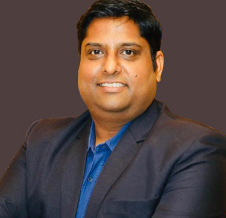
FACEOFF leads next- gen security with AI, behavioral biometrics & quantum-safe tech
 ARINDAM SARKAR
CHIEF ARCHITECT, FACEOFF TECHNOLOGIES INC.
“In today’s rapidly evolving digital landscape, static authentication methods are no longer sufficient to protect sensitive information against increasingly sophisticated threats. Synthetic fraud, driven by data collected from leaked credentials, Aadhaar, PAN cards, and other personal information, has become a major concern, with global losses projected in billions of dollars. Attackers fabricate entirely new personas, exploiting them for loans, employment, or government benefits, and disappear without leaving a trace. The rise of AI- generated deepfakes and synthetic identities, powered by GANs and advanced large language models, further complicates authentication, rendering conventional methods inadequate. FACEOFF addresses these threats with tools like DeepFace, capable of scanning dark web sources, detecting deepfakes, and providing forensic analysis through frame-by-frame and pixel-based scrutiny. By leveraging multimodal analysis — including facial features, posture, eye movement, heart rate, and oxygen saturation — authentication now goes beyond static biometrics to behavioral and physiological verification, significantly enhancing security, confidence, and trust. FACEOFF integrates quantum-safe, post-quantum cryptography to secure personal and biometric data against emerging threats, including “harvest now, decrypt later” attacks, which anticipate future quantum decryption capabilities. Adaptive quantum defense varies encryption techniques depending on device resources, attacker sophistication, and environmental constraints, while neural-generated keys provide a unique, high-strength security backbone. Privacy-first design ensures that only the features necessary for algorithmic analysis are captured, leaving original videos or audio safely local. These features are further obfuscated with noise, split across multiple channels, and processed via encrypted machine learning, preventing reconstruction of the underlying data. FACEOFF also supports age- invariant facial matching, synthetic data generation for low-data scenarios, and secure feature transmission using gossip learning, ensuring resilience, compliance, and adherence to privacy standards like DPDP and GDPR.
FACEOFF’s portfolio spans enterprise, fintech, and public safety applications. Products such as Face Pay enable secure behavioral-biometric authentication for financial transactions, while CCTV and KYC tools facilitate real-time verification, threat detection, and criminal identification. Advanced AI agents, both explainable and adaptive, provide continuous learning and deliver evidence-backed, frame-by-frame analysis through comprehensive PDF reports. From emotion detection to drowsiness monitoring, restricted-area breach alerts, and post-quantum secure data transmission, FACEOFF ensures responsible, explainable AI deployment. By combining quantum, neuro, and AI-driven intelligence, FACEOFF is redefining authentication and privacy, delivering robust, future-ready security solutions capable of withstanding the post-quantum era’s challenges.”
-------------------------------------------------------------------------------------------------------------------------------------
PANEL DISCUSSION: Technology is Redefining its Boundaries

(L to R): Dr. Deepak Kumar Sahu, Editor-in-chief, VARINDIA; Siva Subramanian Loganathan, office of CIO, NetApp; Dr. Harsha Thennarasu, Chief Cyber Security Advisor Researcher – HKIT Security; Satish Kumar Dwibhashi, CIO & CISO - Frontline Fintech; Shobha Jagathpal, MD, India CISO - Morgan Stanley; and Satish K S, CTO - Zeotap
The panel discussion themed Technology is Redefining its Boundaries was moderated by Dr. Deepak Kumar Sahu, Editor-in- chief, VARINDIA. The panellists who joined the discussion were Dr. Harsha Thennarasu, Chief Cyber Security Advisor Researcher – HKIT Security; Satish Kumar Dwibhashi, CIO & CISO- Frontline Fintech; Shobha Jagathpal, MD - India CISO- Morgan Stanley; Satish K S, CTO- Zeotap and Siva Subramanian Loganathan, office of CIO, NetApp.
The discussion stated the fact that AI is redefining boundaries by expanding what is possible across industries, disciplines, and human capabilities. Traditionally, boundaries existed due to limits in speed, scale, accuracy, or human effort. AI pushes beyond these limits. It is removing traditional constraints and opening new possibilities for innovation, efficiency, and growth.
On how AI is redefining boundaries in his company, Siva Subramanian Loganathan, office of CIO, NetApp remarked that in his experience, he has seen a lot of transformation journeys, but not as quick and as fast as AI. “We are reaching about 70 percent of AI deployment in almost every space - from a basic user to a C level, everyone is being impacted by it. It's like the heart of the enterprise at this point of time.”
Dr. Harsha Thennarasu, Chief Cyber Security Advisor Researcher – HKIT Security stated that in the cybersecurity space, AI was looked at as a reactive approach. But now it's a proactive approach as one can manage the detection instantly and respond to a particular threat. “That's where AI makes a big difference in cyber security. Also, with security parameters disappearing, leaders are rethinking trust and protection. In my opinion, it should be security by design and security by culture. The involvement of the leadership in design and culture is very important. In all my 500 audits that I have been a part of, I have seen that where the leadership is driven and more involved, cyber security has been more efficient and effective.”
However, Satish Kumar Dwibhashi, CIO & CISO - Frontline Fintech points out that in the fintech sector, AI is deeply embedded across operations. “For example, most card networks rely entirely on AI-driven systems for fraud detection. Similarly, in the lending space, decision and underwriting engines are powered by AI. As a result, many enterprises have already made significant investments in AI technologies.”
Shobha Jagathpal, MD, India CISO - Morgan Stanley said that from her personal perspective, she has benefited greatly from learning one language alongside another. On the other hand, from a cybersecurity standpoint, it has had a significant impact in several areas. First, it helps in analysing the threat landscape and gaining actionable intelligence. Second, it goes beyond merely identifying vulnerabilities by also enabling their automatic remediation. It has been a huge saviour in terms of time and effort, various optimization scenarios, and in scenarios where you need to produce documentation. So no matter where we apply them, human intervention is definitely a necessity so that we trust and verify what's coming out of the various elements.
Satish K S, CTO - Zeotap stated, “Since there was a keyword of boundaries in terms of how we are looking at AI, I think one of the things that we need to understand is that our psychological boundaries are broken now. Everyone feels that they can do something extra than what they do. For instance, if you look at our company, and if you look at operations, we used to have a specific team for the support services, one for sales operation, and then for marketing operations. Now, if you look at it, everything converges into a single funnel. It's called the Revenue operations (or RevOps) which is a strategic framework that brings together all revenue-related activities in an organisation. So I believe humans are getting comfortable, and they are ready to break the boundaries and take a risk and move.”
As traditional security parameters disappear, the assumptions that once defined “secure” environments—clear network perimeters, fixed identities, and predictable access patterns—are no longer reliable. Cloud computing, remote work, AI-driven systems, and interconnected digital ecosystems have blurred these boundaries. As a result, leaders are rethinking trust by moving away from implicit trust models toward continuous verification. Instead of assuming users, devices, or systems are safe once inside a network, trust is evaluated dynamically based on behaviour, context, and risk.

See What’s Next in Tech With the Fast Forward Newsletter







Tweets From @varindiamag
Nothing to see here - yet
When they Tweet, their Tweets will show up here.