

Breaking News
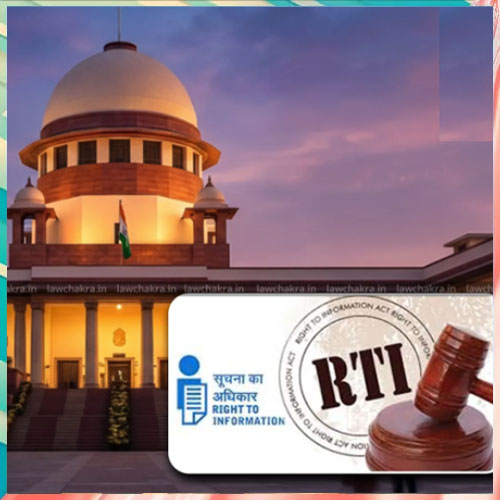
The Supreme Court declined to stay amendments made to the Right to Information Act, through the Digital Personal Data Protection (DPDP) Act, , stating that it would not suspend a statutory framework enacted by Parliament without a detailed hearing. The matter has now been referred to a larger bench for consideration.
A bench led by Chief Justice of India Surya Kant, along with Justices Joymalya Bagchi and Vipul M. Pancholi, observed that the case raises complex constitutional questions involving competing fundamental rights. When petitioners sought interim relief, the Court firmly stated there was “no question of stay,” adding that it would not introduce an alternate regime through an interim order. The case is expected to be listed before a larger bench in March.
Privacy vs Transparency at the Core
At the heart of the dispute is Section 44(3) of the DPDP Act, which amends Section 8(1)(j) of the RTI Act. Earlier, personal information could be disclosed if it was linked to a public activity or justified by a larger public interest. Petitioners argue that the amendment removes this balancing test and creates a broader restriction on disclosure of personal data.
During the hearing, the Court acknowledged the delicate balance between the right to privacy and the public’s right to information. The bench noted that both sides have arguable constitutional claims and that the issue requires careful scrutiny.
Petitioners Raise Constitutional Concerns
The petitions have been filed by transparency advocates and journalists, including Venkatesh Nayak, The Reporters’ Collective, journalist Nitin Sethi, and the National Campaign for People’s Right to Information (NCPRI). They contend that the amendments weaken transparency protections and infringe upon the freedom of speech under Article 19(1)(a).
Apart from the RTI-related changes, the petitioners have also challenged provisions of the DPDP Act and related 2025 Rules that empower the government to seek information from data fiduciaries. They argue that these provisions are overly broad and may affect privacy, free expression, and institutional independence.
While refusing interim relief, the Supreme Court underscored that it will examine the matter in depth before laying down the law on the intersection of data protection and transparency.

See What’s Next in Tech With the Fast Forward Newsletter








Tweets From @varindiamag
Nothing to see here - yet
When they Tweet, their Tweets will show up here.