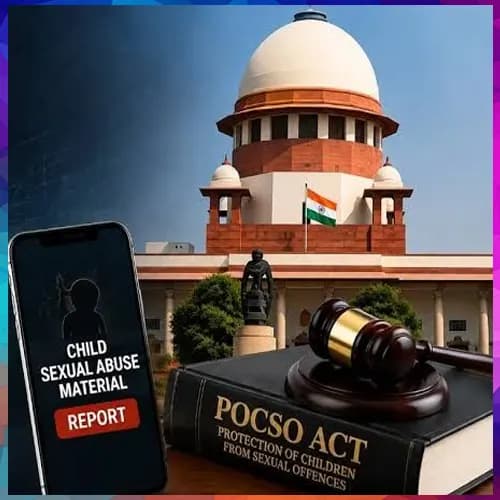
The apex court is examining whether social media intermediaries are meeting India’s mandatory reporting requirements for child sexual abuse material, with the case also seeking standardised procedures for evidence preservation, disclosure and investigation.
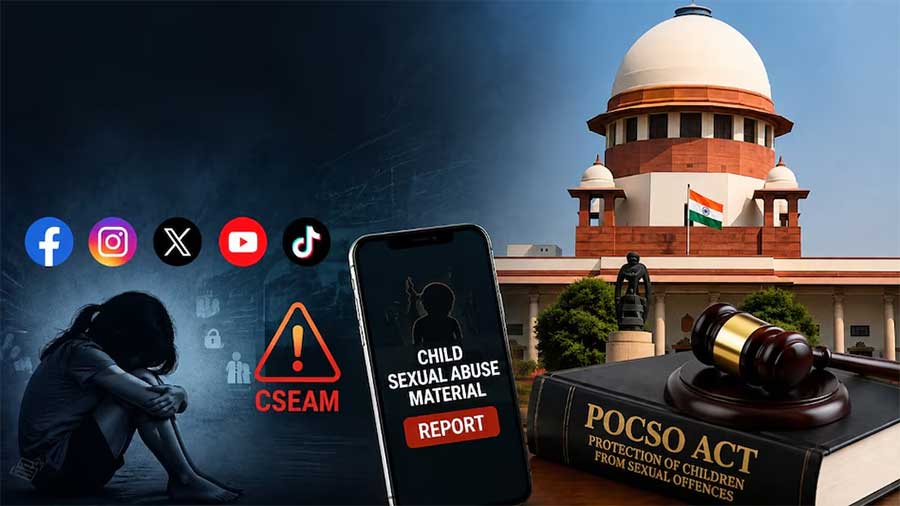
The Supreme Court has raised concerns over the manner in which social media platforms handle and report child sexual exploitative and abuse material (CSEAM), potentially bringing greater regulatory scrutiny on intermediaries and their obligations under India’s child protection laws.
The matter has come before the court through an application alleging that certain social media platforms, after detecting CSEAM, report such instances to the US-based National Center for Missing & Exploited Children (NCMEC) but do not necessarily make a corresponding report to Indian law enforcement authorities.
The application argues that such an approach may not satisfy the reporting obligations prescribed under the Protection of Children from Sexual Offences (POCSO) Act. Under the legal framework, platforms are expected to report cases involving child sexual abuse to the appropriate Indian authorities, including the Special Juvenile Police Unit (SJPU) or local police.
Petition seeks uniform reporting framework
The petitioners have sought criminal action against intermediaries that allegedly fail to meet mandatory reporting requirements. They have also called for a standard operating procedure (SOP) that would establish a common framework for platforms to detect CSEAM, report suspected offences, preserve digital evidence and provide relevant Internet Protocol (IP) information to investigating agencies.
According to the application, a centralised mechanism could help eliminate uncertainty over how platforms should handle such cases once unlawful material is identified. The proposed framework would also provide a secure channel for intermediaries to submit CSEAM-related information and digital evidence directly to Indian authorities.
The plea additionally seeks the inclusion of individuals involved in CSEAM-related offences in the National Database of Sexual Offenders wherever such action is legally permissible.
The proceedings assume significance in light of the Supreme Court’s 2024 ruling concerning intermediary responsibilities in cases involving child sexual abuse. In that judgment, the court had examined the relationship between the due-diligence requirements applicable to intermediaries under the Information Technology Act and their responsibilities under POCSO.
Safe harbour linked to legal compliance
The court had made it clear that intermediaries seeking protection under the IT Act’s safe-harbour provisions must comply with applicable due-diligence requirements. It had also emphasised that POCSO imposes specific reporting duties on intermediaries when they encounter material or instances involving child sexual abuse.
The 2024 ruling further clarified that an intermediary cannot automatically claim safe-harbour protection if it fails to fulfil mandatory reporting obligations under POCSO. The court had also observed that where provisions of POCSO conflict with other legal requirements, the child-protection law would take precedence.
In the latest proceedings, the Supreme Court has permitted the petitioners to implead the Ministry of Electronics and Information Technology (MeitY) and the Ministry of Law and Justice. Both ministries have been directed to respond to the allegations and concerns surrounding the compliance of social media intermediaries with the reporting framework.
The case could have wider implications for how technology platforms operating in India detect, document and report CSEAM, particularly where their existing processes involve reporting to overseas organisations.
The Supreme Court has listed the matter for further hearing on September 24, 2026. The Centre has been directed to file its counter-affidavit at least two weeks before the scheduled hearing.