
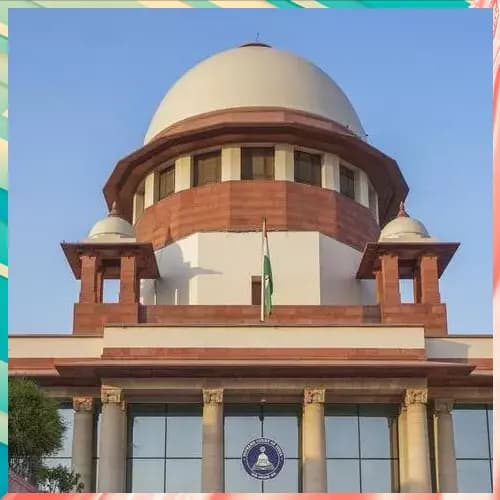
The Supreme Court of India remarked that while it respects the views of eminent authors and thinkers, it cannot rely on information sourced from “WhatsApp University.”
The observation came from a nine-judge Constitution bench during hearings on petitions concerning alleged discrimination against women at religious places, including the Sabarimala Temple in Kerala and the broader scope of religious freedom across faiths.
The bench was led by Chief Justice Surya Kant and included Justices B V Nagarathna, M M Sundresh, Ahsanuddin Amanullah, Aravind Kumar, Augustine George Masih, Prasanna B Varale, R Mahadevan, and Joymalya Bagchi.
Senior advocate Neeraj Kishan Kaul, appearing for the head of the Dawoodi Bohra community, cited an article by Congress leader Shashi Tharoor that discussed judicial restraint in matters of religious relief.
At this juncture, CJI Kant said, "We respect all eminent persons, jurists, etc, but personal opinion is personal opinion."
Kaul said there was no harm in drawing from all sources. "If knowledge and wisdom come from any source, any country, any university, it should be welcomed. We are far too rich as a civilisation not to accept all forms of knowledge and information," Kaul said.
In a lighter moment, Justice Nagarathna said, "But not from WhatsApp University."
Kaul said he was not getting into that. "I am not into which university is good or bad, which is really inconsequential to this debate..... The point is simply that wherever knowledge and information come from, they must be accepted," Kaul said.
A day earlier, the top court observed that it is extremely difficult, if not impossible, for a judicial body to define what constitutes “essential” and “non-essential” religious practices.
A five-judge Constitution bench, by a 4:1 majority verdict in September 2018, lifted a ban that prevented women between the ages of 10 and 50 years from entering the Sabarimala Ayyappa temple and held that the centuries-old Hindu religious practice was illegal and unconstitutional.
The Supreme Court is hearing a batch of petitions challenging religious practices that allegedly discriminate against women. The Sabarimala Temple case, which previously struck down a ban on women of menstruating age entering the temple, is a key precedent in these proceedings. The current nine-judge bench is tasked with determining the scope of judicial review in matters of religious freedom.