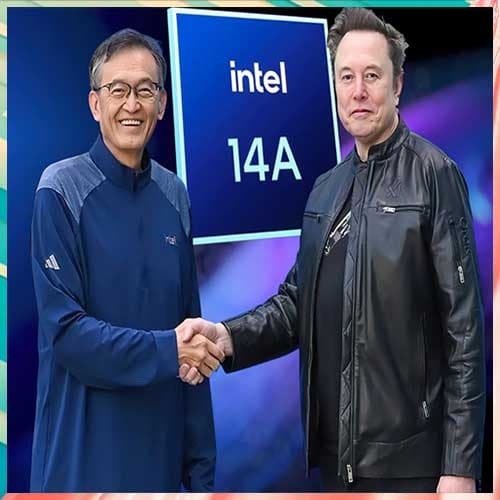
Tesla plans to manufacture chips for its ambitious Terafab AI complex using Intel’s next-generation 14A process, a move that could mark a కీల major win for Intel’s contract manufacturing ambitions.
CEO Elon Musk said the Terafab facility in Austin will rely on Intel’s advanced process technology to produce chips designed to power Tesla’s future AI, robotics, and data center workloads.
If finalized at scale, the agreement would represent Intel’s first major external customer for its 14A node—an important milestone as the company seeks to compete with leading foundries such as TSMC and revive its struggling contract manufacturing business.
Intel has previously indicated it was in talks with large customers for 14A but had not disclosed any major commitments. Securing Tesla as a customer would significantly strengthen its position in the advanced chip manufacturing race.
The Terafab project itself is a massive undertaking. Musk has outlined plans for a sprawling AI chip complex involving both Tesla and SpaceX, with two dedicated fabrication facilities—one aimed at powering electric vehicles and humanoid robots, and another designed for AI-driven data centers, including potential space-based infrastructure.
Musk has said the long-term goal is to produce up to one terawatt of computing capacity annually—roughly double the current total compute capacity generated across the United States. Achieving that scale would require enormous investment, with estimates ranging from $5 trillion to $13 trillion in capital expenditure.
While many operational details—such as funding, equipment sourcing, and timelines—remain unclear, the project underscores Tesla’s expanding ambitions beyond electric vehicles into AI infrastructure and robotics.
For Intel, the partnership could provide critical validation for its advanced manufacturing roadmap and help attract additional customers to its foundry business, which is central to its turnaround strategy.
CEO Elon Musk said the Terafab facility in Austin will rely on Intel’s advanced process technology to produce chips designed to power Tesla’s future AI, robotics, and data center workloads.
If finalized at scale, the agreement would represent Intel’s first major external customer for its 14A node—an important milestone as the company seeks to compete with leading foundries such as TSMC and revive its struggling contract manufacturing business.
Intel has previously indicated it was in talks with large customers for 14A but had not disclosed any major commitments. Securing Tesla as a customer would significantly strengthen its position in the advanced chip manufacturing race.
The Terafab project itself is a massive undertaking. Musk has outlined plans for a sprawling AI chip complex involving both Tesla and SpaceX, with two dedicated fabrication facilities—one aimed at powering electric vehicles and humanoid robots, and another designed for AI-driven data centers, including potential space-based infrastructure.
Musk has said the long-term goal is to produce up to one terawatt of computing capacity annually—roughly double the current total compute capacity generated across the United States. Achieving that scale would require enormous investment, with estimates ranging from $5 trillion to $13 trillion in capital expenditure.
While many operational details—such as funding, equipment sourcing, and timelines—remain unclear, the project underscores Tesla’s expanding ambitions beyond electric vehicles into AI infrastructure and robotics.
For Intel, the partnership could provide critical validation for its advanced manufacturing roadmap and help attract additional customers to its foundry business, which is central to its turnaround strategy.