
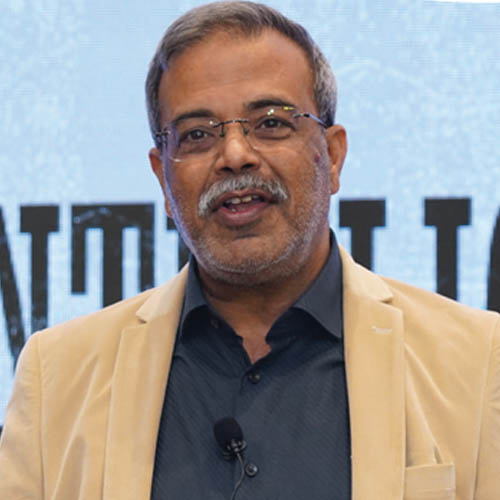
SANJAY SAHAY
EX-IPS & FOUNDER AND DIRECTOR, TECHCONPRO
“As we speak about AI, it is important to first remove a few fundamental misconceptions. AI is not a finished solution, nor is generative AI ready to seamlessly deliver enterprise outcomes. MIT research clearly shows that nearly 95% of AI projects fail, and compliance narratives around PII, NIST, and regulations in India remain half-baked and poorly understood. The industry is overly consumed by numbers—trillions of dollars, billion-dollar valuations—while ignoring ground realities. Massive investments can be challenged by far smaller, agile players, proving that scale alone does not guarantee success. AI adoption today is driven more by jargon, borrowed presentations, and hype than by preparedness, research, or real execution. If we do not truly understand where we stand—cloud, edge, or somewhere in between—we risk missing the very purpose of technology-driven transformation.
The Intelligent Edge is where AI, data, and decisions converge, and that convergence must happen as close to the point of data generation as possible. Today, decisions largely converge in boardrooms and centralized data centers, not where data is actually created. This results in latency, inefficiency, and loss of contextual intelligence. Intelligent Edge represents a shift from cloud-only dependence to distributed intelligence powered by edge computing, AI, and IoT, enabling real-time decisions with minimal or no human intervention. From manufacturing floors and campuses to healthcare, smart cities, energy, retail, and agriculture, the edge is where action truly happens. However, edge computing alone is not enough—what matters is actionable intelligence at the edge. Cloud, fog, and edge must coexist as a complementary model, where cloud handles long-term analytics, fog bridges capabilities, and edge delivers immediacy, resilience, and responsiveness.
As we move toward hyperautomation and IoT 2.0, the Intelligent Edge can no longer remain optional; it is becoming a strategic necessity. Benefits such as reduced latency, lower bandwidth costs, improved reliability, compliance, and availability are clear, yet challenges remain—from security vulnerabilities and expanded attack surfaces to data privacy failures and weak governance. Edge insecurity, AI-specific threats, and the absence of robust regulatory oversight further complicate adoption. The future battle will increasingly be AI versus AI, demanding zero-trust architectures, decentralized intelligence, and disciplined execution. While AI has been deliberately simplified and centralized by a few global tech powers, enterprises must build awareness, architecture, and capability to regain control. The Intelligent Edge represents the next wave of distributed intelligence—but only for those willing to move beyond hype and invest in real understanding, research, and execution.”

See What’s Next in Tech With the Fast Forward Newsletter







Tweets From @varindiamag
Nothing to see here - yet
When they Tweet, their Tweets will show up here.