
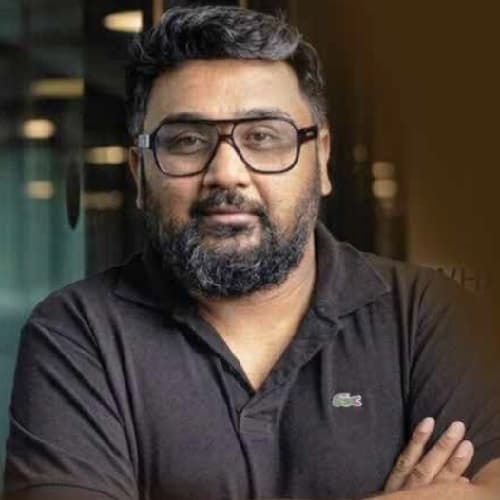
MARK ZUCKERBERG HAS PUT ONE OF INDIA'S BEST-KNOWN ENTREPRENEURS IN CHARGE OF HIS THREE-BILLION-USER MESSAGING APP. THE APPOINTMENT IS LESS ABOUT LEADERSHIP AND MORE ABOUT A REVENUE GAP META HAS STRUGGLED FOR YEARS TO CLOSE.
When Meta announced on June 22 that Kunal Shah would take over WhatsApp, the surprise was not that an Indian had been handed one of the most-used products on the planet. It was who. Shah is not a career platform executive. He is a founder, an angel investor, and the man behind CRED, a fintech business better known for credit-card rewards than for running global infrastructure. The choice tells you a great deal about what Meta now believes WhatsApp is for.
Shah succeeds Will Cathcart, who ran the app for more than seven years. Reports say Cathcart is not leaving the company but moving into a role building new products at Meta, with Zuckerberg noting he would work on consumer-facing AI. Under Cathcart, WhatsApp roughly doubled its user base to more than three billion monthly active users and pushed the app into business messaging and early commerce. By any measure of reach, his tenure was a success.
The problem he leaves behind is a different one.
AN ADVICE CALL THAT BECAME A JOB
The handover itself was unconventional. As Bloomberg first reported, the process began when Meta's chief product officer, Chris Cox, sent Shah a cold email in the spring, not to recruit him but to seek his views on WhatsApp's future. Cox had been canvassing entrepreneurs and investors in markets such as India, Brazil and Mexico, where the app is woven into commerce and daily life, and Shah's thinking made an immediate impression. Over roughly three months, that conversation turned into a recruitment, with Shah making several visits to Meta's California headquarters and meeting Mark Zuckerberg before the offer was made.
Shah succeeds Will Cathcart, who had run WhatsApp since 2019. His tenure was, by the metric of reach, a clear success: under Cathcart the app roughly doubled its base from about 1.5 billion to more than 3.3 billion monthly users while moving into business messaging and early commerce. The problem he hands on is a different one entirely.
THE REACH-REVENUE MISMATCH
WhatsApp's difficulty has never been adoption. For all its cultural dominance, the app's contribution to Meta's revenue has lagged far behind its scale. The platform now carries more than three billion monthly users worldwide, and over 500 million of them are in India, its single biggest market. Yet the money has been slow to follow the eyeballs.
That is changing at the edges. Meta's "other revenue" line within its Family of Apps, driven largely by WhatsApp paid messaging, reached $801 million in the fourth quarter of 2025, and the company has said paid messaging crossed a $2 billion annual run-rate around the same time. Click-to- WhatsApp ads, the format that drops a user from a Facebook or Instagram ad straight into a business chat, have become one of Meta's fastest-growing products: Meta disclosed roughly $1.5 billion in click-to-WhatsApp ad revenue in 2025, growing about 80% year on year, and analysts have begun describing the app as Meta's next major revenue pillar after Facebook and Instagram.
These are real numbers, but set against an app of WhatsApp's scale they read as a beginning, not an arrival.
THE PAYMENTS PROBLEM, IN HARD NUMBERS
Nowhere is the mismatch starker than in payments, and nowhere does it matter more than in India. The figures are unforgiving. As of May 2026, WhatsApp Pay accounted for just 0.65% of India's UPI market, while PhonePe held 46.2%, Google Pay 32.7% and Paytm 7.9%. Even smaller and newer players such as Navi, super.money, BHIM and CRED rank ahead of it. For an app sitting on more than half a billion Indian phones, that ranking is close to an indictment.
The causes are well understood, and worth laying out for readers because they explain why this is so hard to fix. The Federal, summarising the dynamics, points to timing first: PhonePe launched in 2016 and Google Pay in 2017, but WhatsApp Pay did not receive full regulatory clearance until 2020, by which point Indian consumers had already formed habits around the incumbents.
Then there was strategy. PhonePe and Google Pay spent years buying adoption with cashback, scratch cards and rewards, and built physical acceptance at neighbourhood shops, while WhatsApp Pay leaned on its existing user base and offered little reason to switch. Design compounded both: the service stayed buried inside the messaging interface, with no standalone payments experience or home-screen presence, so many users never encountered it. Trust played a part too, with some users wary of linking bank accounts to a Meta-owned platform already plagued by spam and phishing.
Against that backdrop sits a number that frames Meta's whole India project. Meta has now committed more than $6.6 billion to India: $5.7 billion in 2020 for a 9.99% stake in Reliance's Jio Platforms, and $900 million in June 2026 for roughly 20% of CRED. The Jio investment was meant, in part, to power WhatsApp commerce, and it has not moved the payments needle. The CRED cheque is the second swing at the same pitch.
THE REGULATORY WINDOW
What makes the timing of Shah's appointment more than coincidence is a looming regulatory deadline. India's National Payments Corporation (NPCI) has set December 31, 2026 as the date by which any single UPI app must cap its share at 30% of transaction volume, a rule first proposed in 2020 and twice deferred. PhonePe at 46.2% and Google Pay at 32.7% both sit well above that ceiling, so if the cap is enforced both would have to stop onboarding new users above the threshold.
That does not hand the market to WhatsApp. Payment habits are sticky and CRED's own UPI product sits at just 0.68% despite years in market, so redistribution is an opening, not a guarantee. But it is the first structural break WhatsApp Pay has ever been offered. It is also why, back in April, Amazon, Meta, CRED and others lobbied the NPCI directly, raising concerns about how the dominant apps acquire users and use contact data, and asking for support to help smaller players compete. Shah arrives precisely as that window is prised open.
WHY SHAH, SPECIFICALLY
The fit becomes obvious once you trace Shah's career. He first founded FreeCharge which was sold to Snapdeal for about $450 million, he then launched CRED in 2018 and grew it from credit-card rewards into lending, insurance, payments and wealth management, while backing more than 250 startups including Razorpay and Gojek.
His entire track record sits at the junction of consumer trust and financial plumbing, exactly the territory Meta wants WhatsApp to occupy. Zuckerberg publicly praised what he called Shah's builder mentality, the trait Meta has emphasised as it pours money into AI and new consumer products. The $900 million CRED investment, which valued the fintech at around $4.5 billion, reads less as a side deal than as part of the price of the hire.
THE HARDER QUESTIONS
A useful analysis resists treating this as a coronation. The first question is whether WhatsApp's payments failure is a leadership problem at all. Its struggles have been driven as much by regulatory caps and the entrenched UPI duopoly as by any deficit of vision, and a founder's instincts do not rewrite a regulator's rulebook. There is evidence the duopoly is loosening on its own: the combined share of PhonePe and Google Pay slipped below 80% for the first time in May 2026, falling to 79%, as smaller apps gained ground ahead of the cap.
WHETHER WHATSAPP PAY CAPTURES ANY OF THAT DRIFT IS UNPROVEN.
There is a product trap, too. The very integration that should be WhatsApp Pay's advantage has been a weakness, and Meta's own response hints at ambivalence: with WhatsApp Flows, customers completing purchases inside business chats can now pay through any UPI app or card rather than being funnelled into WhatsApp Pay. Shah will have to monetise without breaking the simplicity and trust that made the app ubiquitous, a balance that has defeated more conventional operators. And there is the cultural question of an independent founder joining a long-tenured executive team inside one of the world's largest firms, a tension Meta is framing as the whole point.
THE OTHER LEVER: BUSINESS MESSAGING
Payments is the headline, but the larger near-term prize may be enterprise messaging, where the India numbers are already strong. More than 15 million businesses use WhatsApp Business in India, the largest such base in the world, and India's WhatsApp commerce GMV was estimated at around ₹2.5 lakh crore in 2025. If Shah's real mandate is to fuse AI, commerce and payments into a single conversational layer, this is the ground where it compounds fastest.
For VAR India's readership this is more than a marquee personnel story. WhatsApp Business has become genuine infrastructure for Indian SMBs, retailers and the solution providers who build customer-engagement tools on its API. A more aggressively monetised WhatsApp means new commercial surfaces for partners to build on, but also a platform owner with sharper interests in a space partners currently treat as open ground. The Business Solution Provider ecosystem, message-template pricing and any move toward deeper in-app payments will all flow directly into partner economics.
What Meta has bought, in the end, is a thesis with a deadline. Cathcart proved WhatsApp could reach almost everyone. Shah has been hired, and CRED effectively acquired into Meta's orbit, to prove that reach can finally be made to pay, with a regulatory window closing at the end of 2026 that may never open this wide again.