Why Enterprises Must Move Beyond DPDP Compliance Toward Quantum-Ready Cybersecurity
The implementation of India’s Digital Personal Data Protection (DPDP) Act has triggered widespread discussions around data privacy and compliance. However, many organizations continue to operate under the misconception that compliance alone guarantees protection. In reality, privacy cannot exist without strong security architecture. As cybercriminals adopt AI-powered attack models, deepfake frauds, synthetic identities, and intelligent impersonation attacks are emerging as the next generation of enterprise threats. Traditional cybersecurity frameworks are increasingly becoming inadequate in this evolving threat landscape.
The risk becomes even more critical with the rise of quantum computing. Conventional encryption standards such as RSA and AES, which form the backbone of today’s digital security systems, are expected to become vulnerable in the quantum era. Governments, regulators, and institutions globally are already preparing for Post-Quantum Cryptography (PQC). In India, warnings and advisories from the Ministry of Finance, Ministry of Electronics and IT, RBI, SEBI, and CERT-In indicate the urgency for enterprises, BFSI organizations, and critical infrastructure sectors to strengthen cyber resilience against emerging AI-driven and quantum-enabled threats. The growing concerns around advanced systems such as MYTHOS, QWIN, and other superintelligent AI frameworks further reinforce the need for proactive cybersecurity modernization.
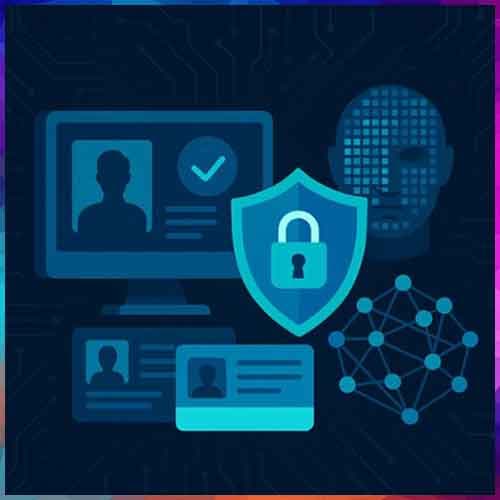
One of the fastest-growing concerns today is synthetic fraud powered by deepfake technologies. Fraudsters are now capable of generating hyper-realistic audio, video, and digital identities to manipulate financial systems, bypass authentication processes, and execute social engineering attacks. These AI-generated synthetic identities are increasingly targeting banking transactions, executive communications, digital onboarding systems, insurance claims, and enterprise workflows. Traditional fraud detection systems often fail to detect these advanced manipulations because they are designed for static rule-based environments rather than adaptive AI threats.
Against this backdrop, Faceoff Technologies is emerging as a pioneering cybersecurity innovator focused on combating deepfake and synthetic fraud through next-generation AI security solutions. The company has developed a powerful framework powered by homegrown Agentic RAG (Retrieval-Augmented Generation) architecture combined with naturally inspired algorithms designed to identify suspicious behavioral intelligence patterns in real time. Unlike traditional security systems, Faceoff Technologies integrates contextual intelligence, adaptive learning, and real-time threat correlation to detect AI-generated manipulations before they can impact enterprise systems.
Its advanced deepfake detection engine analyzes facial movements, voice modulation patterns, behavioral inconsistencies, transaction anomalies, and contextual authenticity markers to identify fraudulent interactions with high accuracy. The platform further strengthens enterprise security through customized algorithms integrated with Small Language Models (SLMs), enabling lightweight, domain-specific, and privacy-centric AI security architectures. This approach allows enterprises to deploy secure, scalable, and intelligent fraud prevention mechanisms without exposing sensitive data to public AI ecosystems.
Faceoff Technologies is also helping organizations prepare for the future by aligning cybersecurity frameworks with quantum-resilient strategies and AI-driven governance models. By combining deepfake detection, intelligent fraud analytics, adaptive AI security, and post-quantum readiness, the company is positioning itself at the forefront of next-generation enterprise protection.
In an age where synthetic intelligence is reshaping cybercrime, enterprises can no longer rely solely on compliance-driven approaches. The future of digital trust will depend on intelligent, adaptive, and quantum-ready security ecosystems capable of protecting enterprises against the rapidly evolving world of AI-powered fraud and cyber deception.