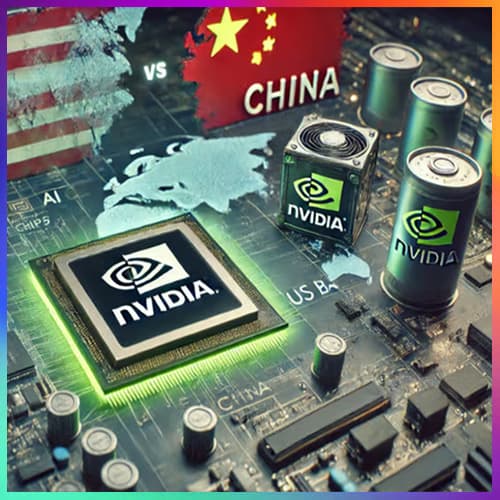
The Trump administration is reviewing whether to permit Nvidia to sell its advanced H200 artificial intelligence processors to China.The move would mark a significant shift in U.S. export-control policy and comes amid a period of easing tensions between Washington and Beijing.
According to Reuters, the Commerce Department—responsible for administering U.S. export restrictions—is evaluating a potential policy change that would relax the current ban on selling high-performance AI chips to China. The sources stressed that discussions remain fluid and plans could still change. A White House official declined to comment directly, telling Reuters only that the administration “is committed to securing America’s global technology leadership and safeguarding our national security.” The Commerce Department did not respond to a Reuters request for comment.
Nvidia told the news agency it would not comment on the policy review but noted that existing regulations prevent the company from offering a competitive AI data-center chip in China, effectively ceding one of the world’s largest markets to fast-growing foreign rivals. The possibility of loosening restrictions follows a tech-trade truce struck last month between President Donald Trump and Chinese President Xi Jinping during talks in Busan.
The potential shift is expected to draw scrutiny from China hawks in Washington, who have long warned that advanced AI hardware could enhance Beijing’s military capabilities. Those concerns previously led the Biden administration to impose strict limits on AI chip exports to China. However, the Trump administration has oscillated between threatening tighter restrictions and reversing them, particularly as Beijing has wielded its own export controls on rare earth minerals critical for global tech manufacturing.
Nvidia’s H200 processor, introduced two years ago, features more high-bandwidth memory than the widely used H100, enabling significantly faster data processing. Industry analysts estimate it is roughly twice as powerful as the H20, which is currently the most advanced Nvidia AI chip legally allowed for export to China after the administration rolled back a short-lived ban earlier this year.
Recently the Commerce Department separately approved exports of up to 70,000 Nvidia Blackwell-series chips to Saudi Arabia’s Humain and the UAE’s G42, according to the Reuters report.
If approved, the policy shift would expand Nvidia’s access to a vital market at a time when global competition for leadership in AI hardware is intensifying, while also raising questions about the balance between national security concerns and commercial interests in the U.S.–China tech relationship.
According to Reuters, the Commerce Department—responsible for administering U.S. export restrictions—is evaluating a potential policy change that would relax the current ban on selling high-performance AI chips to China. The sources stressed that discussions remain fluid and plans could still change. A White House official declined to comment directly, telling Reuters only that the administration “is committed to securing America’s global technology leadership and safeguarding our national security.” The Commerce Department did not respond to a Reuters request for comment.
Nvidia told the news agency it would not comment on the policy review but noted that existing regulations prevent the company from offering a competitive AI data-center chip in China, effectively ceding one of the world’s largest markets to fast-growing foreign rivals. The possibility of loosening restrictions follows a tech-trade truce struck last month between President Donald Trump and Chinese President Xi Jinping during talks in Busan.
The potential shift is expected to draw scrutiny from China hawks in Washington, who have long warned that advanced AI hardware could enhance Beijing’s military capabilities. Those concerns previously led the Biden administration to impose strict limits on AI chip exports to China. However, the Trump administration has oscillated between threatening tighter restrictions and reversing them, particularly as Beijing has wielded its own export controls on rare earth minerals critical for global tech manufacturing.
Nvidia’s H200 processor, introduced two years ago, features more high-bandwidth memory than the widely used H100, enabling significantly faster data processing. Industry analysts estimate it is roughly twice as powerful as the H20, which is currently the most advanced Nvidia AI chip legally allowed for export to China after the administration rolled back a short-lived ban earlier this year.
Recently the Commerce Department separately approved exports of up to 70,000 Nvidia Blackwell-series chips to Saudi Arabia’s Humain and the UAE’s G42, according to the Reuters report.
If approved, the policy shift would expand Nvidia’s access to a vital market at a time when global competition for leadership in AI hardware is intensifying, while also raising questions about the balance between national security concerns and commercial interests in the U.S.–China tech relationship.