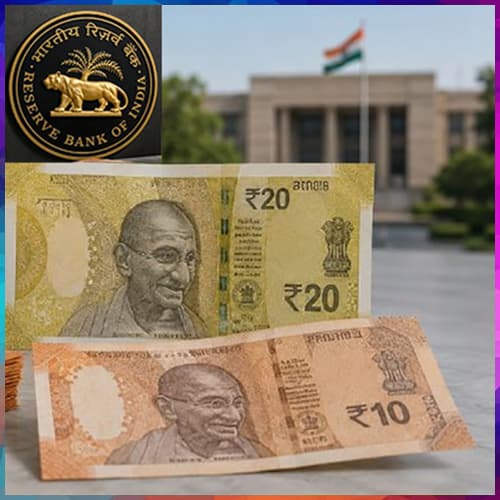
The Indian Rupee, which has been witnessing a downward trend for a couple of months, has hit the lowest at Rs.62 against the Dollar on 67th Independence of India. A weak Rupee will anyways have a negative impact on the domestic economy. If this continues, the after-effects will be seen in the form of inflation, slow GDP growth and economic reformsand Foreign Exchange deficit. Policy-makers have taken various steps in recent days to stem the decline in the rupee with the Central Bank initiating many measures but to no avail. India being a country dependent on imports, importers are facing a tough time tackling the situation and bringing it under control.
Rupee Fluctuation Effect on SI/Distribution Business
The fall in the rupee has had an impact on the economy as a whole and the worst sufferers have been the System Integrators and Distributors of the country as the significant depreciation is already resulting in delayed import decisions. The partners are caught in a bind since most of them are net importers. This, in turn, is impacting the revenue growth of companies.
 |  |  |  |
| Kshitij M. Kotak CEO, Fortune Grecells P Ltd. | K. V. Jagannathan CEO, Choice Solutions | Purvi Kotecha Director – Finance, Ishan Group | Ranjan Chopra CMD, Team Computers |
"Since we import hardware building blocks, the dollar price rise instantly and directly hits our profitability. Our Channel Partners had already booked orders and we safeguarded them by absorbing total price shock which has resulted in massively eroding our bottom line with immediate effect. Dollar going up has badly dampened SMB customers' buying sentiment as informed by our Channel Partners with Enterprises asking for staggered payment facility or lease options,” saysKshitij M. Kotak, CEO, Fortune Grecells P Ltd.
With the dollar expected to go up to the level of Rs.75, Kshitij predicts a scenario of an immediate surge of orders to beat price rise.
“Rupee devaluation has direct correlation with profits of our organization. Whenever the dollar becomes stronger, the entire ecosystem gets impacted. I have seen some OEMs/vendors change for their benefit even there is no much direct impact in short term or even existing stocks last, as they have complete manufacturing systems in India with over 80% indigenous components. Customer proposals with long-term commitments and long execution cycles have high impact and will be challenging to meet expectations,” sharesK. V. Jagannathan, CEO, Choice Solutions.
With costs escalating and clients stalling their buying decisions, the rise has made its impact fall on the regular sales cycle of the companies, eventually hampering their sales and margins. "The deals that are handpicked by our sales force from the market at competitive rates have to be executed at the same prices incurring losses. This elongatesthe sales cycle in turn and the completion of the time-worn transactions becomes the biggest challenge. Gathering new orders from the market at higher rates becomes challenging for the sales force and this, in turn, makes it tough for them to accomplish the given targets," informsPurviKotecha, Director – Finance, Ishan Group.
 |  |  |  |
| Harshad Thakkar Head of Sales, Rincon India Solutions Pvt. Ltd | Ashok Kumar CEO, RAH Infotech | Sudershan Ranganathan CEO, Veeras Infotek | Sunil Pillai, Co-Founder & Managing Director, iValue InfoSolutions |
"Hardware has become more expensive and customers are stretching their asset refresh cycles. Sales are down by 10 percent,"retorts Ranjan Chopra, CMD, Team Computers.
Harshad Thakkar, Head of Sales, Rincon India Solutions Pvt. Ltd, also points out how coupled with the price rise the tax structure is making things look more complicated at present. “Customers, as usual, arenot agreeable to a higher price and things have suddenly become difficult. Added to that our tax structure is so heavy (Software has service tax, VAT and then Octroi in Mumbai). All this is adding to the price burden on the customer which, in turn, affects our business,” he reiterates.
"Rupee devaluation has impacted our margins due to losses in conversion and has even resulted in negative deals on a couple of occasions. With distributors working with very little margins, dollar strengthening will hit our bottom line more than the top line," said Ashok Kumar, CEO, RAH Infotech.
 |  |  |  |
| Rupesh Ashar, General Manager (Finance), neoteric infomatique ltd. | Vaidyanathan Radhakrishnan, VP – Finance, Avnet Technology Solutions Asia-Pacific | Pankaj Goenka ICONS Infocom (P) Ltd. | Chetan Shah, Managing Director, Xpress Computers Ltd. |
According to Sudershan Ranganathan, CEO, Veeras Infotek the fall in rupee is a combination of many different factors that are affecting the overall market scenario of which dollar is a component. “With companies having fixed budgets they are getting a lot lesser for the same value of money on the software and hardware since nearly everything is imported. This leads to higher discounts, lesser margins and greater strain on profitability. Cost efficiencies have to be a key focus area for both buyers as well as solution partners like us."
 |
| Vinod Mulchandani, Director, Aarvee Computers |
 |
| Anil Kumar TV CEO, Dhanush Infosol |
 |
| Suresh Pansari Director, Rashi Peripherals Pvt. Ltd |
The real challenge for iValue and most of the other IT players in both export and import business is not the level of the rupee but its sudden variations. “8% variation within a month during July 2013 is too high for even OEMs to manage, leave alone partners and distributors,"observesSunil Pillai, Co-Founder &Managing Director, iValue InfoSolutions.
Rupesh Ashar, General Manager (Finance), neoteric infomatique ltd. agrees that the larger issue is the volatility.“The swing at times is almost 1% to1.5% on a daily basis of exchange rates which is making it difficult for organizations to manage.” He also points out that with the price rise going steep, it is temporarily hindering the purchasing power of consumers, SMEs and large corporates which tend to defer their plans of purchasing IT products.
“The exchange rate volatility has adversely impacted predictability of financial performance of companies which primarily sell in Indian rupees and at the same time having significant import content cost in their business,”viewsVaidyanathan Radhakrishnan, Vice-President – Finance, Avnet Technology Solutions Asia-Pacific.
However, despite challenging economic times, India remains a growth region for Avnet. “From a system integrator five years ago, we have grown into a successful value-added distribution business. We believe this is due to our commitment to accelerating the success of our partners and customers,” adds Vaidyanathan.
With the rupee depreciating by almost 10% in the last couple of months, prices for all import products have shot up. Since almost everything related to IT products – be it hardware or software – are imported, vendors are planning to increase their prices for both their consumers and enterprise products with the current rise in dollar. “The increase in prices coupled with the economic slowdown in the country, the demand of IT products and services is definitely going to take a beating. Business in the coming days will definitely be more challenging as dealers also have to deal with lower margins and high operating cost in IT business,” remarks Pankaj Goenka of ICONS Infocom (P) Ltd.
The sharp depreciationlike any other SI business has impacted Xpress Computers in many direct and indirect ways. “Prices of many products have been revised upward or are in the process of upward revision by most vendors. This obviously increases our system prices and also impacts existing order commitments. Also, we will see increase in operating costs and hence this will impact our services business to some extent as well,"says Chetan Shah, Managing Director, Xpress Computers Ltd.
Dhanush Infosol has two kinds of business – System Integration and IT Infrastructure Managed Services. The negative impact on System Integration business is severe for the steep hike in dollar-rupee conversion. "As most of the components in various domains of System Integration are imported, the rupee depreciation has a definite impact on the order closures, adverse effect on sales and create ambiguity on running projects. Most of the clients are holding their decisions on finalizing the orders due to the increase in the estimated budget. As a chain reaction, the pending decisions lead to larger sales cycle and are severely affecting sales. Sis are unable to see money on the table. In case of running projects, holding the agreed prices has become practically impossible, as the material supply will be done in a phased manner in the projects," says Anil Kumar TV, CEO,Dhanush Infosol.
But on a positive note, the company's IMS offering is generating increased profit margins as it is largely a dollar business. Though there is a hike in the cost of the tools, it is a positive profitable scenario since at the end of the day they offer services using those tools.
However, for some partners like Vinod Mulchandani, Director, Aarvee Computers, the impact has been very minimal. “Frankly at the moment there is no serious impact as the costs have not gone up. We buy locallyand most of the time we carry inventory for more than a month,” he replies.
In the end…
This is a “challenging time”. There is no “escape route” fromsuch asituation unless a partner is well prepared to handle it all by himself. And as Suresh Pansari, Director, Rashi Peripherals Pvt. Ltd, says that in IT hardware distribution business,due to wafer-thin marginthere is no other choice but to pass on the same to Partners/Customers.“We try to cover Rupee depreciation burden by increasing the price in the market. But since we are engaged in import business, it is difficult to cover all the losses, and the rest of the losses reduce our profits.”
Most of the partners were not prepared to face this calamity as it has hit them suddenly. And given the not-so-satisfactory economic growth globally, they are to perform a balancing act in all directions. In the coming weeks, vendors are set to hike prices of their products by up to 10%. There is no other scope left other than to try convincingthe principal vendors to close the deals already picked up at the same rate.
Partners also complain of not getting any kind of assistance during such stressful times other than mounting pressures on them for increasing sales. Vendors would instead support for increase in the price of consumer and enterprise products, thereby building more pressure on partners. However, the fact also remains that most vendors are left helpless as they can best support older prices only for existing stocks. For new imports, they will have to resort to higher pricing.
Nonetheless, there is no quick-fix at least for sometime as India is a country with the current account deficitand FOREX deficit and the Indian currency would continue to remain under pressure. “Hence, it is strongly recommendable for SIs/ VAR community/ distributors to plan such issues in forward looking and plan to help themselves,” sums up Jagannathan.
samrita@varindia.com