
5% of Cyber Breaches Tied to Human Error as AI Phishing Widens ‘Golden Hour’ Risk: Threatcop Report

Human error continues to be the dominant cause of cyber breaches, with 95% of incidents linked to people-related failures, according to the Threatcop People Security Report 2025. The report warns that cyber attackers are increasingly using artificial intelligence to scale phishing and deception faster than organisations can train employees to respond, exposing critical gaps in people security.
Threatcop’s findings reveal that traditional, static security awareness programmes are proving ineffective against AI-generated phishing attacks that dynamically adapt tone, timing, and targeting. As a result, retention from conventional training has dropped sharply, even as enterprises continue to invest heavily in technical security controls.
The report highlights a major shift in attacker strategy—from exploiting software vulnerabilities to leveraging social engineering and credential misuse. This approach has proven highly lucrative. Business Email Compromise (BEC) alone caused global losses of nearly $3 billion in 2023, demonstrating how behaviour-driven attacks translate directly into financial damage.
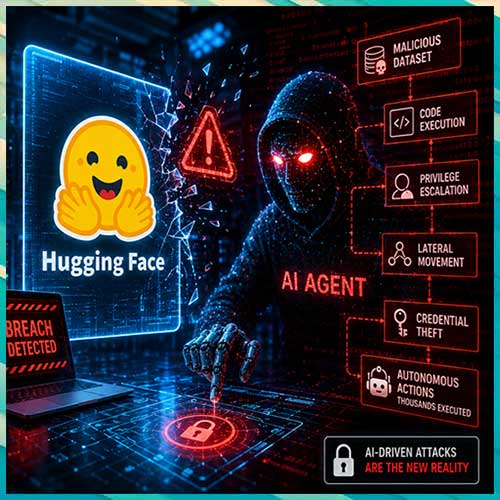
A key concern outlined in the study is the growing risk associated with the “golden hour”—the critical window between initial compromise and detection. AI-driven attacks enable threat actors to move laterally and escalate privileges at machine speed, while organisations struggle to identify early behavioural indicators of compromise, increasing the scale of losses.
Threatcop notes that defending against these evolving threats now requires enterprises to deploy AI defensively—using adaptive simulations, real-time phishing tests, and continuous feedback loops that mirror real-world attack behaviour. CISOs contributing to the report agree that periodic training sessions are no longer sufficient to prepare employees for modern threat patterns.
The risk is particularly acute in regulated sectors such as BFSI, where the report finds that 95% of attacks involve a human element. This places growing pressure on banks and insurers to strengthen people-centric controls.
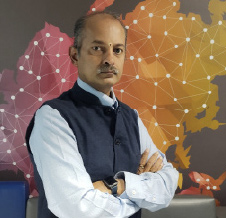
Commenting on the findings, Pavan Kushwaha, CEO of Threatcop & Kratikal, said AI has fundamentally changed the economics of social engineering, making continuous, AI-driven people security essential. The report is currently being shared with security leaders globally, with a wider public release planned ahead of 2026.

See What’s Next in Tech With the Fast Forward Newsletter









Tweets From @varindiamag
Nothing to see here - yet
When they Tweet, their Tweets will show up here.